ATLANTA — Republicans in Georgia’s state House say they want to take steps to erase homeowner property taxes this legislative session, which is getting underway ahead of an election cycle seemingly dominated by concerns about the cost of living.
The proposal unveiled at the Capitol Wednesday by House leaders, would gradually chip away at the amount of property taxes homeowners pay on their primary residence, until the amount vanishes to zero in 2032.
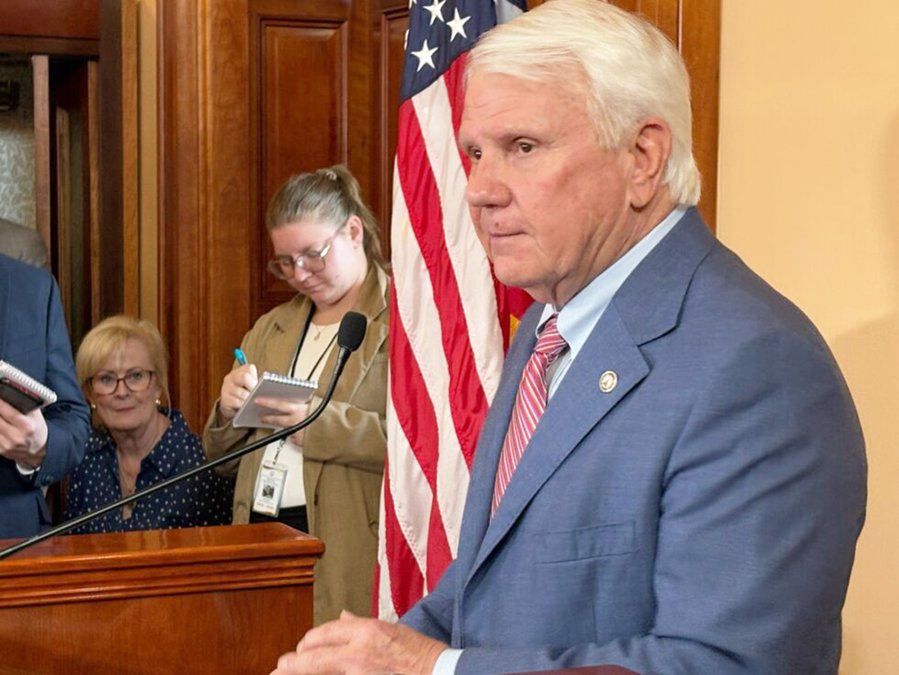
“This historic tax relief will be delivering on our commitment to make life more affordable,” House Speaker Jon Burns, R-Newington, said Wednesday before releasing a resolution with outlines of the proposal. The way property taxes are levied now, based on fast-rising home values, is “unsustainable” for most homeowners, he said.
The abolishment of a core revenue stream for local communities is a major undertaking. Property taxes are not collected by state government, but they pay for most local services, from police to teachers.
The proposal, still being drafted by Burns’ team, would let cities, counties and schools make up some of the lost revenue by either increasing sales taxes or by shifting revenue from their current sales tax if it is already at the maximum under state law. It also would allow them to levy more property assessments for specific services, much like some jurisdictions bill for fire services.
Burns said that would increase transparency, since taxpayers would be able to see the line-item bill for each service.
But sales tax revenue is currently a larger revenue stream. Much of it is dedicated to road projects or to supplanting a portion of homeowners’ property tax bill. Sales taxes are also less reliable than property taxes, especially during a recession. That would make budgeting more difficult.
And some lost property tax revenue probably could not be replaced, some observers said, leading to cuts to local services.
Property taxes deliver at least $5 billion to fund operations in cities, counties and schools, said Clint Mueller, deputy director of the Association County Commissioners of Georgia.
“It means cutting services. It means raising taxes through assessments. It means shifting sales tax from other purposes like capital and general property tax relief across the board,” he said. Costs don’t “magically go away,” he said.
The biggest local cost is typically the operation of school systems, a mandate under the state constitution. They are so big they are often the largest employer in the community, with 90% of revenue typically going to employee pay and benefits.
And property taxes cover all of that.
“No question that is the primary source of local revenue that school systems have, and it’s really the only way they can raise revenue,” said John Zauner, executive director of the Georgia School Superintendents Association.
Many districts levy a 1% sales tax, but it is typically used to cover capital costs, such as construction or technology purchases.
Zauner noted that some areas would find it difficult to raise much sales tax revenue to replace residential property taxes because they lack a significant industrial or commercial tax base.
“Some of the counties don’t even have a grocery store, let alone a Dollar General,” he said. “It’s just an imbalanced way to collect taxes.”
Striking the right balance of alternative revenue streams versus cuts will not be the only challenge.
To untie the Gordian Knot of Georgia’s property tax system, lawmakers will need voters to approve an amendment to the state constitution.
Before they can even get it to voters, they will have to get it through both chambers of the General Assembly with two-thirds votes in favor. That would mean securing votes from Democrats. It would also require collaboration from the Republican-controlled Senate, which has its own affordability priority.
Senate leaders have said they want to make deep annual cuts to the income tax, eventually eliminating it.
Sen. Blake Tillery, R-Vidalia, chairman of the Senate Appropriations Committee, noted that his chamber’s proposal does not call for an increase in the state’s portion of the sales tax.
The House has yet to release legislation with full details about how its property tax cut would work. Tillery said he looks forward to reading the details and to “working with the house to reduce the tax burden on all Georgians.”