As summer begins, local and regional officials with the American Red Cross warn that blood supplies could reach critical levels, risking lives if there is a major accident or catastrophe.
Dean Smith, coastal district manager of the Southern Region Blood Services for the Red Cross, said the possibility of a disaster is why they are asking people to donate blood this summer, a time when the number of donations typically decreases as people take vacations and get busy with outdoor activities.
Smith said, "During the summer months is when we traditionally see our blood supplies start to dip, especially right after the Memorial Day holiday."
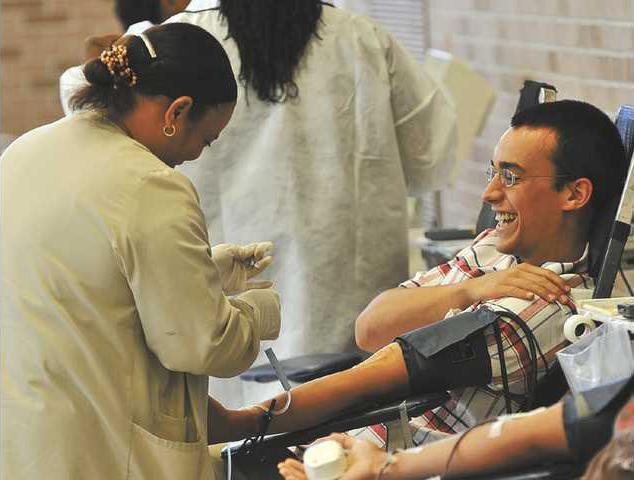
Georgia Southern University's Physical Plant sponsored a blood drive Wednesday with a goal to collect 30 units, enough blood to save up to 90 lives according to statistics from the Red Cross.
Smith said that there are nearly 20 blood drives in the Statesboro area every month. In particular, Georgia Southern was honored last month for being the largest producer of blood donors in the Coastal District.
“In the entire district, Bulloch County has the highest percentage of the population giving blood,” Smith said. “That’s nearly double the average of the rest of the district.”
According to Nancy Martin, senior accounts manager for the Red Cross's Southern Region Blood Services, the entire Southern Region, which includes most of Georgia and part of South Carolina, needs to collect 1,200 units of blood every day to keep up with demand.
She said that in the event of an emergency a lack of blood availability could result in catastrophe.
"If we don't have the blood already on the shelf, it takes 48 hours to collect it, process it, test it and then get it back to the hospital." Martin said. "If it's an emergency, you're not going to have 48 hours."
According to Martin, supplies of o-negative and b-negative blood in the region are at emergency levels. The only types of blood with sufficient stock as of Thursday are ab-positive and ab-negative. Overall, blood supplies are low, she said.
East Georgia Regional Medical Center lab director Wendell Persinger said that blood supplies at the hospital are currently stable, but that he has seen a drop in the stock of o-negative blood.
He has worked at the hospital for 33 years and he said that he cannot remember a time when a surgery was cancelled due to a lack of blood in stock.
“In the last few years, generally in the summer, there may be some minor shortages," Persinger said. "We’ve been lucky that we can work around these shortages and not have to postpone any surgeries. We've been very fortunate.”
Persinger said that when facing shortages, the hospital typically works with the Red Cross to keep supply lines flowing. He said that EGRMC use much less blood compared to some hospitals in Savannah that typically use hundreds of units a week.
Smith said that the main reason people don't donate is simple: No one asks them to.
Billy Brannen, a mechanic with Georgia Southern's Physical Plant was a first time donor Wednesday after someone asked him if he would donate. He had advice for people who are afraid to donate blood.
“I’d tell them that it’s not nearly as bad as they think,” Brannen said. “Come on out and donate.”
Smith said that even if a person is afraid of needles or has never donated blood before, that it's not a bad experience.
“On the average, I would plan for an hour – from the time you walk in the door to the time you walk out,” Smith said. “If we don’t do what we do everyday, we can’t provide life-saving blood.”
Summer wish: More blood
Red Cross manager: Supplies drop as people vacation, head outside