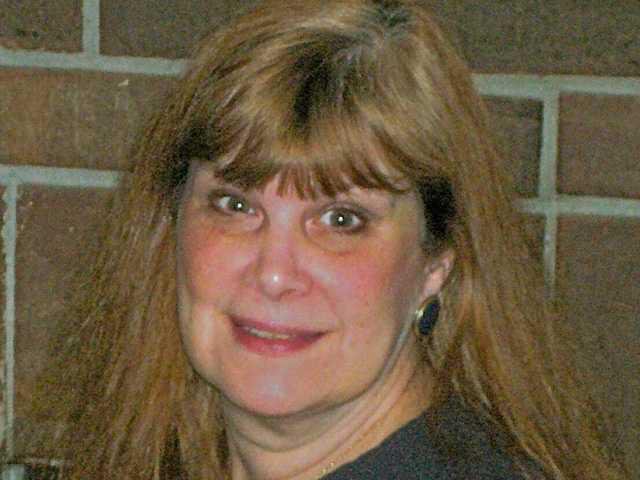
A rare hereditary disease has forced a Bulloch County woman into a fight for her life.
And it is a battle that she cannot win on her own.
Andrea Maechtle has known for quite some time that her life would not be allowed to follow a normal path.
In 1998, after suffering a lung infection, she received news that very few ever had.
“(That year), I was diagnosed with alpha-1 antitrypsin deficiency, a genetic disorder that can cause severe damage to the kidneys and lungs,” she said, lying in her Statesboro home, connected to a machine that aids her breathing. “I know most people have probably never heard of it because I had never even heard of it.”
The condition is one in which the body does not make enough of a protein that protects the lungs and liver from damage. The only way someone can contract the illness is by being born to pair of disease carriers (the condition doesn’t necessarily affect either parent, nor is it guaranteed to affect their children).
While recent studies suggest the condition is more common than once thought, Maechtle, 58, learned of her illness when not much was known about it.
“I have had this disease since I was born, but I wasn’t diagnosed until my mid-40s,” she said. “I was one of the first people diagnosed with this. It didn’t become a diagnosis until 1989.”
Now, almost 15 years after the unexpected news, the condition is reaching its worst. The symptoms — shortness of breath, wheezing, recurring respiratory infections and fatigue — are constant, and severe.
“I did pretty well at first. I continued to work until 2003. They had told me then that I would eventually need a lung transplant, but I felt fine,” Maechtle said. “I moved to Statesboro from Chicago in 2005 and did really well here until about two or three years ago, when I went on oxygen. Since then, things have slowly deteriorated.”
In December, Maechtle was given a grim revelation.
“My doctor finally convinced me that I needed a lung transplant — I was hoping that I would never have to — and he recommended me to the Duke University Medical Center in Durham (N.C.),” she said, holding back tears. “They invited me up for an evaluation. It was a five-day evaluation and, in the end, they told me that I had six months to one year to live. They wanted me to move to Durham, for treatment and a double-lung transplant, as soon as I could.”
That news was not the only bit to swallow.
Doctors also told Maechtle that to move into the center — where she would perform physical therapy to prepare for the surgery, receive treatment and, hopefully, receive new organs — she would need to raise a seemingly impossible $25,000.
A typical double-lung transplant can cost more than $800,000.
Today, it is the money keeping Maechtle from her life-saving procedure.
Through a partnership with the National Foundation for Transplants, she has collected nearly half of the needed expenses thus far.
“It has been really unbelievable to me, the people that have helped,” she said. “I have raised a little more than $12,000. It means more than anyone can know. It is overwhelming to know that there are so many great people out there.”
Maechtle said donations have come from old friends and complete strangers.
“A lot of money has been gathered through my Facebook account and friends. Kids I went to high school with have probably donated about $2,500 between them,” she said. And, “When I was in the hospital, I met a nurse — Stephen — in the ICU. We were just talking and I was telling him about my transplant. On Valentine’s Day, he came in and gave me a check from his church (Grace Community) for $5,000.”
Members of other churches, friends of her sister-in-law, have helped as well.
“These are people that don’t even know me,” she said. “The goodness in people is absolutely incredible.”
Though still needing help, Maechtle said she has decided to use money already donated and open lines of credit to make the move to Durham next month.
She plans to move on April 7, and more importantly, return to Statesboro later this year.
“I have a lot of living to do yet,” she said, with an understanding that she will need more money, a successful surgery and an additional two months of therapy and treatment. “Knowing what I have been through, I think I can help other people get through this disease better than I did.”
People interested in helping Maechtle in her fight for more time can do so in two ways.
Individuals may send a tax-deductible donation, in the form of a check, to the National Foundation for Transplants, Georgia Transplant Fund (5350 Poplar Ave., Suite 430, Memphis, TN 38119) — the address would need to read “In honor of Andrea Hughes Maechtle.”
Or, people can make a donation online at www.transplants.org. On the website’s homepage, users need to select the “Find an NFT patient” link, and type either Maechtle’s first or last name in a box provided. Maechtle’s page can be selected from the search results.
Jeff Harrison may be reached at (912) 489-9454.
Statesboro woman fights for her life
Needs community support/donations for surgery