ATLANTA — A monthly slowdown in container units handled at Port of Savannah suggests an economic slowdown, though traffic is still up for the year.
The number of container units handled fell 8.4% in October compared with October 2024 but traffic is up 4% as of this point for the year compared with the same point last year.
The script was flipped at Colonels Island Terminal at Port of Brunswick, where auto and heavy equipment shipments were up 5.4% last month versus October last year but traffic fell 9% for the year.
Georgia Ports Authority President and CEO Griff Lynch hoped for more trade in 2026.
“We’ve been impacted by the trade downturn,” he said in a statement, “so we look forward to seeing more trade deals come together and we’re hopeful the market bounces back in the new year.”
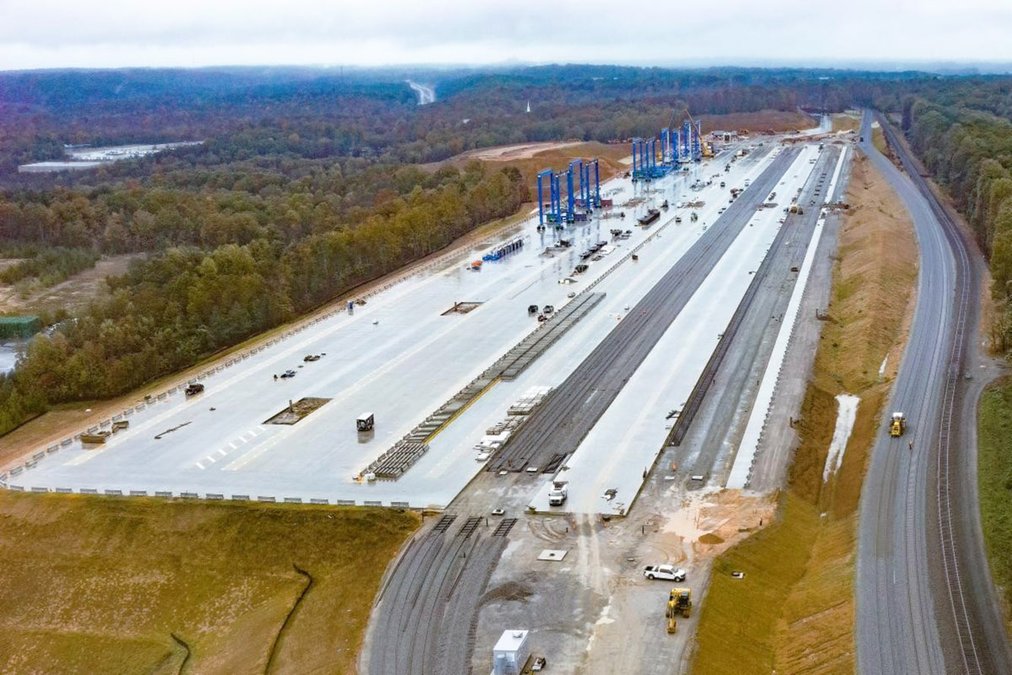
The Port Authority is preparing for long-term growth with the Blue Ridge Connector. The $127-million rail facility in Gainesville, 50 miles north of Atlanta, is expected to open next spring.
When it does, Norfolk Southern “doublestack” trains are projected to eliminate 52,000 truck trips during the first year of operation, relieving Atlanta traffic and reducing carbon dioxide emissions by 90%, according to the Authority.
It will serve northeast Georgia, a high-growth corridor known for exporting heavy equipment, forest products and poultry. The area to be served by trains is about a five-hour truck drive from the Port of Savannah.
After the first year of operation, the rail service is expected to grow exponentially as more volume is added, according to a release from Georgia Ports. In the future, the volume could rise to 400,000 truck trips based on the demand the Ports Authority envisions.