This weekend Dana Armel, 24, from Statesboro, assisted members of a Special Olympics team at the South Dakota State Summer Games.
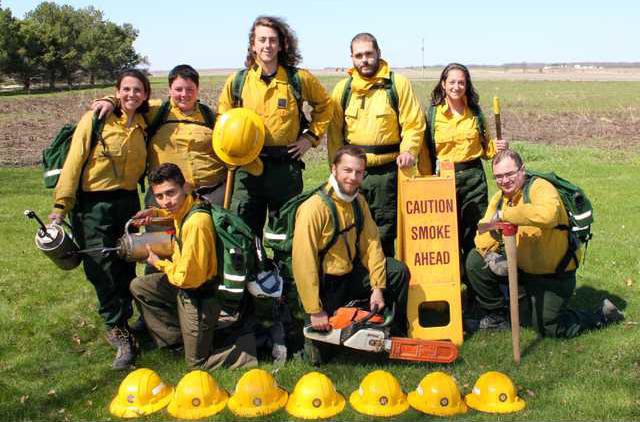
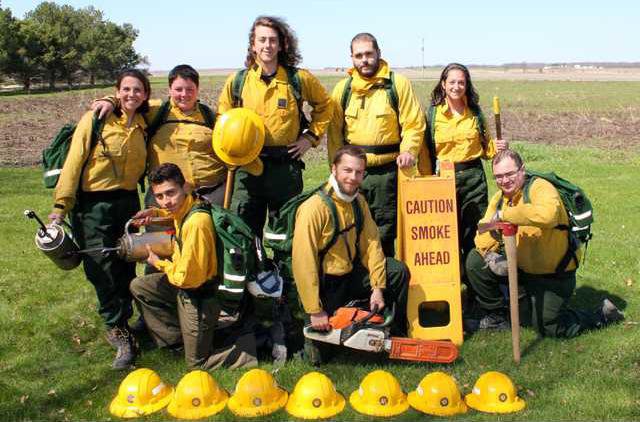
A few weeks ago, she helped with controlled burning of prairie grass and removing invasive species – in other words, weeds – from parklands in Iowa.
For 10 months this year, Armel is serving with AmeriCorps, specifically its National Civilian Community Corps, the NCCC or “N-Triple-C.” It’s her second tour with NCCC, and her third year of involvement with AmeriCorps programs.
The daughter of Don and Cindy Armel of Statesboro, Dana Armel graduated from Statesboro High School and attended Ogeechee Technical College, where she completed her core classes. She plans to return to Ogeechee Tech to earn an associate degree in culinary arts.
“I started AmeriCorps to kind of decide what I really wanted to be, in between majors,” Armel said.
It has been a long break from formal studies, but one that has taken her to contrasting parts of a huge country, from the urban heart of Philadelphia to the prairie.
She started fairly close to home, with a one-year stint in VISTA, or Volunteers in Service to America, another AmeriCorps program. VISTA enlists U.S. citizens and lawful permanent residents, ages 17 and up, to work in programs that serve low-income people. Armel was assigned to the Coastal Regional Commission in Brunswick.
There, she did computer data entry for GeorgiaCares, a state program that helps retirees get the most from their Medicare benefits while aiming to reduce errors and fraud. Meanwhile, she did some outreach for AmeriCorps itself.
After VISTA, Armel trained for her first 10-month stint with the NCCC. Assigned to the NCCC’s Atlantic Region campus in Perry Point, Md., she worked in various projects in several states between New York and the District of Columbia in 2012. Armel and other members of a team called Moose 4 helped with home construction at a Habitat for Humanity site and worked at a YMCA summer camp in Kingston, N.H. She was also assigned to projects with the City of Philadelphia and with Delaware Parks and Recreation.
In New Hampshire last summer, Armel’s team assisted with paperwork, input screening and crowd control at a testing clinic for hepatitis C during an outbreak. This emergency response assignment, which followed an incident in which syringes used to treat patients were contaminated by an infected hospital technician, attracted national attention, including an article in the Statesboro Herald, in August.
Americorps NCCC team members are selected from applicants who are U.S. citizens or lawful permanent residents ages 18-24. Teams assist state and federal agencies, local governments and nonprofit organizations with environmental and energy conservation, urban and rural development and infrastructure projects and disaster response.
Armel said it’s like a domestic version of the Peace Corps. The webpage www.nationalservice.gov/programs/americorps states that the NCCC is modeled on the Civilian Conservation Corps of the 1930s and on programs in the military. AmeriCorps is the working name of the Corporation for National and Community Service, a federally funded agency.
‘Hands-on work’
After a busy 2012, Armel signed up for a second 10-month tour with NCCC.
“You can only do two years of NCCC, and I like how with NCCC it’s hands-on work,” she said. “So that’s why I did a second year, because I really like that I’m directly helping the community.”
This time, she was assigned to the North Central Region, headquartered in Vinton, Iowa. Participants trained for four weeks before leaving for their first assignment March 11. Graduates were divided into 20 teams with eight to 12 members each. Each team will take on four to seven projects at different sites for the remainder of their service.
In Wapello, Iowa, Armel and the rest of Cedar 2 worked with the Louisa County Conservation Board on removing invasive plant species and helping set and control some prescribed prairie burns. Only five days were suitable for prescribed burning because of weather conditions, Armel said. But she and other team members also taught environmental lessons at schools, talking to students from kindergarten through 12th grade.
In the first days of May, the team arrived at Rapid City, S.D., to assist Black Hills Works, a nonprofit organization. Black Hills Works offers life skills courses and job training and placement for people age 16 and up with disabilities, and operates programs for people of retirement age.
Earlier this week, Armel was spending mornings interacting with senior citizens in the day program – putting puzzles together with them, for example. Each afternoon, she assisted younger people preparing for Special Olympics events such as the softball throw. Thursday, traveled with the athletes from Rapid City to the state games, to serve as a coaching assistant.
When 2013’s service is done, Armel will have finished an unusually long tenure with AmeriCorps. After getting her culinary degree, she plans to become a chef and eventually own a restaurant.
“Once I start my career, I won’t get the chance to, you know, move around to as many places,” Armel said. “I’ve gotten to see so many things and I really like that I get to help people that really need the help.”
Stipend and scholarships
AmeriCorps and agencies that receive NCCC assistance feed and house team members. Armel spent nights this week in a room provided by Black Hills Works in one of its buildings. Meanwhile, she receives a stipend of about $300 a month.
At the conclusion of a 10-month journey of service, most NCCC members will be eligible for a $5,550 Segal AmeriCorps Education Award. This can be used to repay existing student loans or for future educational expenses.
However, Armel has already earned two such scholarships, the lifetime maximum, for her previous VISTA and NCCC service, she said. So at this point she is serving for the stipend, travel and experiences.
Although it’s not a fully paid job, members are not considered volunteers, said Zak Kahn, team leader for Cedar 2.
“A lot of the work we’re doing is what people would typically consider volunteer work, but it’s a full-time commitment,” Kahn said. “It’s a full work week for us, so it’s what we’re doing for a living, essentially, at this moment.”
Getting selected involves an online application, followed by a brief interview. But there is also a random element, because applicants who meet all the standards can be placed on a waiting list until there are more openings, Armel said.
About 1,600 young Americans each year are accepted into Americorps NCCC, according to information at www.nationalservice.gov. More apply than are called, but an estimate of how many apply was not readily available.
Local woman doing national service
Armel now completing third year with AmeriCorps