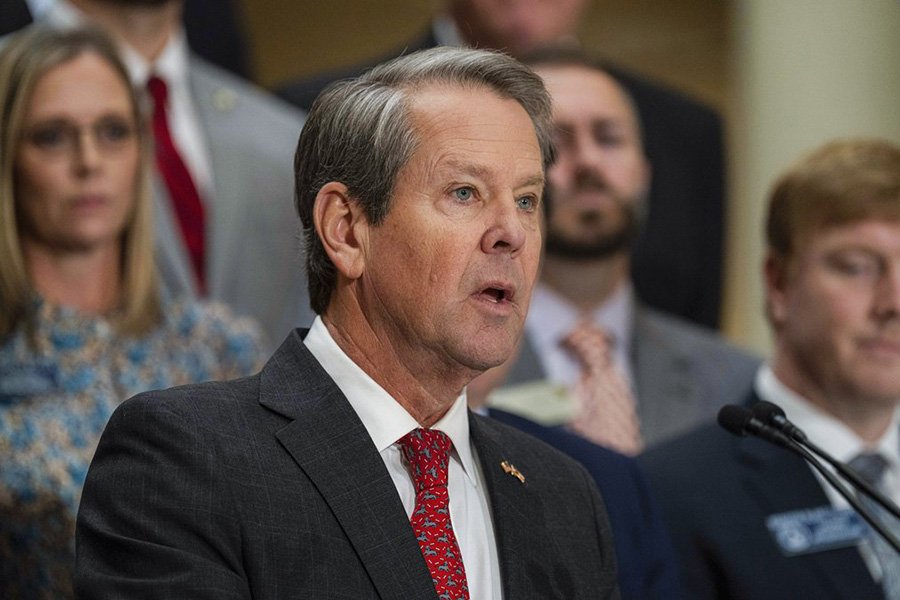
ATLANTA — A bipartisan education initiative that seeks to boost reading skills among young public school students in Georgia will go into effect this year after Gov. Brian Kemp signed it into law Tuesday, along with a package of other education bills.
The Georgia Early Literacy Act of 2026 is a sweeping overhaul of prior legislation that targeted literacy and dyslexia. The new measure, which was a top priority of House Speaker Jon Burns, R-Newington, adds numerous new requirements for curriculum, teacher training and student testing.
It also adds about $70 million to the formula that drives state education budgeting, enough to hire a classroom literacy coach in more than 1,300 schools that have kindergarten through third-grade classrooms.
"This bill is a monumental step in our years-long work to ensure students have the literacy skills they need," Kemp said before signing House Bill 1193.
The governor signed eight other education bills, including House Bill 1009, which will ban cellphones in public high schools starting in the 2027–28 school year.
The legislation expands a ban passed last year on devices in kindergarten through middle school. Although the lower grades ban does not go into effect until the upcoming school year, many schools have already prohibited personal cellphones ahead of schedule.
Surveys of parents and teachers at many of those schools last fall indicated the bans were popular. Studies also showed academic gains associated with removing the devices.
"The improved outcomes following last year's bill have been incredible," Kemp said, "and this commonsense step will help both students and faculty learn in safer, distraction-free environments."
Among the other bills that Kemp signed are measures that will require public schools to expand access to afterschool programs for pre-kindergarten students enrolled in those schools (House Bill 1123), require closer collaboration between public schools and "completion schools" that offer credit recovery for students at risk of dropping out (House Bill 907), and expand a program allowing retired teachers to fill teacher shortages by returning to the classroom for pay while collecting a pension (Senate Bill 150).
The literacy act was the most expansive measure. Starting this summer, the state will have to identify at least one test to measure whether incoming students are reading on grade level. By fall, state leaders will convene a literacy task force that will vet literacy curricula for use statewide, with the state ensuring at least one option is free to public schools. The methods will be grounded in phonics and what proponents have labeled the "science of reading" and "structured literacy," with approaches based on decades of research. State universities will also be tasked with overhauling the way they teach future teachers.
Burns said literacy levels affect mental health and health care outcomes, employment and even the prison population.
"Only one in three of our children can read on grade level when they leave the third grade. Unacceptable," he said. "But I'm hopeful and I'm confident with Governor Kemp's signature of the Early Literacy Act of 2026 today, we are well on our way to rewriting that narrative."