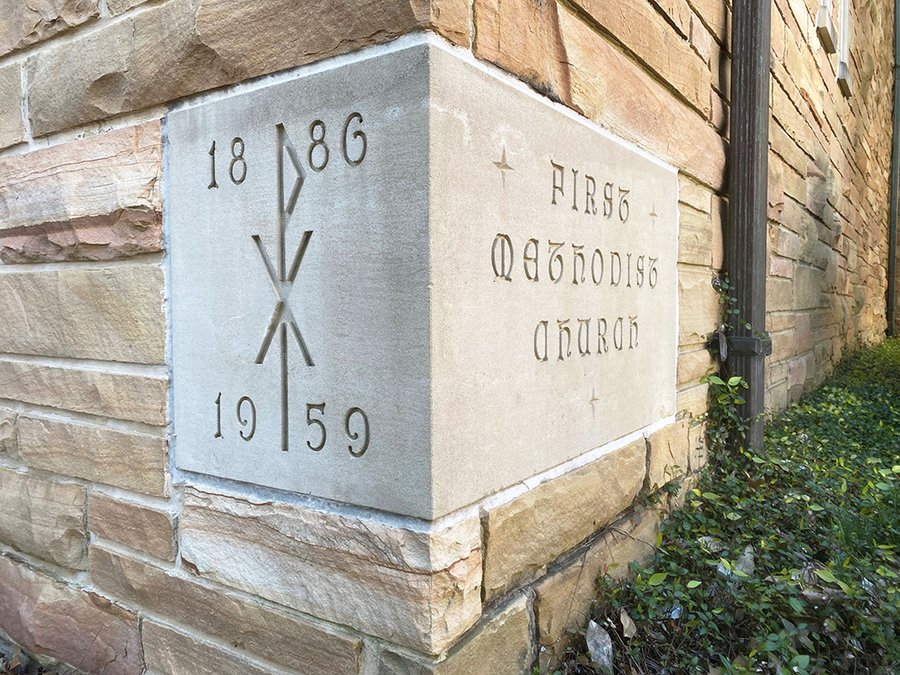

The church that is now Statesboro First United Methodist Church has been a part of its denomination's South Georgia Conference since the local church was founded in 1886 and of the United Methodist Church since unification in 1968. With a vote slated for this Sunday afternoon, the congregation could end its affiliation with both larger groups.
Under the process set out by the United Methodist Church's international, special General Conference in 2019, "disaffiliation" would require a two-thirds majority vote of members present at the local church's specially called March 12 conference.
"Shall Statesboro First United Methodist Church disaffiliate from The United Methodist Church for reasons of conscience over disagreements related to human sexuality, or the actions or inactions of its annual conference related to these issues…?" begins the only question on the congregational ballot.
Members are to vote, by paper ballot, "yes" or "no."
A further clause of the ballot question, in the version the Statesboro Herald obtained Wednesday, could have been used to state what the church would be known as and what name its property would be legally titled under after disaffiliation. But this clause had only "name to be decided" in two sets of parentheses, and no new affiliation for the church is being decided Sunday.
That would have to be decided later. If it disaffiliates, the church would need to affiliate with another Methodist association or drop the word "Methodist."
As the "disagreements related to human sexuality" wording indicates, the possibility of exit has to do with the larger denomination's current and future stance on same-sex marriages and the ordination of LGBTQ individuals as ministers. But the local church maintains the traditional view, as does the South Georgia Conference, and at this point, the overall United Methodist Church in its official position.
Kept traditional rules
A paragraph of the Book of Discipline of the United Methodist Church, as still in effect from the 2016 version, states that "ceremonies that celebrate homosexual unions shall not be conducted" by UMC ministers or in UMC churches. Another paragraph states, "The practice of homosexuality is incompatible with Christian teaching," and goes on to prohibit "self-avowed practicing homosexuals" from being ordained, certified as candidates for ministry, or appointed to serve as ministers. At least some of this language has been in place since the early 1970s.
Usually, the United Methodist Church, as a denomination, holds a General Conference, attended by delegates from churches in North America, Europe, Asia and Africa, every four years. But a special General Conference on the sexuality issues was held in 2019 and "The Traditional Plan" upholding those prohibitions — and in fact, adding some stricter or clarifying language — was approved by 438 delegate votes (53%) to 384 (47%). The regular General Conference of 2020 was then postponed during the COVID pandemic and has not been held, leading to speculation that a conference in 2024 could make other changes.
Before the 2019 special conference was adjourned, a "disaffiliation plan," was created by amendment, becoming Paragraph 2,553 of the Book of Discipline. It gives local churches "a limited right" to leave the denomination "over issues related to human sexuality," before a Dec. 31, 2023, deadline.
The Rev. Dr. Scott Hagan, senior pastor of Statesboro First United Methodist, said this amendment was intended to give more "progressive" churches the ability to leave United Methodism over its continued traditional position but has instead been used by more conservative, or "traditionalist," churches to disaffiliate from the denomination.
"The whole process was created for progressive-leaning churches to exit the traditional United Methodist Church over a matter of conscience, or a difference of opinion. …," Hagan said. "In South Georgia, one progressive-leaning church left in 2020, and I think every other one that has left would probably define themselves as traditional-leaning."
Hagan spoke about the process and background but declined to state a position on what the outcome of the vote should be. The church also has an executive pastor, the Rev. Stephanie Smith, and the denomination has been ordaining women for more than 60 years, so that is not an issue. But no, they do not conduct, and the church does not host, same-sex weddings.
"I wouldn't say we're traditional or not traditional," Hagan said. "I would say we're faithful to the United Methodist Church. I mean, we're faithful to the doctrine, we're faithful to the polity. We have been faithful to the rules."
But when asked about the area annual conference, he said, "The South Georgia Conference has upheld the discipline. It's one of the most traditional conferences in the United Methodist denomination."
Mounting departures
Statesboro First UMC has well over 1,000 members and added 43 new members in 2022. Statesboro's other large United Methodist Church, Pittman Park UMC, has not initiated a process to consider disaffiliation. But churches as close by as the former Nevils United Methodist, which became Nevils Crossroads Church, and the former Claxton First United Methodist Church, which is now Claxton First Church, have left the denomination.
As of 2019, there were over 30,000 United Methodist churches in the United States. As of three months ago, about 2,000 churches have disaffiliated from the denomination and there are estimates that another 1,000 will do so in 2023, according to information Hagan provided.
Statesboro First United Methodist members and leaders have been discussing the possibility of disaffiliation since August. The church council, with a Feb. 20 decision that was not unanimous, set the process in motion leading to Sunday's congregational vote. But the church has been holding information sessions on the topic since January. In a Jan. 15 presentation that was posted on the church's website, Bill Hatcher, a Methodist for more than 70 years and a former mayor of Statesboro, appeared to state a position for leaving the denomination. Hatcher has served as a UMC South Georgia Annual Conference delegate to the UMC General Conferences since 1988.
'They left us'
"The United Methodist Church has left us," Hatcher said in his presentation. "We would be simply changing the flag that we're flying under and be the same that we've always been."
He answered questions that were read to him. One asked why "we traditionalists have to leave" the denomination.
"We had the majority, so why are we leaving? The other folks ought to be leaving," Hatcher rephrased the question, and said, "One simple answer: accountability."
He noted the UMC Western Jurisdiction's election in 2016 of an openly lesbian bishop, the Rev. Karen Oliveto, who is married to a woman, and last fall of an openly gay bishop, the Rev. Cedrick Bridgeforth, who is married to a man, and called their appointments "in direct violation of the discipline." He noted that the denomination's Judicial Council ruled that Oliveto's election was illegal but that she remained a bishop. The Western Jurisdiction includes UMC churches from the Rocky Mountains and Desert Southwest to the Pacific Coast states and Alaska.
He also expressed concerns about doctrines such as the virgin birth not being taught as truth in seminaries or believed by their graduates.
On the phone Wednesday, Hatcher declined to comment directly for this story, saying the church's decision feels like a "family matter." But he acknowledged that his remarks were available in the video and also confirmed that his opening statement on Jan. 15 still expresses his hope for members of the church to get along after Sunday's vote, however it turns out.
"We all love the Lord. We all love this church because there are many great and wonderful things happening in our church," Hatcher said then. "We're brothers and sisters in Christ, and we must remember as we go through this … we don't all agree this morning, and we won't all agree … but we must never lose sight of the fact that we are his children and he loves us, and we are called to love even those of us who we don't agree with. That's paramount, to love one another."
Local attorney Sims Lanier is also an active Statesboro First UMC member. Phoned Tuesday, he said the disaffiliation process had been conceived for the departure of a relatively few "much more liberal" churches but has been "twisted, in a way," for the departure of many conservative congregations.
"I'm a lifelong member, and my family goes back generations of being members here," said Lanier, 70. "I'm very traditional in terms of wanting to keep the operation as it is now, follow the rules as they are now, and not withdraw from the United Methodist Church and not disaffiliate. … I just don't have a crystal ball to tell you what is going to happen. I know what I want to happen, and that is for the congregation to stay together, and my vote will be not to disaffiliate on Sunday."