Because of a recent change in Georgia law regarding the new sales tax known as FLOST, the Bulloch County Board of Commissioners may be able to roll back their property tax millage rate by more than full mill this year, instead of waiting another year.
Becoming the ninth penny of sales tax here, the Floating Local Option Sales Tax, or FLOST, also known as a Property Tax Relief Sales Tax, was authorized by 71.7% of Bulloch County voters in a November referendum and has been collected since Jan. 1. Under the 2024 state law that authorized these sales taxes, the revenue was originally required to be collected for a full year before being available for proportional rollbacks of property tax rates by the county and the cities beginning July 1, 2027.
But on or about May 11, Gov. Brian Kemp signed amended legislation that, in counties such as Bulloch that have collected a FLOST tax since Jan. 1, makes the first six months revenue available for counties’ and cities’ fiscal 2027 budgets, starting July 1, 2026.
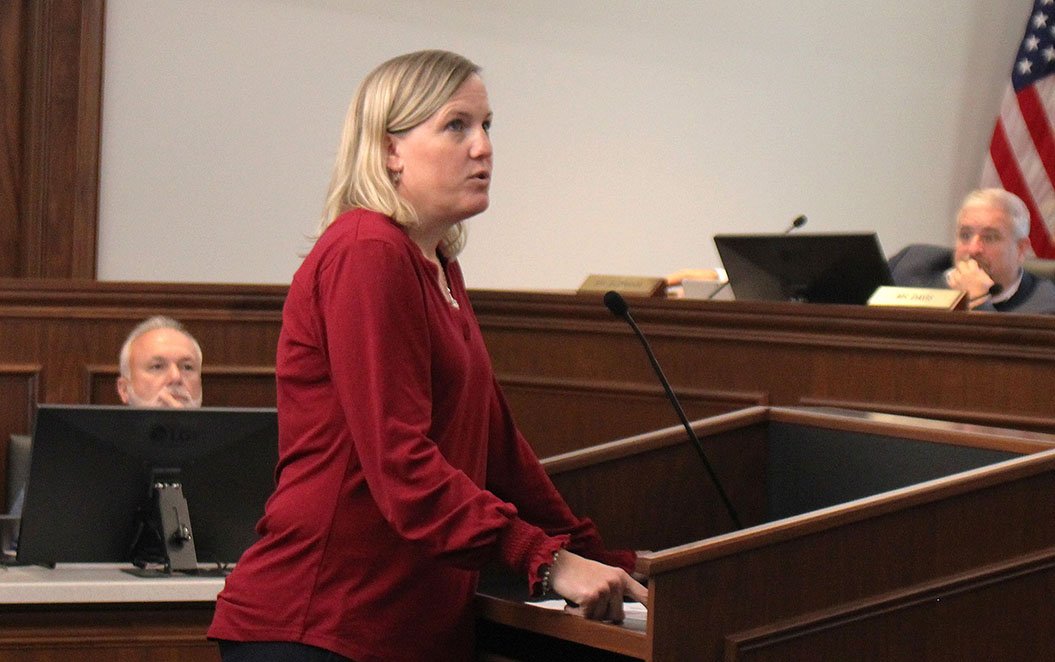
Speaking to the Bulloch County commissioners during a May 19 meeting, county Chief Financial Officer Kristie King said the county “now must use” that first six months of FLOST revenue to offset its calendar year 2026 property taxes.
“So that’s good new for us,” King said. “We didn’t think we were going to be able to use that until next year.”
She estimates that six months of the 1% FLOST tax will bring the county about $6.4 million.
Spending requests cut
However, to realize something like the almost 1.3-mill net property tax reduction that King suggested during her presentation, the county will not be able to fund $1.7 million worth of added new employees and job reclassification pay upgrades previously requested by county departments or almost $457,000 of the $743,000 in funding increases requested by county-funded outside agencies.
Those items had been part of the preliminary overview of the budget she presented during a March 31 budget work session. But that overview included the full “wish list” of requested items, for spending totaling $78 million, and staff members have since pared down the suggested spending but left some increases.
The old year’s, fiscal 2026, budget had approved $72 million in spending but estimated revenues of over $69.8 million. So from the first it anticipated the use of more than $2.25 million in general-fund balance, “eating into our reserves,” King said.
So the modified proposed budget for fiscal year 2027 is designed to halt this erosion of the rainy day fund.
“We’ve kind of taken expenses down and revenues up to get to a balanced budget with no plans for using fund balance,” King said. “Revenues equal expenditures.”
But this latest proposal still includes some significant increases in spending. Among these is a little over $1 million boost in overtime budgets, mainly for the Sheriff’s Office, including the jail, and the Emergency Medical Service. These public safety agencies have current “structural issues,” incurring more overtime than budgeted, she said. Another increase of just over $1 million is for “non-personnel increases” also with the sheriff’s department and jail, such as for inmate medical care and the contract for body cameras and Tasers.
The third-largest increase would be $874,000 to implement the first two phases of a new compensation plan for all departments. Nearly half offsetting that is a $422,000 reduction in the county’s funding of its employee health insurance fund.
But the only new jobs, or “position additions” kept in the proposed budget presented last week are those in the previously reported plan to close 10 of the county’s 22 trash collection centers and staff the remaining 12. That plan would eliminate eight positions in the Public Works Department but assign 12 new positions to the Bulloch County Correctional Institution staff to work in the centers.
Now $76.25M
Total expected spending, and also total projected revenue, in this latest version of the proposed general fund budget is $76.25 million.
“I didn’t add anything,” King told the Board of Commissioners. “This is not growth. This is not changing a lot. This is trying to do what we’re doing just a little bit better. So if any new positions are desired by the board, that’s a decision y’all are going to have to make and direct the staff to add back in.”
For the current fiscal year, which ends June 30, the millage rate for the county’s general government operations was 11.35 mills. A mill is 1/1,000th of a property’s value as assessed for taxes, and most real estate in Georgia is assessed at 40% of market value. So – not considering any exemptions – 1 mill amounts to $100 tax on a home or other real estate with a market value of $250,000.
Six months of FLOST
Technically, what King suggested during the May 19 budget work session was a fractional 0.215-mill increase in the property tax millage followed immediately by a 1.511-mill rollback offset by the first six months of FLOST revenue.
That would amount to a 1.296-mill net property tax rate reduction, and a new rate of 10.054 mills.
“So that is a decrease,” she said. “So, individual homeowners should see a lower property tax bill this year, and another thing to remember, this year’s (FLOST rollback) is only based on the first six months. Next year FLOST will have an entire year, so next year’s decrease will be better than this year’s.”
Her projections also include an estimated $2 million increase in property tax revenue from “real growth,” such as new businesses and townhomes built last year. With the lack of a rollback for inflation projected to add $1.7 million before this is more than offset by the $6.4 million rollback from FLOST, the county government’s total property tax revenue is projected to be about $40.6 million, or about $1.73 million less than last year’s.
Not final numbers
However, King cautioned commissioners and the public against taking her latest estimates “as the gospel” regarding the millage rate. Most counties, cities and boards of education in Georgia need to adopt budgets for their next fiscal year before it begins on July 1, but final tax digest numbers, showing the value of taxable property, often don’t become available from tax appraisers – in this case the Bulloch County Board of Assessors staff – until later.
So the commissioners need to approve a budget very soon but will not actually set the millage rate until later, probably in July or August.
Fire millage increase?
King also briefly discussed the separate millage rate used to fund the Bulloch County Fire Department, with that tax now collected from a “fire district” that includes all of the county outside Statesboro’s city limits. Statesboro is exempt from this tax because it funds its own fire department from city taxes.
One of the latest expansion efforts for the county’s Fire Department and the Emergency Medical Service has been the renovation of the volunteer firefighter station in the Stilson area. An EMS ambulance and crew have been placed there, but the station has not been staffed with career firefighters.
“The fire district, they can maintain their current level of service at the same millage rate they have, 3 mills, but I know there’s been talk about staffing that Stilson fire station. …,” King said. “If y’all want to put (full-time firefighters) in that station also, more funding is going to be needed.”
Nine firefighters – three on each of three shifts – would be required to staff one fire truck around the clock. So fully staffing the “Stilson” station would take about $835,000 for a year, King reported. Also with some real growth, the 3-mill fire tax is generating about $9 million, but the total would need to be about $9.6 million to include the Stilson station, which would mean adding about a quarter mill of tax, to a 3.25-mill rate, she suggested.
“If you don’t want to fund those additional positions, I can take them out and the fire fund should be fine for the year. So that’s really up to y’all,” she told the commissioners.
They slated a public hearing on the proposed budget as a called meeting for June 9, possibly at 5:30 p.m., so that the budget may be adopted during the 8:30 a.m. June 16 regular meeting.