By allowing ads to appear on this site, you support the local businesses who, in turn, support great journalism.
Challenger Jones offers ‘active listening,’ seeks focus on efficiency and results in budgeting
Board of Education District 5 race
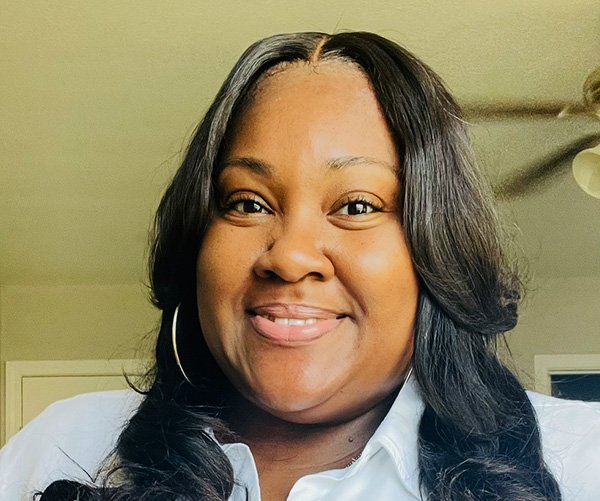
Jessica Jones.jpg
Jessica L. Jones

Jessica L. Jones, a healthcare social worker and mother of a current Bulloch County elementary school student, asserts that she would bring problem solving and "active listening" skills and transparency to the role if elected to the Board of Education from District 5.

Toward budgeting decisions, Jones suggests a focus "on outcomes, not just spending levels" as well as on efficiency and efforts to build trust and accountability. Jones is challenging incumbent District 5 member Glennera Martin in a nonpartisan race being decided only by BOE District 5 voters. In-person advanced voting, as part of the nonpartisan general election and party primaries, concludes at 5 p.m. Friday. Traditional voting precincts open 7 a.m.–7 p.m. Tuesday, May 19.

The Statesboro Herald asked each candidate three questions. The Q&A follows brief biographical info on each.

Who is Jessica Jones?

Jones, 41, is a lifelong resident of Georgia, a 10-year resident of Bulloch County, and a five-year resident of BOE District 5.

Born in Tattnall County, she grew up in Evans County and attained her bachelor's and master's degrees in social work at Albany State University. A member of the National Association of Social Workers, she now works for Pruitt Health.

Meanwhile, Jones' son is currently completing fourth grade at Julia P. Bryant Elementary School.

Herald: What insights and abilities would you bring to the board, and what do you believe — based on what you have heard from other District 5 residents and people in the larger community — should be your priorities if elected?

Jones: "I would bring a mix of practical problem-solving, active listening, and focusing on (being) as transparent as possible. I'm someone who looks for clear, workable and realistic solutions rather than unrealistic ideas with a focus into the details, asking the right questions, and making sure decisions are grounded in data as well as actual and current experience.

"I'd also prioritize transparency: making sure teachers, staff, as well as parents understand not just what decisions are made, but why. Just as important, I'd work to be accessible, creating consistent ways for people to share concerns and actually see follow-through.

"In conversations with some District 5 parents, there's a strong desire for better communication and trust (with) school officials/school board members. Many residents feel decisions are made without enough input or follow-up. Making engagement more consistent, inclusive, and meaningful would be a core focus to aid in bridging that gap between the school system and parents.

"Overall, my approach would be to listen carefully, act transparently, and focus on results that parents, teachers/staff as well as students can actually see and feel in their day-to-day lives."

Herald: How do you go about balancing students' need for a great education with Bulloch County taxpayers' demands for lower taxation and state efforts to limit local taxing ability?

Jones: "Balancing those pressures starts with being honest about a basic reality: A 'great education' and 'lower taxes' can both be goals, but they're in tension. The job isn't to pretend that tradeoff doesn't exist; it's to manage it responsibly and transparently.

"The primary focus should be on outcomes, not just spending levels. That means prioritizing investments that clearly improve student learning early literacy, strong teachers, and career pathways — while being willing to scale back or redesign programs that aren't delivering results. Every dollar should be tied to a measurable impact.

"Efficiency matters, so before asking taxpayers for more, the district should show it is using current resources well: regular audits, zero-based or priority-based budgeting, and looking for shared services or cost-saving partnerships. Operational costs such as energy, transportation, and procurement often have room for savings without touching the classroom.

"Ultimately, communication and trust are key. If the community understands where money is going, what results it's producing, and what the real tradeoffs are, they're more likely to support necessary investments but also holding leadership accountable for results.

"The balance will come from disciplined spending, clear priorities, creative funding, and being upfront with the community about what it takes to deliver the education they expect."

Herald: Beyond transitioning to a new superintendent and starting construction of the new Southeast Bulloch High School, what do you see as the biggest challenge facing the Bulloch County Schools leadership?

Jones: "The biggest issue I see is aligning growth/change, workforce, and resources in a way that's sustainable. Bulloch County is changing in regards to enrollment patterns, housing growth, and student needs are evolving — and the district has to keep up without overextending itself. Some key aspects to look at are: recruiting and keeping great teachers and staff, academic consistency and recovery, managing growth without losing quality, and rebuilding and maintaining public trust.

"All of these connect to one core challenge: focus. The district can't do everything at once. Success will come from setting a few clear priorities like early literacy, teacher retention, and responsible growth — and executing them well, year after year, with visible results."