ATLANTA — When lawmakers return to the Georgia Capitol next week, they will focus on affordability.
While President Donald Trump tries to address complaints about the cost of living, Georgia Republicans see the risk of a voter backlash.
They worry that the landslide defeat in November of two Republican incumbents on the state Public Service Commission could be a harbinger for the November general elections.
So, members of the state Senate and House say they will be pushing pocketbook proposals this year.
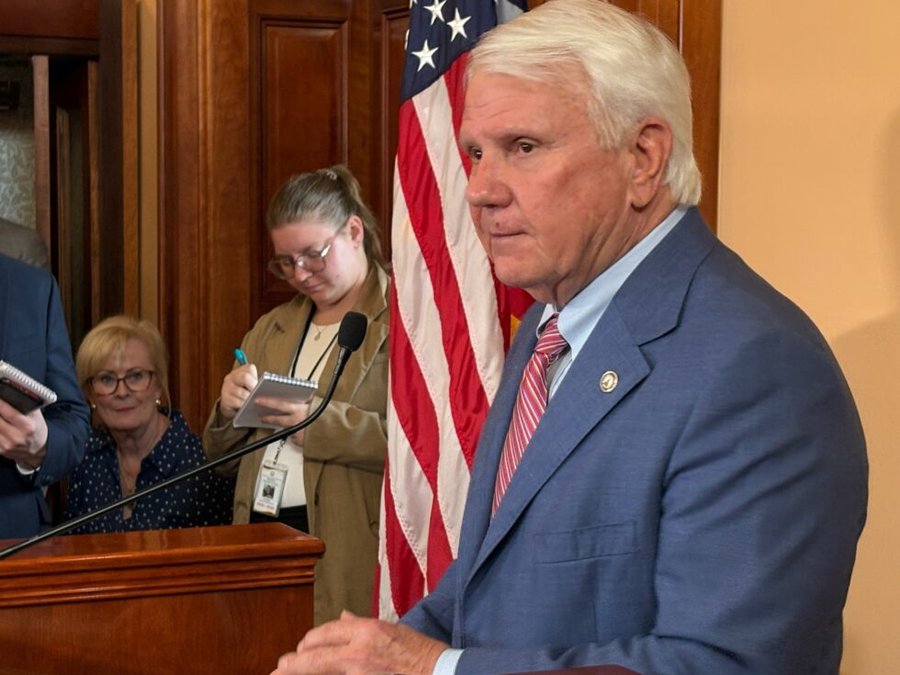
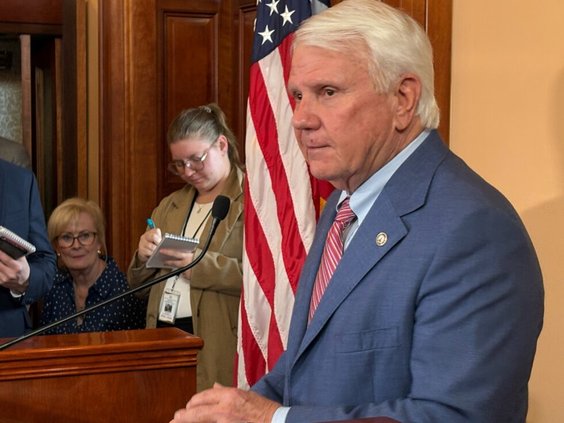
“We’re laser focused on pursuing an agenda — when we start back next Monday — that makes life affordable,” said House Speaker Jon Burns, a Republican from Newington.
In a briefing Wednesday, he said he and his chamber would focus on local property taxes, which he blamed for undermining the American dream of homeownership.
“For many of the families in our state, because of those property taxes, that dream appears to be unattainable,” he said. “We need to do something about it. And we’re going to do something about it.”
Senate Republicans are concerned about taxes, too. But they are targeting the state income tax.
On Wednesday, a Senate study committee recommended eliminating it on the first $50,000 earned by individuals and $100,000 for couples.
The committee, led by Sen. Blake Tillery, R-Vidalia, also recommended abolishing the $16 billion tax entirely by 2032.
But first, he said, lawmakers must help those struggling most with rising costs by exempting them from the 5.19% income tax.
“Georgia families are feeling the burden of affordability,” said Tillery, who, as chairman of the Senate Appropriations Committee, will have significant say over the state budget. “They’re talking about how high their power bill is. They’re talking about how much child care costs, how much their grocery bill is.”
Last spring and summer, legislators held hearings to study rising medical costs, a topic that could lead to legislation, as well. The House heard about a resulting lack of access to cancer care and about the impact of federal funding policy on the state public health system.
The end of COVID-19 era subsidies for people who buy health insurance through the Affordable Care Act is expected to make coverage unaffordable for hundreds of thousands in Georgia. The Congressional fighting over the issue could spill into state politics.
U.S. Sen. Jon Ossoff, a Democrat, taunted Georgia’s Republican delegation to the U.S. House over the issue, targeting those who want to unseat him in November.
“They support throwing half a million Georgians off their health insurance. They support more than a million Georgians seeing their health insurance premiums double,” he said Thursday. Republicans should break with Trump and extend the tax credits, he said. It is a line he will surely repeat during this election season.
Health care was the second issue Burns said the state House would tackle this year. His concern centered on recruiting and retaining doctors. His plan is to establish more opportunities for future doctors to complete their residency in Georgia, since they tend to settle where they do that training.
The third top issue Burns mentioned was education. He said the state must do more to improve literacy rates, so he wants to put a literacy coach in every elementary school. It has been a major concern of his wife, Dayle, a retired educator who has been helping with a state literacy campaign.
Speaker Burns also touched on another education topic that lawmakers in both the House and Senate have been discussing since the last legislative session: banning cellphones in high schools.
Gov. Brian Kemp signed legislation into law in May that will ban personal devices in elementary and middle school starting next fall. Last month, a Senate committee co-led by Sen. Sally Harrell, D-Atlanta and Sen. Shawn Still, R-Johns Creek, the chamber’s majority caucus chair, recommended extending that ban to high schools.
Burns was on board with the idea, observing the popularity in schools that have banned phones on their own.
“You’ll see us move this session, I do believe, to ban cell phones in high schools because so many jurisdictions around the state have already done that,” he said. It is a hot topic, with school shootings leading to parent concerns about being able to contact their children.
Burns noted that authorities see phones as a distraction from safety protocols during emergencies, but he said he respects parents’ feelings on the issue: “that will be something we will certainly have a lively discussion about.”