
About this time of year in 1940, 78 years ago, at a two-room country school in the northwest corner of Toombs County, I began a long, winding academic career. Landmarks include diplomas for seven graduations: grammar school, high school, BA in journalism, BD and Th.M. in theology, MA and Ph.D. in sociology. My two years at Marietta School provided an excellent foundation for all that followed.
Marietta School was a lot like myriad others that dotted rural Georgia. The building — two class rooms and a small auditorium — was newer and one room bigger than the one that my father had attended across the road. However, the teachers had limited formal preparation. It lacked electricity, running water and indoor plumbing. It was heated by a wood-burning stove in each classroom. The library consisted of a shared dictionary.
The first year, pupils brought lunches, whatever mothers could find in the way of biscuits and meat. The next year there was a "soup kitchen," a plain frame building with tables and benches. The menu consisted mostly of farm program surplus commodities provided by the U.S. Department of Agriculture and occasional fruits and vegetables from parents as payment for the 3 cents a week per student cost. I remember best regular offerings of black-eyed peas and rice and the one time a truck showed up with bushels of apples. My parents never knew how often I told Mrs. Collins that I enjoyed lunch but never took a bite.
The teachers had busy days. Grades one, two and three were taught in one room. Grades four through seven met in the other. Teachers would start each grade with something to do: silent reading, writing or studying. One class would receive instruction: reading aloud, working arithmetic problems on the blackboard, taking a spelling test. Then these students were assigned desk work while another grade received active instruction.
You might ask how any student could learn with so much going on and such limited direct instruction. First, classes were small. The entire enrollment for all seven grades was 35, or five children in each grade, 15 to 20 in a room. So, a teacher could find time to help a struggling student or call on a star student from a higher grade to tutor.
I prospered by neglecting my busy work to pay attention to what was being taught to those in higher grades. While I was supposed to be training my clumsy fingers to make perfect numbers, letters of the alphabet, even do cursive writing, I actually was picking up on whatever the older kids were learning. My writing was not pretty, but I knew the words and how to spell them. With the help of the multiplication table printed on the Blue Horse writing tablet, I knew the "times table," one through 12 by the end of my second year, and still remember.
The teachers also taught us to perform during special events to which parents and others in the community were invited during the year — Christmas, "school closing," etc. We sang patriotic and seasonal songs together, but most were also called upon to recite, perform or sing individually. Paralysis by stage fright was not an option. One day 19 years after leaving Marietta School, in a packed high school gymnasium six miles from that spot, I conducted a funeral service for four people killed in a tragic accident. I could not have gotten better preparation for a career in preaching and teaching.
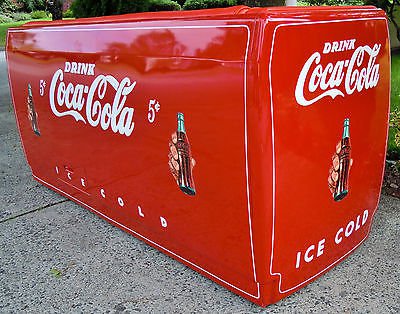
A favorite memory from my days at Marietta was when the Coca-Cola man came to school. A few times a year — maybe two or three — after delivering his order at McLain's store, he came to the school bearing gifts. Each pupil got a shiny, round, red pencil and a tablet with large, smooth-finish paper and shiny red cover. Pencil and pad were both decorated with the Coca-Cola logo. Did he and/or others visit other country schools? None came to the two larger schools that I later attended — Cobbtown and Lyons. No doubt this was good advertising for the product, but it was almost like Christmas to me.
Explanation is in order. While the worst of the Great Depression was over, money was still in short supply among the farmers of rural Georgia. It took World War II to awaken the USA as an economic giant. Parents were frugal with school supplies. My writing tablets for homework, writing practice, etc., were thick and composed of lined paper the consistency of coarse newsprint. I was instructed to let my father sharpen my pencil with his pocket knife rather than use the wall-mounted sharpener in the classroom because the point was less likely to break. His way a pencil lasted longer. I was heavy-handed, laboring mightily to produce numbers, letters, words and sentences. The coarse paper often tore and pencil points sometimes broke under such duress.
The paper in the Coca-Cola tablets was smooth and never tore. My pencil would glide over the surface, producing better looking numbers, letters, words and sentences. The gifts of the Coca-Cola man were more than objects. They were keys to the kingdom of writing, in which I have lived from that day to this.
Roger G. Branch Sr. is professor emeritus of sociology at Georgia Southern University and is a retired pastor.