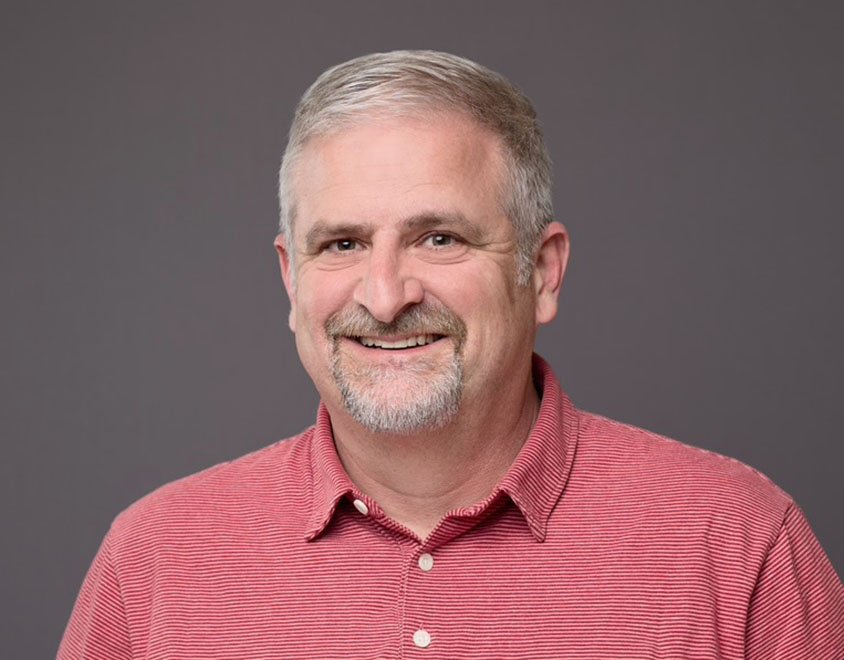
Yes, Chris Eldridge, newly hired to be Bulloch County’s county manager beginning Oct. 6, has heard about lingering local political friction and the growth-related issues here. But he said he sees opportunity for cooperation and appreciates the challenge of “work to be done.”
Now concluding his five years as city manager for Doraville, which is in DeKalb County northeast of Atlanta proper but very much part of the metro area, Eldridge is preparing to move to Bulloch County, where the county seat is Statesboro, in the next two weeks. He already has a house in Bulloch under contract and is slated to close on the purchase the end of next week, he said in a phone interview Wednesday.
Although originally from Tucker, which is also in DeKalb County, Eldridge, now 54, spent roughly the first 15 of his so-far 27 years in local government management working for small towns in South Carolina. He was city administrator for the towns of Liberty and Pickens, S.C., in the northwestern part of the state, and then for Georgetown, S.C., on the coast.
So, when asked what interested him about Bulloch County, Eldridge indicated that he welcomes a change from metropolitan Atlanta.
“If you’re in Atlanta, you know, it’s Atlanta,” he said. “So I miss just that sense of community working together. I won’t miss Atlanta traffic. But you know, I know there’s work to be done, and that’s exciting too. I don’t like sitting around; I like accomplishing things and moving things forward.”
Eldridge left historic but still relatively small Georgetown back in 2012 for the job of county administrator in Horry (pronounced OR-ree) County, South Carolina, where Myrtle Beach is better known but Conway is the county seat. Horry County’s population now is now over 400,000, and during the seven years he was administrator, the county government had 2,600 employees and a roughly $600 million annual budget.
Bulloch County now has about 85,000 residents, and the commissioners approved general fund and special revenue operating budgets totaling about $87 million projected expenditures for fiscal year 2026. The county government reports having 568 full-time and roughly 560 part-time employees, including the Recreation Department’s seasonal student workers.
‘Sound management’
What opportunities and challenges does he see working for the Bulloch County Board of Commissioners in this community?
“They just want good, sound management,” he said. “I know there’s some projects on the SPLOST list, and you know, it won’t take me really long, but it will take me a little bit to get my feet wet and get a feel for everything, and then we’ll start mapping out the direction forward.”
A majority of Bulloch County voters approved a six-year extension of the Special Purpose Local Option Sales Tax in March. The SPLOST is projected to collect at least $138 million for projects of Bulloch County and the municipalities of Statesboro, Brooklet, Portal and Register.
The largest single project planned is an expansion of the Bulloch County Jail, with $51 million assigned to that purpose, and the county financed it in August with a $61 million, 20-year bond issuance.
Doraville’s big project
In Doraville, Eldridge has seen some “work to be done” in the form of major projects. The long-proposed $35 million Doraville City Center plan has moved forward to the awarding of contracts this year and now, as he is leaving, demolition is underway to make way for the new construction.
Doraville lost its original downtown decades ago to highway expansions and the construction of the Doraville MARTA station.
Now, on a 13-acre city-owned “campus” across from that metro rail station, five buildings, including City Hall itself, the library, courts building and a police building, are being taken down to make way for the envisioned new heart of Doraville.
A single structure called The People’s Building will house a new City Hall and other government offices, a library, plus a café and restaurant space, creator studios and event space. A community park and even multifamily housing are also mentioned on the city website, with some of that requiring private investment.
Incidentally, although many online sources assign Doraville a population of about 11,000, Eldridge notes that an annexation last year added about 3,500 residents, pushing the total close to 15,000. Also while he has been there, private developers turned the former General Motors’ Doraville Assembly Plant into a studio complex called Assembly Atlanta. Gray Media invested nearly half a billion dollars to create 22 sound stages and has now leased 20 of those to NBC Universal.
So, he’s leaving a growing little city in transition – its city offices moved to temporary locations – within a huge metro area.
Bulloch’s challenges
Eldridge is leaving there for Bulloch County, which still has a lot of dirt roads and rural area but has experienced a boom in housing development and the opening of some new manufacturing plants. Both are related to the creation of Hyundai Motor Group Metaplant America in neighboring Bryan County.
So of course, he’s aware that dealing with anticipated growth – or seeing what actually comes of it – has been the crux of controversy here and something he and the commissioners will be dealing with.
“Yeah, I know that’s one of the key things to focus on, and it’s always hard to fully anticipate what those changes look like, but that’s what we have to work on and plan for, and make sure it’s acceptable to the community,” Eldridge said.
He noted that he was living in up-state South Carolina when the BMW plant came to Spartanburg.
“And it’s still changing that area,” he said. “That whole I-85 corridor, Greenville to Spartanburg, changed with BMW. You’ve got to study it; you’ve got to be ready for it.”
The BMW plant employs about 11,000 people. HMG Metaplant America has been projected to eventually employ about 8,500.
‘Cool community’
Eldridge will be moving here with his partner Caroline, who also has a professional career.
“We came and visited. We drove around. It’s a cool community,” he said. “I like the mix of rural-urban, which Horry County was the same way. We had 400 miles of dirt roads. The whole northwestern part of Horry County, it was agricultural as well.”
Before attaining his Master of Public Administration at Clemson University in South Carolina, Eldridge graduated from Appalachian State University in Boone, North Carolina, with a bachelor’s degree in English. Between those two graduations, he worked for a South Carolina weekly newspaper, becoming its managing editor.
He is now “excited about coming to a community that hosts a university,” but acknowledged a certain Sun Belt rivalry involving App State.
“So that’s one strike against me, maybe,” he said. “I’ll pull for Georgia Southern except when they’re playing my Mountaineers.”
Eldridge described his job as county manager as overseeing the daily operations of the county departments in providing services to residents while working with the elected commissioners “to try to implement their vision.” To that end, he said, he will share whatever experience or advice he can.
“But they know their community better than I do,” he added. “So we’ll work together. I’ve been doing this 27 years, and I know elections happen and change happens. But when it comes down to it, the bulk of what we do is just to provide good quality, efficient services to the people.”