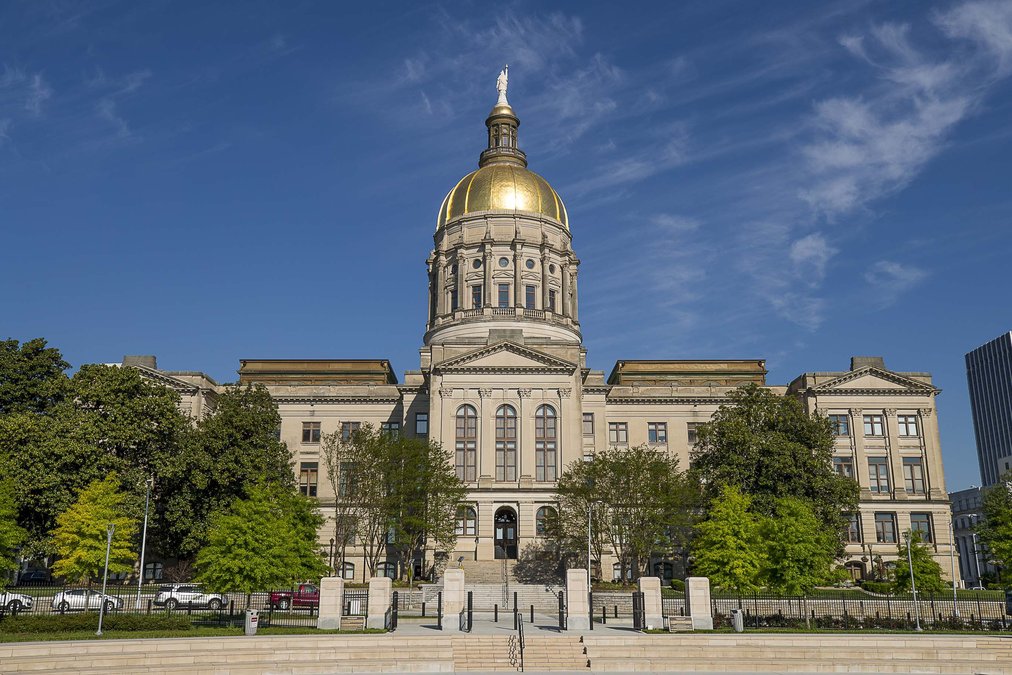
ATLANTA — Lawmakers, lobbyists and protesters swarmed to the Georgia Capitol on Monday, the first day of the annual legislative session in a crucial election year.
State senators and representatives — several of whom are running for higher office — pitched ambitious agendas for tax cuts, a cellphone ban in high schools and affordability before voters weigh in during elections later this year.
By the end of the three-month legislative session, the General Assembly will have passed hundreds of bills, including the state's next budget. Last year, Gov. Brian Kemp signed a $37.7 billion budget into law along with 350 bills.
"We're going to focus on things that matter to hard-working Georgians, which is cost of living, public safety and education," said new Senate President Pro Tempore Larry Walker III, a Republican from Perry.
Dueling tax cut plans could dominate much of lawmakers' debate.
Republicans in the Senate, led by Lt. Gov. Burt Jones, are promoting efforts to eventually eliminate Georgia's income tax, while Republican House Speaker Jon Burns and his allies prefer property tax relief.
Democrats said they're focused on making Georgia a more affordable place to live.
"Everything we do, every bill that we endorse, is going to all fall back on affordability because we want Georgians to be able to thrive," said Minority Leader Carolyn Hugley, a Democrat from Columbus. "My greatest hope is that we will pass a balanced budget and go home, but what I expect to happen is we're going to have a lot of twists and turns in between."
Besides taxes, legislators will also grapple with many other hot-button issues, including perennial efforts to legalize sports gambling, proposals to replace Georgia's touchscreen voting machines and attempts to improve health care access in rural areas.
"I'm looking forward to this session. It's going to be good. We're going to get a lot done," House Speaker Jon Burns, a Republican from Newington, said during a press conference last week.
Protestors showed up at the Capitol to wave signs and make their voices heard in support of civil rights, marijuana access and gun safety. Meanwhile, lobbyists packed the hallways inside to bend the ear of key legislators.
Republicans hold majorities in both the state House and Senate, but Democrats have narrowed the gap in recent years and won two seats on the five-member Public Service Commission in November.
In the House, Republicans control 99 of 180 seats, with vacancies in two Democratic-leaning districts that will be filled by special elections. The GOP has a 32-23 seat advantage in the Senate, with one Republican seat empty following the resignation of Sen. John F. Kennedy, who is running for lieutenant governor.
Which bills pass or fail won't be known until lawmakers throw confetti to celebrate the end of the 40-business day legislative session when it concludes April 2.
Then Kemp will decide which bills to sign or veto ahead of primary elections in May and the general election in November, when every seat in the General Assembly and every statewide office is on the ballot.