Question: Last Saturday I saw what looked like a hummingbird feeding at the moonflower vine growing at the edge of my porch. It was well past midnight. Was this one working the third shift, or was it just a night-owl hummingbird?
Answer: Hummingbirds were having sweet dreams when you saw your midnight visitor. What you probably saw was a species of sphinx moth. Some of these moths are quite large with heavy bodies with narrow forewings. They can be strong and fast fliers with a rapid wingbeat. Collectively they are also known as “hawkmoths” because of their swift flight. They feed on the wing similar to the way hummingbirds do. Because of their size, flight and manner of feeding, it is easy to think you saw a hummingbird.
Some species of sphinx moths are more familiar in their caterpillar stage than in their adult form. Gardeners know the tobacco hornworm (Carolina sphinx moth) and tomato hornworm (five-spotted hawkmoth). As caterpillars, both species will feed on tomato foliage and other members of the nightshade family. Fishermen know the catalpa worm as bait. If they escape being fish food, catalpa worms will become catalpa sphinx moths.
The hummingbird clearwing and the snowberry clearwing are two common species of small sphinx moths that feed during the day and look like a cross between a hummingbird and a bumblebee.
You are most likely to see one of the sphinx moths feeding at white or light-colored flowers, especially night-blooming flowers or flowers that become fragrant in the evening. A few favorites include butterfly ginger (hardy ginger), moonflower (moonvine), tuberose, abelia, evening primrose, petunia (especially old-fashioned re-seeding ones), nicotiana, manfreda, garden phlox, Abyssinian gladiolus, four o’clocks and angel’s trumpet. Plant some and enjoy the speedster moth show.
Q: What are some good blooming houseplants? I want something other than greenery.
A: We are entering houseplant season, in which you will begin to see numerous flowering selections at garden centers and grocery stores. Some are basically temporary ornaments that are usually discarded after blooming. They provide color but are not usually treated as long-term houseplants. This group includes florist’s cyclamen, gloxinia, paperwhites and other potted forced “spring-blooming” bulbs such as hyacinths. Poinsettias may also be considered in this group, although many people keep poinsettias as houseplants and go to great lengths to entice them to bloom again.
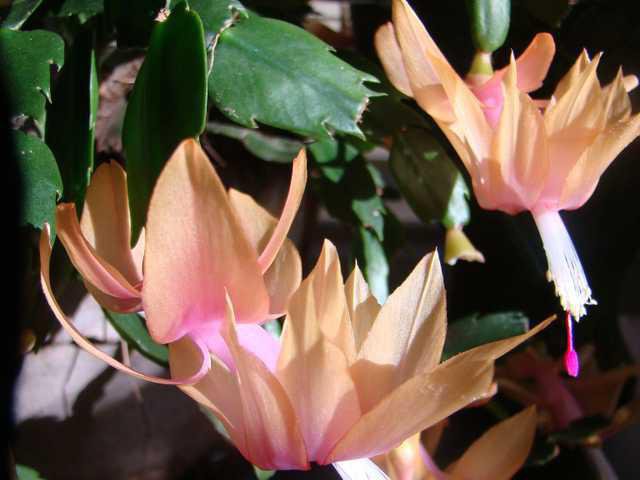
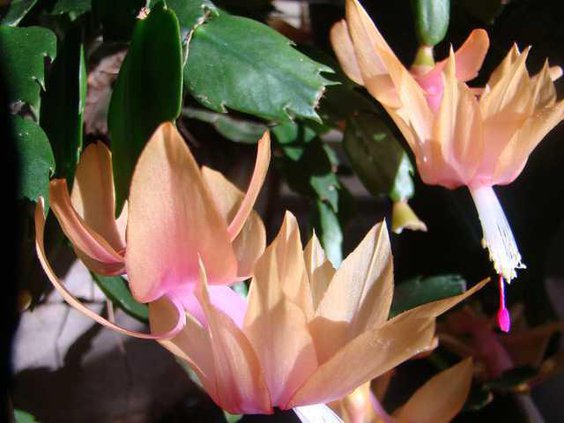
Christmas and Thanksgiving cactuses, although often sold as holiday plants, make good long-term houseplants that will repeat their holiday blooming for many years with minimal care. Amaryllis is another houseplant commonly sold as a Christmas gift or holiday decoration but that will provide years of flowers.
African violets are an old favorite that are available in many colors and forms. Phalaenopsis orchids are one of the easiest orchids to grow and are more readily available than ever before. A few other possibilities that produce a lot of blooms include crown-of-thorns, angelwing begonias, wax begonias and geraniums.
Clivia is a flowering houseplant that is praised for its durability, for tolerating lower light levels than many other flowering plants and for producing incredibly bright and beautiful clusters of flowers. The standard flower color is deep orange, but yellow and other colors may be found.
Of course, there is the very popular peace lily (spathiphyllum). It is primarily a greenery plant but may reward its growers by producing primitive, white flowers.
Visit your local garden center for more information and options about what flowering houseplants will be best for the conditions in your home.
And if it is color you are looking for, don’t forget that there are many houseplants with variegated and multicolored foliage that will brighten your décor without even the hint of a flower.
If you have questions about services or products regulated by the Georgia Department of Agriculture, write Arty Schronce (arty.schronce@agr.georgia.gov) or visit the department’s website at www.agr.georgia.gov.
Consumer Qs: Indoor blooms