In recent years, old storefronts in downtown Statesboro have a tendency to morph into churches or drinking establishments, but the city's Alcoholic Beverages Ordinance generally prohibits issuing a pouring license within 100 yards of a church.
As it stands, the current ordinance allows the mayor and council to grant a "distance waiver" for a restaurant, a pub or a low-volume establishment (such as a salon that serves clients wine). But it makes no provision for a waiver for a "bar" or a "bar with kitchen," which are specific categories in the city law for places that make most of their money from alcoholic beverages.
The Pour House
This came up when someone applied for a new on-premises alcohol license for the 25 West Main St. location that was previously Southern City Lounge. But the storefront church that had met within 100 yards of the lounge — which was previously licensed as a restaurant — had moved on before the council approved the new pub license for the Pour House at that address on Feb. 6, so it no longer needed a waiver, said City Attorney Cain Smith.
The 100-yard "proximity" rule in the city ordinance also applies to "any school building, educational building, school grounds, college building, or college campus."
So that was a concern and a close call, Smith said, when Oak 45, at 45 East Main St., was granted a license as a bar by City Council, also on Feb. 6. In that case, not a church but Georgia Southern University's City Center, where the GS Business Innovation Group is expanding near City Hall, was the source of the proximity concern.
He discussed the possibilities of a change with the mayor and council members during a Feb. 20 work session. Council members then expressed a preference for a carve-out of the downtown central business district, or a portion of it, to allow business owners or managers to apply for all types of pouring establishment licenses within that zone, instead of an expansion of the waiver rule.
Council members directed Smith to draft an ordinance change and bring it forward for a first reading. So he presented the proposed amendment during Tuesday's 9 a.m. regular meeting.
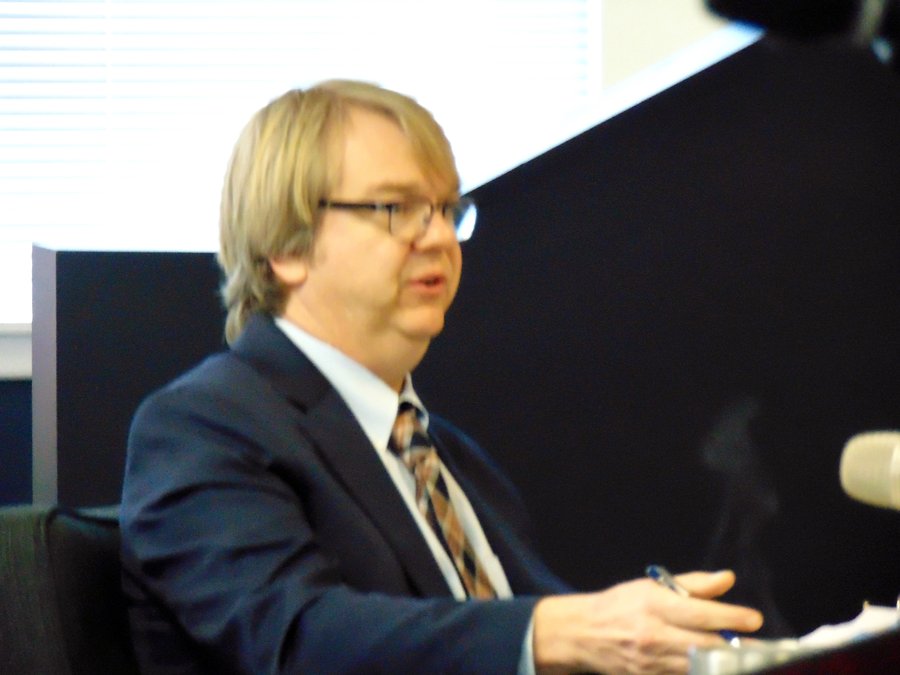
"As it stands now, bars and bars with kitchens can't be within a hundred yards of churches, school grounds, educational buildings, which as we discussed at the work session, takes out some areas, especially with the possibility of a storefront church coming into a downtown location," Smith said.
So the remedy proposed in the amendment is to "set out a delineated area," Smith said. The council in 2020 defined an area of downtown where drinks in plastic cups can be carried outside after being purchased at a licensed establishment, and Smith has advised the council that the proximity requirements for places selling alcoholic drinks for on-premises consumption are purely a local concern. Georgia's state laws do set out similar distance requirements for liquor stores and stores other than grocery stores that sell alcoholic beverages for off-premises use, but that's a separate matter.
The passage proposed to be added to Statesboro's city ordinance is this: "The proximity requirements for on-premises licenses shall not be in effect for that portion of downtown bound by Cherry Street on the south, Hill and Elm Streets to the north, College Avenue to the west, and Mulberry Street to the East."
However, Smith told the mayor and council members that, because all applications for new alcoholic beverage licenses must come to the council for approval, they could still deny a license for any specific location deemed "not appropriate." This authority is based in the idea that holding an alcohol license is a privilege, not a right.
'Legacy churches'
During the previous work session, city officials discussed this in terms of "legacy churches," and council members appeared to have that in mind Tuesday morning when they mentioned certain churches in the downtown area whose buildings are definitely not storefronts.
In fact, the southern boundary of the proposed carve-out exemption, at Cherry Street, is just to the north of First United Methodist Church.
"So, if somebody wanted to come in and put something there, they'd be within a hundred yards of First Methodist," said District 5 Councilmember Shari Barr.
"Y'all could deny it if you wanted to," Smith said.
But he added that, if the change is approved, the ordinance would no longer automatically prohibit new bars or bars with kitchens within 100 yards of a couple of long-established churches.
"First Baptist Church to the northeast and First Methodist Church to the southwest would not create halos, nor would any of the storefronts, or BIG (the Business Innovation Group campus) …," Smith told the council. "But of course, if a business owner wants to put a bar next to First Methodist, and the church members say, 'We don't want this,' deny it. I mean, y'all always have that right."
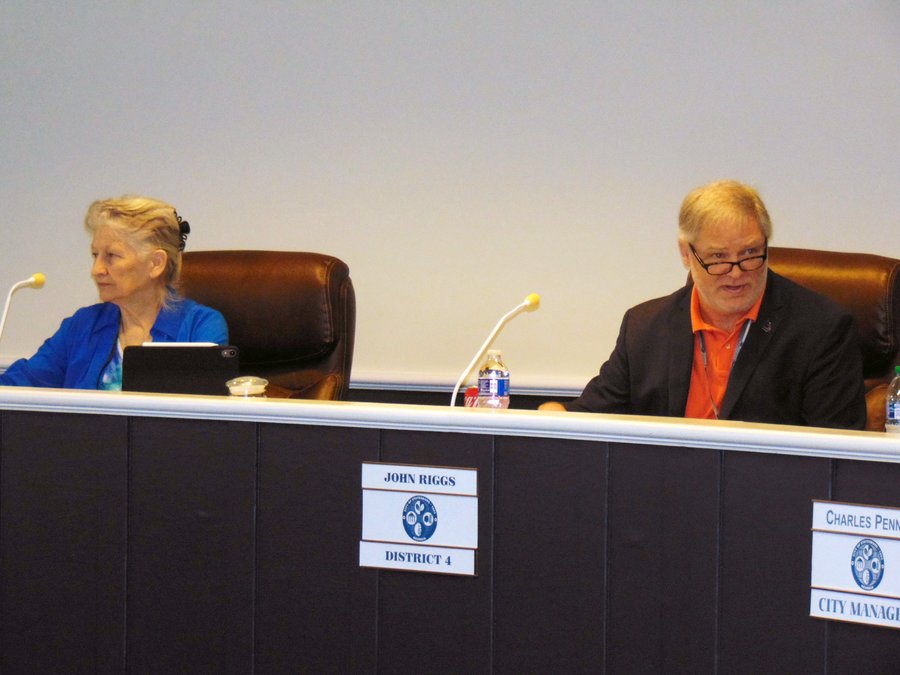
District 4 Councilmember John Riggs observed that part of First Baptist's building is "only a hundred feet from the corner of Elm and Main" and asked what would happen if someone wanted to put a restaurant serving alcohol across the street.
"That application would come before council for approval or denial," Smith said. "But the point is, this allows these to come forward to y'all, as opposed to a blatant prohibition made by a previous council in a different age and a different atmosphere."
Riggs said he was supporting the ordinance change on a first reading but will be listening for community response. No citizens spoke for or against the amendment at the first-reading hearing during Tuesday's meeting.
"The next reading is in two weeks. … I haven't heard from any deacons yet, so I'll vote for it today, but until I've heard from people from the church, I don't know how I'll vote next meeting," Riggs said.
No formal hearing is required for a second reading, but for the amendment to take effect, the council will have to enact it on a new motion and vote at a future meeting.
Riggs made the motion to approve the first reading. City Clerk Leah Harden counted District 3 Councilmember Ginny Hendley as having seconded the motion after more than one council member said "second," and the vote was 5-0.
As also noted during the discussion, new churches were never prohibited from locating near bars. The prohibition only applied the other way around.