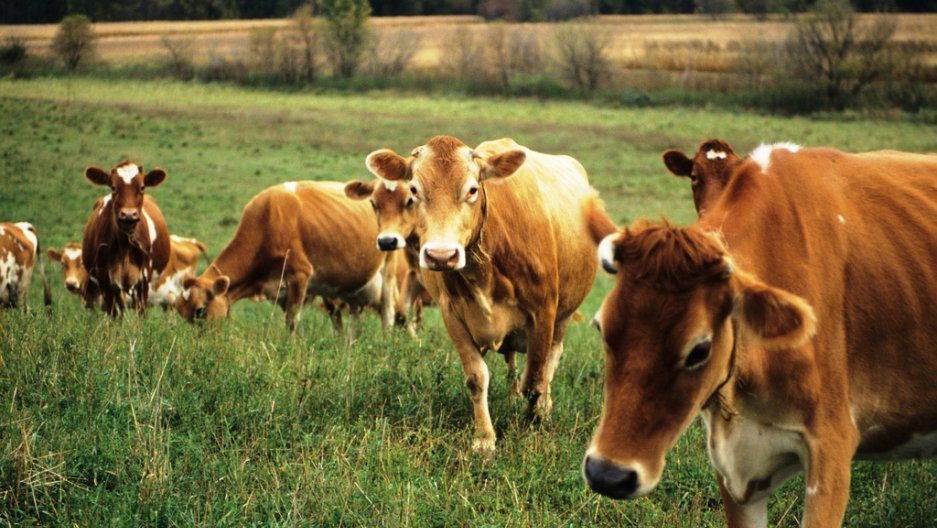

The open range. The phrase evokes images of Texas, of the Wild West with cattle grazing free, unconstrained by fences. In fact, settlers from Great Britain established the practice in the East long before they made their way to Texas and it remained in effect in southern Georgia until the middle of the 20th century.
Indeed, this was the way of herdsmen for millennia on the vast plains, steppes, moors and desert fringes of the earth. It was ancient practice when Abraham moved his herd from Ur to the Promised Land. Among the Highlanders of Scotland, areas of the moors were claimed by various clans, but cattle roamed free until they were rounded up and driven to seaport markets. There were even rustlers. In parts of England, plots of land were set aside as “the Commons” to be used by any farmers in the area. The first big ranches in North America were established by the Spanish in Florida.
When British settlers arrived in the southern colonies, they sometimes found cows and hogs in the forests. Spanish conquistadores like DeSoto took as part of their food supplies, cows and hogs driven by herders and dogs. Some escaped. Attempted settlements sometimes failed and livestock were abandoned. When Florida was obtained from Spain, most of the Spanish and some of the Native Americans went to Cuba, but the ranches and their cattle were there for the taking. Granted, these “left behind” cows and hogs were half-wild to feral, but they were valuable resources and adept at living off the land.
The first challenge in dealing with open range livestock is getting them under control. The most effective resource is food. Corn. The most important crop for the backwoods farmer was corn, which had to be protected by a sturdy fence made of split rails laid in a zigzag pattern. Corn was the carrot.
Dogs were the stick. There were herding breeds or mixed breeds with some herding dog ancestry. Their task was to drive. Then there were “catch dogs,” whose job was to catch and hold until humans could tie them up and load them onto a sledge or wagon. The “bull” in bulldog is there for a reason.
Some people built hog traps in the woods. Hogs were lured to and into the trap with corn. A trip device near the back dropped a door across the entrance. Then they could be removed in cages, high-sided wagons or, later, trucks.
Cattle roundups, complete with holding pens, were common by the 18th century. One of the most important Revolutionary War battles was fought at Cowpens, South Carolina. Ownership of the animals was established by “brands and marks.” Branding is familiar to those who watch Western movies. Marks were specific patterns of cuts and crops in the ears of hogs. Lists of brands and marks were often made part of court records or published in newspapers wherever these existed.
Open range animals were self-sufficient, particularly hogs. Swine are omnivores. They will eat anything — animal or vegetable. They fatten on acorns, which are inedible to humans. They eat living things — including snakes — being little affected by rattlesnake venom. They “root,” meaning they use their snouts to dig in the dirt for edible roots. Others might call them “razorbacks”, but south Georgians called them “pineywoods rooters.” Incidentally, after a time confined with plenty of corn to eat, they put on fat and were no longer creatures of sharp, thin backs. The same is true of slab-sided cows brought in from the woods.
Once fattened, these animals were crucial for subsistence, especially hogs, which provided both meat and cooking oil (lard). These were killed on a cold winter day and preserved with salt and smoke curing. A yearling cow might be harvested on a similar day and shared with neighbors, but beef was not as easy to preserve as pork.
Livestock for sale had to be driven to market, typically a port city like Savannah or Charleston. There are many accounts of cattle being driven to Savannah, swimming rivers along the way. An earlier article noted places named “cow ford” on the Ohoopee and Altamaha and on the St. Johns until the name was changed to Jacksonville. I read about hogs being herded from the mountains to Charleston.
How was that possible? Well, they used horses to drive cows. It was helpful to have a cooperative “lead cow,” perhaps fitted with a bell. Good dogs were effective, especially with hogs. A wagon load of corn to be distributed as inducement could be most valuable.
The proliferation of railroads near the end of the 19th century created a new way to get livestock to market and then livestock auction markets. Cattle drives became unnecessary, remembered only by place names like cow pens and cow ford.
By 1950, it was clear that the end of the open range was near. Farmers were learning by marketplace prices and change agents that more desirable breeds of animals on permanent pastures produced greater profit. Coastal Bermuda grass, a hybrid developed by the Coastal Plains Experiment Station, grew fast, made nutritious hay and was controllable. It even grew well on sandy soil. The future had arrived.
There was also the matter of animal versus automobile. Post-war prosperity turned major north-south highways — 17, 301, 1 and 441 — into busy avenues of migration of people from northern states to Florida. They needed places to sleep and places to eat. First there were tourist cabins (basically a room with a bed) tourist homes (aka bed and breakfast inns) and then motels. Shops cropped up selling pecans, pralines and novelties. A new and profitable “industry” blossomed.
The problem was that cows were attracted to these highways because warmth generated by traffic made the grass turn green earlier there, but they did not remain on those grassy shoulders. They walked onto highways and had close encounters of the worst kind with automobiles. They usually died, a loss to owners. Automobiles were badly bent and passengers were injured.
It became clear to politicians, as one wag crudely put it, “You can make more money plucking tourists than picking cotton.” A law was passed. Cows and hogs were fenced in. The open range was no more.
Roger G. Branch Sr. is professor emeritus of sociology at Georgia Southern University and is a retired pastor.