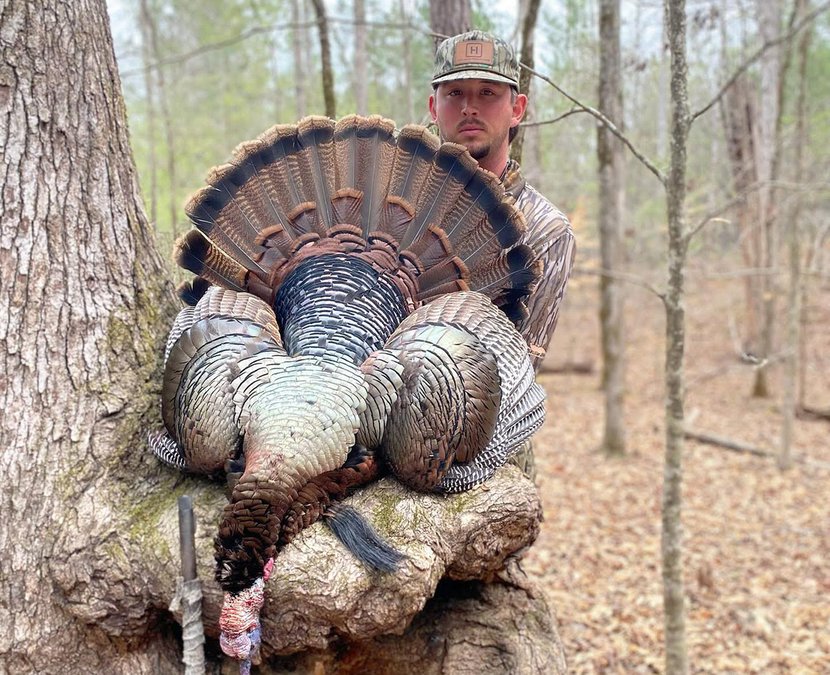
The statewide Georgia turkey hunting season opens on private land on Saturday, while hunting on public lands, including Wildlife Management Areas and National Forest land open April 4.
Turkey season ends statewide on May 15, according to a release from the Georgia Department of Natural Resources' Wildlife Resources Division.
"If we look back to 2024, the statewide turkey reproduction rate averaged 1.8 poults per hen, which was tied with 2021 for the highest production year in the past decade," said Emily Rushton, WRD wild turkey project coordinator. "This means that hunters should see a bump in the number of 2-year-old birds in the woods, and we would expect to have an increase in hunter success this season."
While all regions of the state were above average in 2024, the Piedmont region had the strongest production estimate of 1.9 poults per hen. Most of the state's turkey hunters are in the Piedmont and it is the region of the state where production has lagged over the past 20 years, so to see such a strong production year is very promising, Rushton said.
The daily and season bag limits are one gobbler per hunter per day, and a season total of two gobblers. In Wildlife Areas and on National Forest land, the bag limit is one gobbler per area.
All turkey hunters, including those under 16, landowners, honorary, lifetime and sportsman license holders, must obtain a free harvest record each season. Before moving a harvested turkey, hunters are required to immediately enter the date and county on the harvest record, and within 24 hours, must complete the reporting process through Georgia Game Check.
More information is available at GeorgiaWildlife.com/HarvestRecordGeorgiaGameCheck.
Find more hunting information, including the Hunting and Fishing Regulations Guide, at GeorgiaWildlife.com/hunting/hunter-resources
Turkey hunting safety
➤ Never wear red, white, blue or black clothing while turkey hunting. Red is the color most hunters look for when distinguishing a gobbler's head from a hen's blue-colored head, but at times it may appear white or blue. Male turkey feathers covering most of the body are black in appearance. Camouflage should be used to cover everything, including the hunter's face, hands and firearm.
➤ Select a calling position that provides at least a shoulder-width background, such as the base of a tree. Be sure that at least a 180-degree range is visible.
➤ Do not stalk a gobbling turkey. Due to their keen eyesight and hearing, the chances of getting close are slim to none.
➤ When using a turkey call, the sound and motion may attract the interest of other hunters. Do not move, wave or make turkey-like sounds to alert another hunter to your presence. Instead, identify yourself in a loud voice.
➤ Be careful when carrying a harvested turkey from the woods. Do not allow the wings to hang loosely or the head to be displayed in such a way that another hunter may think it is a live bird. If possible, cover the turkey in a blaze orange garment or other material.
➤ Although not required, consider wearing blaze orange or pink when moving between a vehicle and a hunting site. When moving between hunting sites, hunters should wear blaze orange or pink on their upper bodies to facilitate their identification by other hunters.