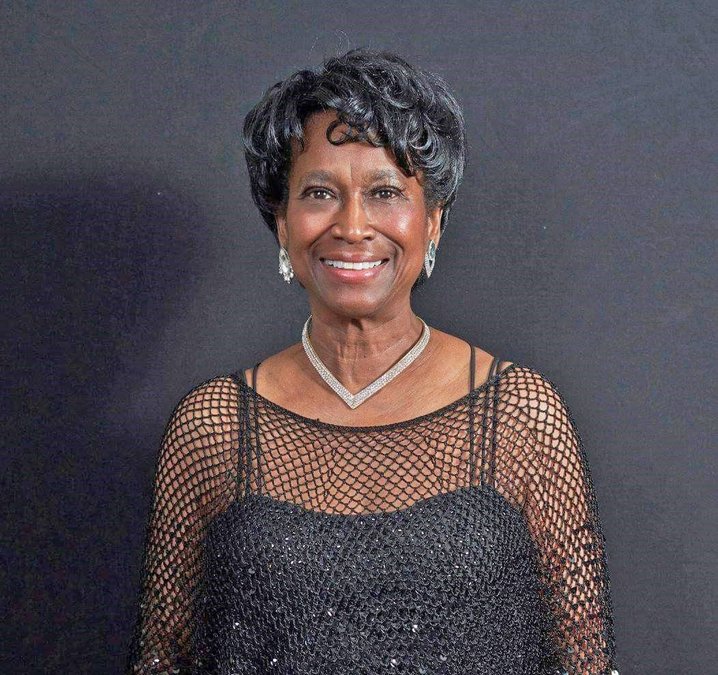
Statesboro’s local Dr. Martin Luther King Jr. Weekend began with the prayer breakfast Saturday where veteran English teacher Dr. Enola Mosley defined what King was “made of” and the “difference between a neighborhood and a community.”
“Community, this is power!” continued as the theme Monday with the parade and concluding celebration. The Bulloch County Branch of the NAACP organized Monday’s events. But the Bulloch County NAACP Youth Council and the Georgia Southern Chapter of the NAACP hosted Saturday’s breakfast, attended by 150 or more people in the Williams Center on the Georgia Southern campus.
“I am pleased to know that programs such as these are being carried on, that people are taking time out to hold events, marches, parades to commemorate the man that not only had a vision but had a dream, a man who wasn’t afraid to stand up, nor speak up, nor line up, because he did not have a mind to give up,” Mosely said.
NAACP Youth Council members Kaleb Murphy and Ava Mincey kept the program moving forward as the masters of ceremonies. Georgia Southern NAACP Vice President Tyler Frazier and Bulloch NAACP Youth Council Vice President Madison McCollar spoke to greet the crowd, and Youth Council member Bailey Bergans said grace for the meal.
Two other young leaders, Charlize Bonds and Thurgood Johnson, introduced Mosley as the featured speaker.
Johnson called Mosley, whose doctorate is in education, “a master teacher who has been a beacon of hope for many of her students for over 42 years.” For about 40 of those years she taught at Statesboro High School. Now, she teaches English-language arts through the Bulloch County Schools’ virtual program to ninth- and 11th-graders learning at home. She has also taught as an adjunct instructor at both Georgia Southern and Ogeechee Tech.
‘Made of’ prayer …
“I want to tell you about Martin Luther King, what he was made of,” Mosley said. “One thing that he was made of was prayer.”
When King and about 1,500 other nonviolent protestors arrived at Selma, Alabama, in March of 1965 to march to Montgomery, they were confronted by a line of Alabama Highway Patrol troopers, she said. Following the first violent attack against protest marchers on “Bloody Sunday,” the march was the second of three protesting for African American citizens to be able to exercise their right to vote.
“Dr. Martin Luther King paused, he looked at the situation, and he said, ‘Let us pray,” Mosley said. “Everybody bowed down, 1,500 voices going up to heaven, and Dr. King turned and walked away. There is power in prayer, y’all.”
A third march that month, with thousands more participants, reached the state capitol in Montgomery.
Got guidance
King “drew inspiration from others,” Mosley said, noting that his nonviolent approach came from studying and talking with Mohandas Gandhi – whom King visited in India in 1959 – and that he was also influenced by a visit to Africa where there were successful movements against colonial rule.
“Great leaders know when to speak and when to listen, when to guide and when to get guidance, …” she said.
“Dr. King walked by faith, not by sight,” Mosley said. “He believed that he could tackle racial injustice and win. He believed that he could bring down racial discrimination, and he did.”
She said it was because of King’s speeches and protests and marches that “on August 6, 1965, President Lyndon B. Johnson signed the Voting Rights Act: no more poll taxes, no more literacy tests.”
In Mississippi, the number of eligible Black citizens registered to vote increased from 6% in 1964 to 59% in 1969, she noted.
“Now, community, this is power,” Mosley said.
“Let’s build up on the foundation that Dr. King laid out,” she said. “Communities gain power through unity, cultural awareness, action, goal setting, interacting, bonding, serving, praying and believing that all things work to the good to them that love God and are called for his purpose.
“There is a difference between a neighborhood and a community,” she added. “A neighborhood just exists, but a community lives.”
A youth ensemble based in Sylvania, the Screven County Gamecock Gospel Choir, sang a couple of gospel songs, receiving standing ovations. One young man from the group, Jaylen Cail, returned to deliver a soulful rendition of “A Change is Gonna Come” just before Mosley spoke.
Georgia Southern NAACP President Kamaria Mustafa and Bulloch NAACP Youth Council President Landon Young gave the closing remarks. Faith leaders, including Imam Farid Ansari, Father Jason Adams and the Rev. Wayne Williams led prayers, and Cathy Skidmore-Hess gave a reading.
Parade returns
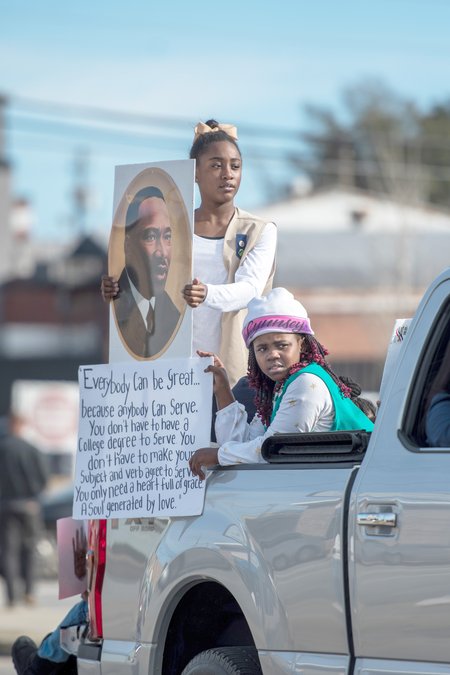
Cars and trucks, a few floats and some marchers with signs carried the “Community, this is power,” message in Monday afternoon’s parade. With fewer units than many past parades, it passed each vantage point in about 20 minutes.
But this was the first MLK Day parade here since 2020. Because of pandemic conditions, the parade was cancelled along with both indoors events in 2021 and 2022, when drive-in services were held instead.
After the parade, a crowd mostly filled the sanctuary at Elm Street Church of God for the Community Service and Celebration.
Culbreth’s message
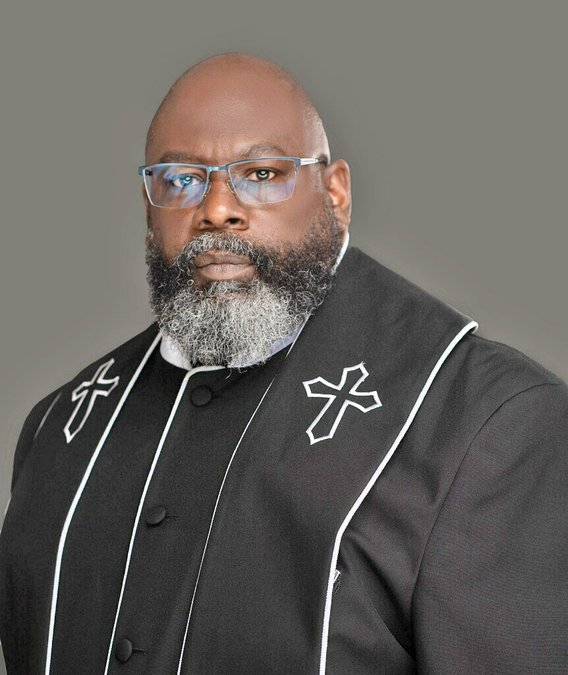
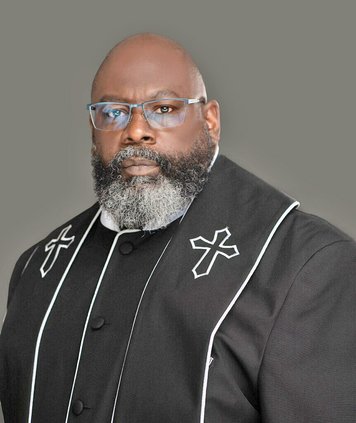
The Rev. Christopher Culbreth I, senior pastor of the Original First African Baptist Church, Statesboro, gave the keynote message. He too described a sense of community founded in Christian faith as central to King’s message and work.
“As we work to build and shape our communities, we must build them with the thought of the first function of community, and that is supports,” Culbreth said. “It’s not enough for community members to know each other. They also must trust each other. Without trust, the awareness of opportunities for collaboration and mutual support will never be acted upon.”
“God works through people in order to strengthen each other,” so individuals must build relationships in order to have the help they need in times of trouble, he said.
“Dr. King said this, ‘I have decided to stick with love. Hate is too great of a burden,’” Culbreth recalled.
Pastor Brock Taylor and the United Voices of Christ punctuated the service with gospel songs that drew crowd participation, such as a hand-clapping, foot-tapping arrangement based on “The Old Rugged Cross.”