At culinary school in my Garde Manger (literally meaning “keep to eat”) class, we’ve been learning about brining, curing and smoking meats, those early methods of food preservation before refrigeration. These concepts give way to Thanksgiving nicely, as brining and smoking turkey are two popular ways to enjoy the big bird.
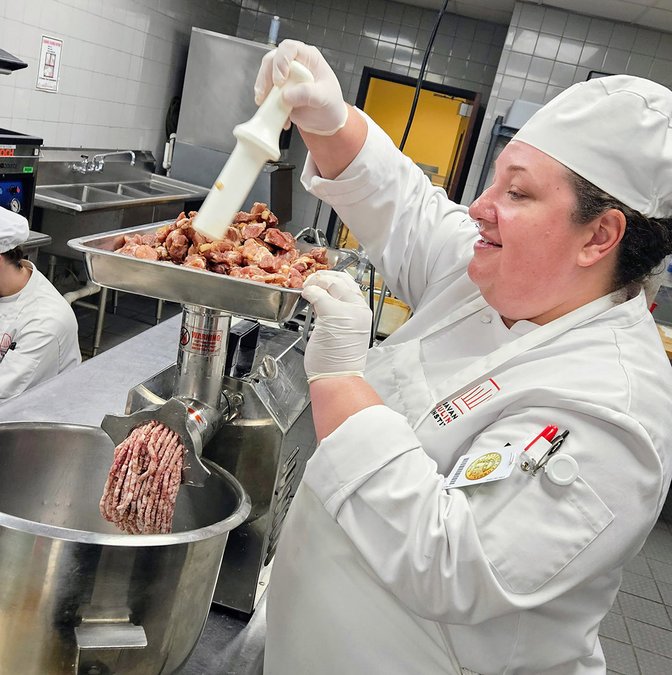
So far this semester, we’ve made all kinds of sausage from scratch including chorizo, andouille, kielbasa, and chicken and pork. My group made andouille, a smoked sausage of pork and other seasonings, often found in Lowcountry boils and Cajun dishes.
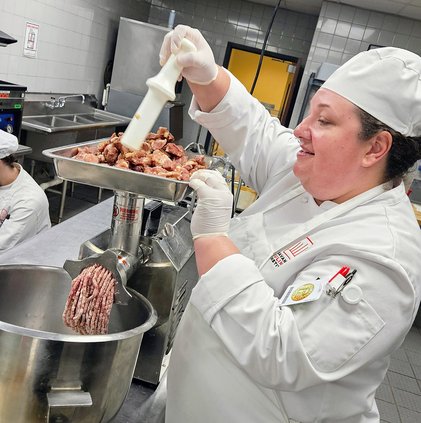
We broke down five pounds of pork butt, which comes from the shoulder of the pig, removing the fat cap and dicing into medium 2-inch cubes. We then ran the meat through the grinder and added spices and seasonings such as dried thyme and allspice. The next technique was whipping the meat mixture in a large blender to ensure a sticky consistency for pushing the meat through the sausage stuffer and into the casings. It was quite a process, and I have a new appreciation for sausage makers. Once the casings were filled, we allowed the outer skin to develop, and later smoked the meat in an electric smoker.
Here’s a tip: If you enjoy smoked sausage and want to make it yourself, try this technique. Once the sausage is smoked, put it in an ice bath for 30 minutes to an hour; this locks in the fat and ensures a juicy, flavorful sausage link. When you’re ready to eat it, heat it up in the oven until warmed through.
We also tried fresh Atlantic salmon two ways: 1) smoked and with 2) gravlax, a mix of salt, sugar and fresh dill, for cold curing. I tried bagels and lox with cream cheese for breakfast in my 7 a.m. class. The “lox” refers to smoked salmon, sliced thinly. It was full of smoke flavor, bright pink and good. I’m partial to breakfast food on the sweeter side, such as biscuits and sausage, or pancakes and bacon, but it reminded me of Jay, my Jewish friend in New York, and I sent him a text to say I was channeling my inner Northerner.
Brining means to soak meat in a solution of water and salt, often flavored with other components. The solution helps tenderize lean meats and ensures a moist and juicy result. This week, I made a brine for 20 pounds of corned beef and let me tell you, I’ve never liked corned beef until I learned to brine it.
Corned beef is made from brisket, the upper breast and chest of the cow, which is often tough and full of muscle cut that must be cooked at length before it becomes tender. The brine had lots of salt, pickling spice, and plenty of garlic for flavor. When I removed the lid from the pickling spice, I inhaled a big whiff of it and learned quickly not to sniff it. It lit me up and I sneezed for a good 10 minutes afterwards.
The meat marinated for a week in the brine and after it was rinsed well, was then simmered on the stovetop in water and more pickling spices until tender. The corned beef finished cooling while covered in the same brine liquid to soak up all those flavorful juices, resulting in a super tender and Some Kinda Good slice of meat. I couldn’t believe how delicious it was. We also brined a turkey in class, and if you’ve never experienced a brined turkey, this technique makes all the difference.
Remember, you only want to brine a fresh turkey, not frozen, because frozen turkeys are usually injected with a sodium solution. You’ll need to rinse the turkey well after brining to remove some of the saltiness. This recipe from The Pioneer Woman is a great guide, and uses apple juice, oranges, and rosemary to amp up the flavors. Make it your own and try something new this Thanksgiving – you’ll be glad to have this technique in your wheelhouse.
Rebekah Faulk Lingenfelser is a private chef and the author of the best-selling memoir “Some Kinda Good.” Featured in Forbes, on Food Network and ABC, she writes about Southern, coastal cuisine, locally sourced and in season. Connect with her on social media by liking Some Kinda Good on Facebook, or follow @SKGFoodBlog on Instagram and Twitter.
Turkey Brine for a 20-Pound Turkey
Recipe courtesy of Ree Drummond, ThePioneerWoman.com
Yields: 18 Servings
• 3 c. apple juice or apple cider
• 2 gallons cold water
• 4 tbsp. fresh rosemary leaves
• 5 cloves garlic, minced
• 1 1/2 c. kosher salt
• 2 c. brown sugar
• 3 tbsp. peppercorns
• 5 whole bay leaves
• Peel of three large oranges
1. Combine all of the ingredients in a large pot and bring to a boil, stirring until the salt and sugar dissolve. Turn off the heat, cover, and allow the brine to cool completely.
2. Place the uncooked turkey in a large brining bag or pot, pour in the brine solution to cover the turkey, and refrigerate for 16 to 24 hours.
3. Before roasting, remove the turkey from the brine (discard the brine) and submerge the turkey in a pot or sink filled with fresh, cold water for 15 minutes. This removes excess salt from the outside.
4. Remove the turkey from the water, pat very dry, and cook according to your normal roasting method.