ATLANTA — Some lawmakers have been working under Georgia's Gold Dome long enough to remember when the place reeked of cigarettes.
Although no one openly smokes there today, lawmakers seem to have an abiding aversion to legislation to curb tobacco use, specifically a tax increase.
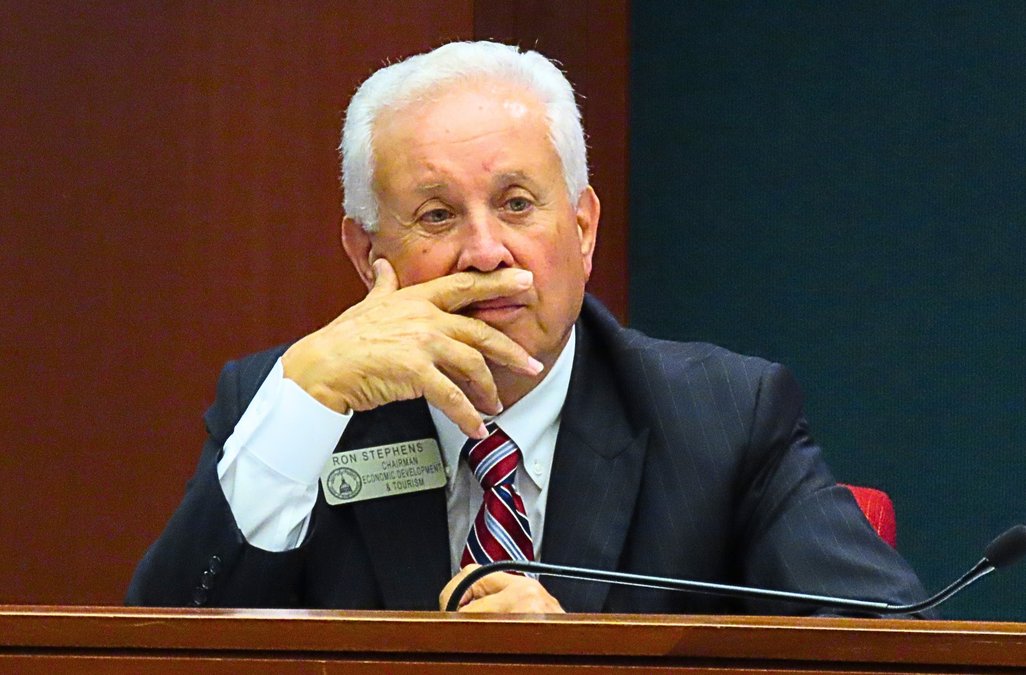
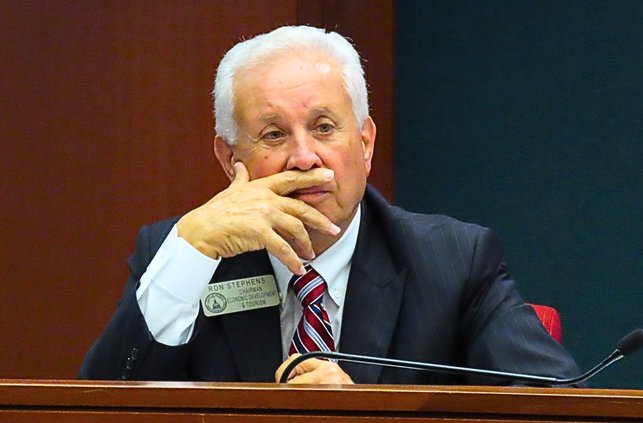
Rep. Ron Stephens, R-Savannah, took his oath of office in 1997. The white-haired pharmacist has personal reasons to abhor cigarettes, and he has been introducing legislation against tobacco since his hair was black.
But some mysterious force has always undermined his efforts.
He and a fellow Republican who chairs the House Public and Community Health committee have been tilting at a tobacco windmill for most of their legislative careers, and they have little to show for it.
After numerous hours invested last spring and summer in a study committee that underscored the dangers of tobacco use, they feel defeated.
"I don't know why anything related to tobacco has trouble getting through," said Rep. Sharon Cooper, R-Marietta, the public health committee chairwoman who also led the smoking study committee.
It is not as if the risks of smoking are a secret.
The report written by their five-member study committee makes that plain. It starts off by noting that the resolution passed by the full House to establish the committee had recognized that smoking "harms every organ" in the body.
The report then summarized facts gathered during three hearings: cigarette smoke can produce more than 7,000 chemicals, including ammonia, formaldehyde, lead, mercury and uranium-235. It can cause, among other things, cancer, heart and lung disease, type 2 diabetes, eye diseases, and rheumatoid arthritis.
Both Stephens and Cooper have personal motivations, as well.
Stephens' sister-in-law died last summer, due, he said, to the effects of smoking. For years, she had been confined at home, tethered to an oxygen bottle. He said his father smoked as a teen and got lung cancer later in life, which cost $5,000 a month to treat.
Cooper's half-sister died in her 30s, and the lawmaker always suspected it was due to secondhand smoke exposure from her chain-smoking stepmother.
As a licensed nurse, Cooper said she had witnessed the damage. "I've seen lungs blackened over years of smoking," she said.
Both also spoke of the resulting financial burden for taxpayers.
"You're going to get sick, usually when you're older and on Medicare or Medicaid," Stephens said, "so then the public bears the cost."
Yet nothing concrete has come of the hours they spent on their study committee. The discussion during the hearings suggested a clear direction: legislation to raise the tax on cigarettes.
Georgia's cigarette excise tax has not changed since 2003. At 37 cents a pack, it is the second lowest in the nation, behind only Missouri. By comparison, New York charges $5.35 per pack, and Indianna increased its tax by $2 a pack in 2024, lifting it to $2.99.
Stephens was not surprised to learn that the American Lung Association had yet again given Georgia a failing grade. This week, the organization released its 24th annual "State of Tobacco Control" report.
Georgia got an "F" in all five categories related to curbing tobacco use. The association recommended that lawmakers increase the state's cigarette tax by at least $1.50 per pack. It said studies show that every 10% increase in the price of cigarettes reduces consumption by about 4% among adults and about 7% among youth.
The association said tobacco use is the leading cause of preventable death and disease nationally and claims 11,690 Georgia lives each year.
Rep. Michelle Au, D-Johns Creek, was not surprised by the failing grades.
"We've been five Fs for a long time," said Au, a medical doctor and one of two Democrats on Cooper's study committee.
Dr. Au observed something unusual for a study committee report. "It is denuded of policy recommendations," she said. "We were told in the process that we could not include policy recommendations."
She said she asked House Speaker Jon Burns, R-Newington, who had empaneled the study committee, why it was given such instructions.
"And he said (it was) because there were such strong feelings on either side of the issue that he felt that the best approach would be to just present the facts," Au said. "Of course, I did notice that basically every other study committee does present policy recommendations."
Indeed, one of the three study committee meetings focused on policy recommendations, she said. "So, it is a conspicuous omission."
A spokeswoman for Burns' office said he had instructed the committee to present "the entirety" of the data and testimony gathered by the committee "so that the General Assembly's future legislative initiatives could be informed and guided by the facts."
Republicans control both the state Senate and House, so only bills promoted by Republicans tend to become law.
But those two GOP representatives who have been tilting at tobacco for years said they were moving on to other issues this year.
Stephens, who chairs the House Economic Development and Tourism Committee, is instead focusing on bread-and-butter issues for the bustling region he represents. His area is booming due to increased shipping traffic at its ports and the new Hyundai Metaplant, not to mention the visitors flocking to the coast and Georgia's charming and oldest city, Savannah.
He said he would put his limited time this year into promoting tourism and managing growth "rather than introduce another bill that that won't go anywhere."
And Cooper is concerned about recreational use of the drug Kratom and the anesthetic ketamine.
The longtime lawmaker, sworn in the same year as Stephens, has watched a succession of lawmakers parade through the Capitol, including several House speakers. She remembers when smoke wafted through the air and left an awful smell on the faded blue curtains. She also has not forgotten the spittoons and carpet stains.
All that may have faded away, but the resistance to taxing tobacco has endured, Cooper said.
"There just doesn't seem to be an appetite from members of the legislature for that to move," she said. "It is the mystery of the century. I would like to know before I die, if we ever find out, what's causing the resistance to it. They slip through taxes on other stuff."