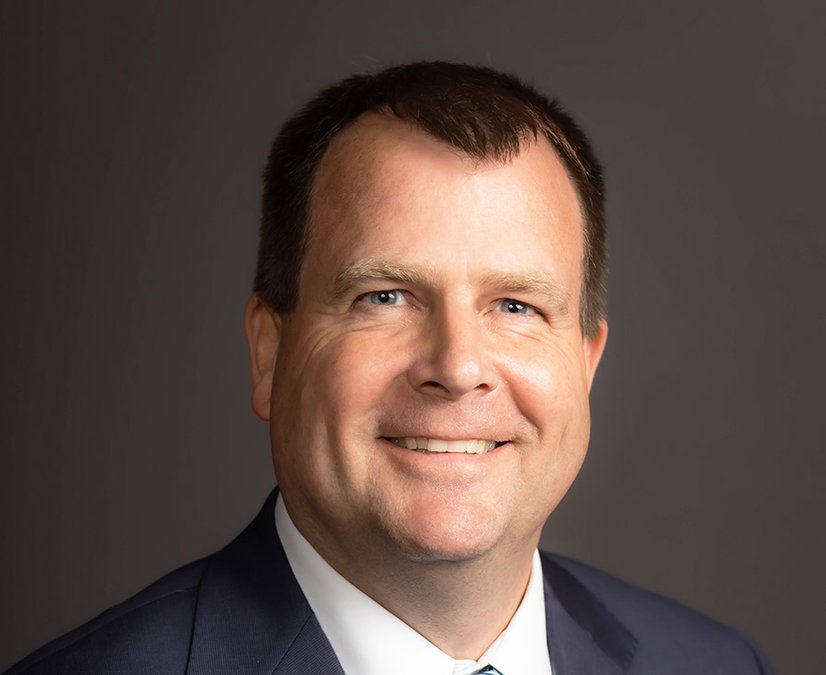
While the Georgia Senate has a special committee studying elimination of the state income tax, two Statesboro-area representatives expect to see more of a focus on property tax relief in the state House.
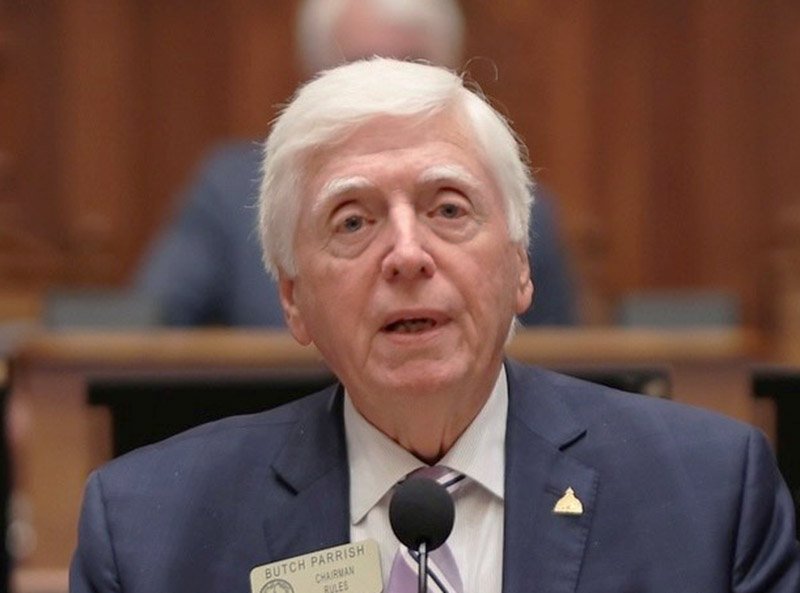
Property taxes are generally subject to local control, but state lawmakers are looking for more ways to provide alternatives and particularly to help with local costs of school system expenses, Rep. Lehman Franklin, R-Statesboro, District 160, and Rep. Butch Parrish, R-Swainsboro, District 158, said in separate phone interviews the last day of 2025.
The Georgia General Assembly convenes – or technically reconvenes for the second half of a two-year session – on Monday, Jan. 12, 2026. All members are elected to two-year terms, so this is an election year, and both Parrish, now the second longest-serving Georgia House member as he heads into his 42nd year there, and Franklin, first elected in 2022 and now in his fourth year, plan to seek re-election.
“Well, I don’t know what the governor’s thinking yet, of course, but you know there’s been a lot of talk and a lot of push about lowering the income tax rate, and lowering taxes in general, which it’s going to be interesting to see what that looks like,” Franklin said.
Lt. Gov. Burt Jones, as president of the Senate, created the Special Committee on Eliminating Georgia’s Income Tax and is now running for governor. But it’s a Senate committee, and all of the members are senators, including two who are candidates in the Republican primary for lieutenant governor. There is no similar special committee in the House, and both Franklin and Parrish indicated they will take a wait-and-see attitude to any proposal to eliminate the income tax, expecting further moves in a phased reduction instead.
“If you’ll remember back, Governor Kemp for the last three or four years now has wanted to lower the state income tax,” Parrish said. “We were at 6 percent and now we’re down to 5.19, and eventually we’ll go to 4.9, and that will probably be next year, and this was passed a couple of years ago.”
Parrish, chairman of the House Rules Committee and a member of the Appropriations Committee, among others, also noted that all legislation having to do with revenue and taxation actually has to start on the House side.
Reasons for caution
The legislation for the already planned, phased-in reductions of the state income tax carries “some built-in safeguards to make sure that the revenue is still coming in as projected, that there’s not some catastrophe or downturn,” he observed, suggesting reasons for caution in the discussion about fully eliminating the tax.
“I think it’s very important that we as a state remember Georgia needs to keep its Triple-A bond rating,” Parrish said. “It’s one of several states that has a Triple-A bond rating, and of course that’s important as the state builds roads or bridges or schools or whatever, we pay a low interest rate, so that saves us money.
“And we want to make sure we that we’ve got our reserve fund built up, the rainy-day fund in case something happens, like COVID again or something like that,” he said.
The income tax is still a major source of the state government’s funding, pulling in about $16 billion last year. So, as these lawmakers from neighboring districts that including portions of Bulloch County noted, either that funding would have to come from other sources or there would need to be very large cuts in the budget.
Franklin said he wants “to see what that bill looks like and what they’re really proposing,” before he would jump on board to support it.
“I mean, you’ve got to fill the money in the budget, so if you remove it from one box, you’ve got to pick it up from another, and I don’t know if they’re looking to increase the sales tax in order to meet that demand or if they’re going to try to do it by eliminating some of the tax credits,” he said.
He added that his speculation would be that a proposal would include “a little bit of both,” and that while he thinks reducing some tax credits might be a good option, he’s “not such a big advocate of raising the sales tax.”
Property tax relief
“I’m a big proponent of lowering the property taxes, or helping to do that, which we did last year, but I think we can do more,” Franklin said.
Again, these were separate interviews, but both representatives touched on the same theme of a greater emphasis on lower property taxes. Both mentioned a change in state law, which they supported and which took effect last year, that allows counties and cities, with voter consent, to trade a penny on the dollar in added sales tax for reductions in property tax rates.
“I think probably in the House side … what you’re going to hear a lot more about too may be looking at what we can do about trying to offer property owners some relief, property tax relief,” Parrish said. “There are several things going on, and I know Bulloch County just passed the FLOST, and so did about 30 other counties.”
Approved by a large majority of participating Bulloch County voters in a referendum Nov. 4 the new 1% Floating Local Option Sales Tax began to be collected Jan. 1, making the total sales taxes here on non-exempt items 9%. The accumulated FLOST revenue must be used for a proportional rollback of property taxes by the county and the municipalities of Statesboro, Brooklet, Portal and Register, although property owners won’t see the relief until 2027.
“So that’s something that’s going to be good. … But I think there will be a lot more conversation about property tax relief, and of course I think we’ll still have some conversation about income tax,” Parrish said.
‘Affordability’ concern
Franklin talked about efforts to further reduce property taxes as part of a wider concern with affordability. He said Georgia legislators will also be looking for ways to help first-time homebuyers with housing affordability and seniors with property taxes, but he doesn’t know what form these efforts may take.
“Affordability has become all the talk in recent months, and rightly so because people are really hurting,” he said. “Everybody’s paying a lot more, and they’re paying more taxes, they’re paying more everywhere. So I know that we’re going to be addressing affordability.”
School employee health insurance
But one issue he’s specifically interested in, with application to Bulloch County, is the cost of the health insurance schools systems are able to provided for “classified” or “non-certified” employees, such as classroom paraprofessionals, bus drivers, custodians and food service workers. Unlike educators with teaching certificates for whom the state pays a share, these support personnel participate in the State Health Benefit Plan with local school districts paying 100% of costs.
In 2025, when the Bulloch County Board of Education approved a nearly 3-mill increase in the property tax rate for school maintenance and operations, the rising cost of health insurance was cited as a major contributing factor. Franklin provided the reporter a summary sheet stating that the current cost of the insurance is about $22,600 per enrolled classified employee, amounting to approximately $20 million annual cost, equivalent to about 5 mills tax, for the Bulloch County Schools alone.
“If we can find a way to lower that, I think that will translate into being able to lower our education tax that we have here,” said Franklin. “So I think that’s a real possibility, and I think now there’s people in the General Assembly that have an appetite to really tackle that.”
He is vice chair of the House’s State Retirement Committee and of an Appropriations subcommittee. The summary sheet he provided suggested that changes might begin with a Local System Healthcare Alternative Pilot Program. Currently, covered employees are required to be enrolled in the State Health Benefit Plan at retirement, and among other things, the pilot programs would extend retiree eligibility to “approved health plans” instead of just the SHBP.
Local school system officials and retirees have been talking to and hearing from these lawmakers.
“Health care insurance is expensive for everybody, and the school systems are having to foot the bill for some of their employees, the non-certificated employees, and I think we’re going to look at what we might can do to help with that some,” Parrish said.