East Georgia Regional Medical Center has invested more than $17.5 million in advanced technology, equipment and facility enhancements across the hospital as part of a “long-term strategy to support the growing healthcare needs of Bulloch County and surrounding communities.”
According to a release from the hospital, the investment in capital projects since September 2025 are designed to “enhance patient care, improve access to services close to home and support physicians and clinical teams in delivering high quality care.”
“As our communities continue to grow, we are committed to ensuring that patients throughout Southeast Georgia have access to advanced healthcare services in their own region,” said Stephen Pennington, chief executive officer of East Georgia Regional Medical Center. “These investments strengthen our ability to care for patients today while positioning our hospital to meet the healthcare needs of our communities for years to come.”
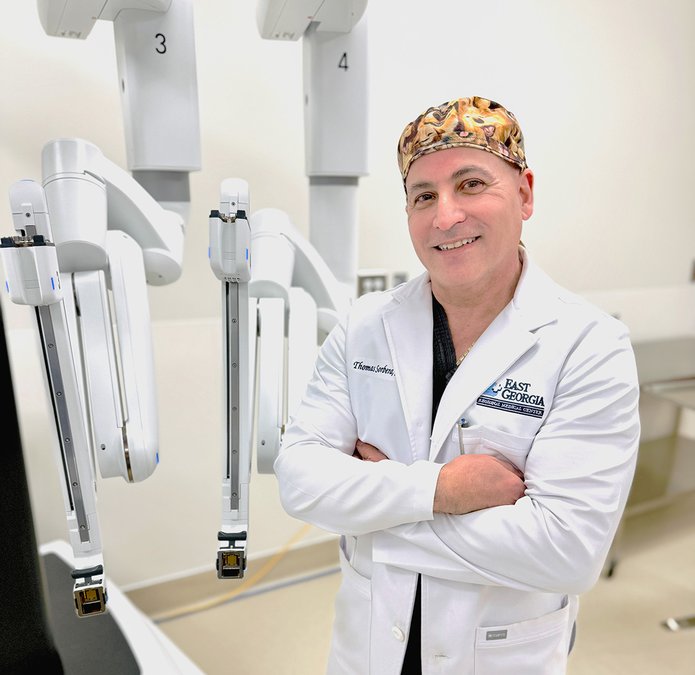
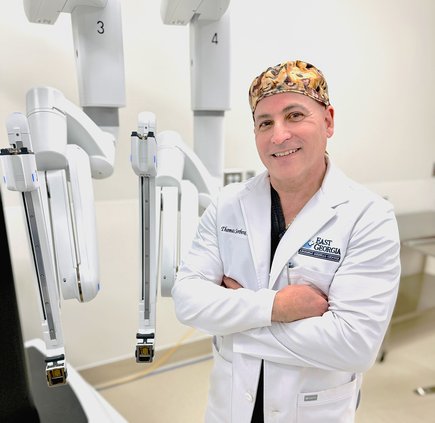
Among the recent investments, according to the release, is the expansion of surgical services through the addition of two operating rooms and new robotic surgery technology. The added surgical capabilities support a range of specialties, including cardiology, radiology, pulmonology and urology.
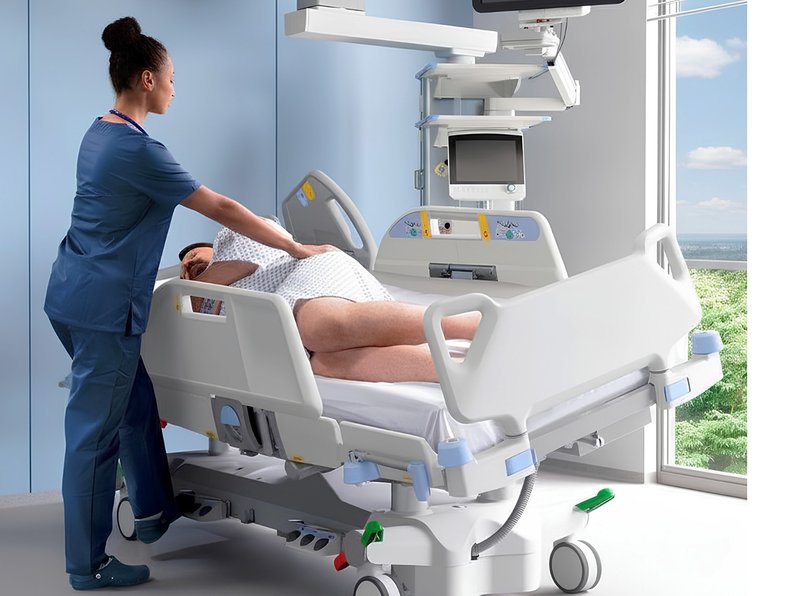
The hospital also has invested in new patient beds throughout its medical surgical, telemetry, pediatric and critical care units. The critical care beds include ones that are technology designed to support patient safety, recovery and nursing workflow efficiency.
Additional investments in women’s and OB/GYN services include new infant bassinets in the Women’s Pavilion designed for safety, mobility and caregiver convenience. The bassinets offer families full visibility of newborns from all angles at all times, while safety and noise-reduction features support smooth, quiet transitions between rooms.
Diagnostic imaging capabilities were enhanced with the addition of a new 128-slice computed tomography, or CT, suite. The advanced technology provides highly detailed diagnostic imaging while supporting faster scan times for patients.
“Our new CT system allows physicians to obtain detailed imaging quickly while reducing radiation exposure for patients,” said Faith Gwinnett, director of imaging services at East Georgia Regional Medical Center. “The technology supports cardiac imaging, stroke and trauma diagnosis, and a wide range of other clinical applications. These capabilities help our care teams make informed decisions more efficiently while enhancing the patient experience.”
The hospital strengthened patient care, according to the release, with new patient monitoring technology that enhances the ability to monitor admitted patients throughout their stay. The system provides real time monitoring of respiratory and hemodynamic parameters and can help clinicians identify changes in patient conditions earlier.
"Every investment we make is directly aimed at elevating the care we deliver to our community,” said Marie Burdett, chief nursing officer of East Georgia Regional Medical Center. “By expanding our surgical suites and integrating advanced robotic, diagnostic, and imaging technologies, we equip our medical teams with the tools they need for faster, more precise interventions. Equally important are the enhancements made to our patient rooms, from specialized critical care beds to new infant bassinets.
“These upgrades do more than just improve patient comfort and safety. They optimize nursing workflows, which allows our dedicated staff to spend more meaningful, direct time at the bedside focusing on patient recovery and the overall care experience.”