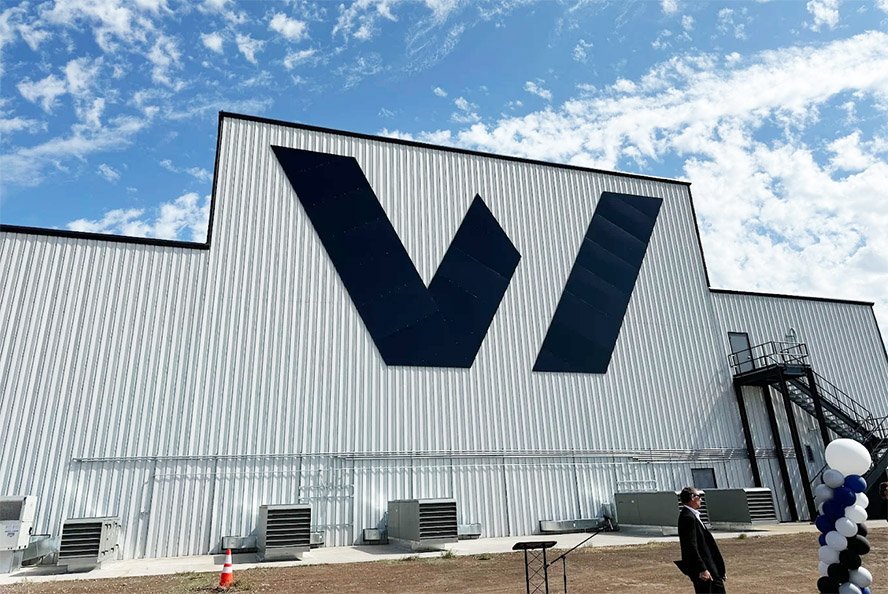
RICHMOND HILL — Coastal Georgia may become home to the United States' only major nickel refinery.
Oklahoma-based company Westwin Elements is seeking a site in Richmond Hill to build a facility "several hundred thousand" square feet in size. The proposal has sparked debate over environmental concerns versus potential job creation and investment.
Marissa Espinosa, Westwin's vice president of strategic operations, said in an email the facility would deliver "800 jobs over seven years," with annual salaries reaching "$90,000 or more" for positions not requiring a college degree.

Westwin has begun outreach to local officials and residents. At the Bryan County Commission meeting Jan. 13, Espinosa said the company had gathered 3,000 local petition signatures supporting the project. Some signatures were collected in store parking lots, where residents received flyers and brief explanations.
The petition requests the state's allocation of $100 million in private activity bond volume cap, which is a financing mechanism funded by private investors rather than state tax dollars.
According to Espinosa, the refinery would serve a critical national need. Westwin plans to produce Class 1 nickel, a mineral tied directly to national defense and energy security.
"Right now, the U.S. relies solely on foreign sources of this type of this high purity nickel," she said. "America is at risk of having to rely on foreign adversaries such as China."
Espinosa said there are no sole-purpose U.S. refineries producing this grade of nickel. The Bryan County facility would start at 18,000 tons annually and scale to 68,000 tons, while total U.S. nickel consumption in 2023 was about 200,000 tons.
She said Bryan County's proximity to the Port of Savannah, available acreage and utilities, and "shared community values" in Richmond Hill are reasons the area is attractive to Westwin.
Support and disapproval
The January Bryan County Commission meeting saw some county residents speaking in favor of the refinery.
Floyd Harbin, a U.S. Air Force veteran, emphasized national security.
"Near and dear to me is where we are strategically as a nation with our raw materials … being able to provide materials for the military," Harbin said. "I want to encourage you guys to give them a chance."
Trey Bragg, a Richmond Hill resident, said he sees a future for his son and other youth with Westwin.
"I think there's a future there with the community," Bragg said. "There are untold opportunities for internships and co-op partnerships, and I believe that Westwin can help with that."
Richmond Hill Post 3 Councilman Van Hunter said Westwin would invest "millions of dollars" into the community and urged commissioners to "take a second look" at the proposal.
But public opposition has grown since the January meeting, citing environmental concerns and distrust of Westwin, County Chairman Carter Infinger criticized Westwin's approach at the January Commission meeting.
"They just showed up for public comment … gave us a petition with signatures … most of them were not from Bryan County … but we have not done anything, taken any action," he said. "If you want to be a partner, you get on our agenda and let us know what you're doing."
Legal issues
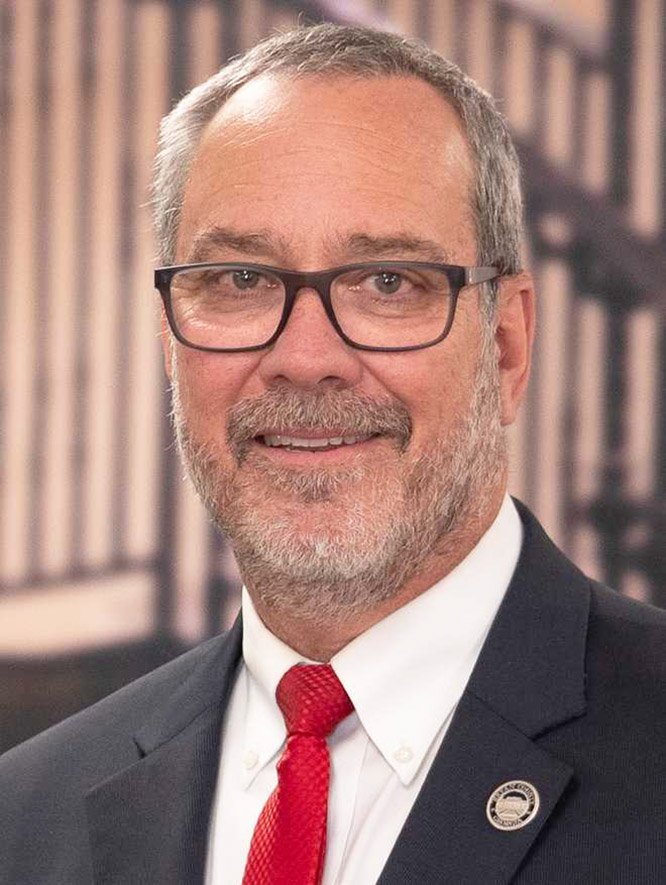
Infinger also cited unresolved legal issues involving Westwin.
Those concerns extend beyond Bryan County. Westwin is currently facing a civil lawsuit filed by Woods Capital LLC and Woods Equity Partners, alleging multiple contract breaches.
In southwest Oklahoma, a proposed Westwin nickel refinery stalled in December after the Lawton Economic Development Authority voted to acknowledge the company's decision not to move forward with a large-scale commercial refinery there. Officials cited logistical challenges in feasibility studies and declining nickel prices as contributing factors.
Westwin also faced criticism from Indigenous tribes in Oklahoma who were concerned about harmful environmental impacts, including dangerous byproducts from the nickel refining process. The U.S. EPA classifies nickel refinery dust as a Group A human carcinogen.
"I'm really not for it, and I don't think it fits in our community," Infinger said. "I think it's too dangerous – the environmental factors. It could or could not happen, but why risk it?"
Espinosa said Westwin plans to use the nickel carbonyl process to refine nickel, which she said "has zero solid or liquid waste" and "does not produce any odor at all." Espinosa said this method has never been done in the U.S.
For some residents, Westwin's methods for gathering petition signatures created an air of distrust. Christopher Smith, a Richmond Hill native and organizer behind Keep Bryan Beautiful, an environmental advocacy organization, said he was shocked when he first learned about the project and the claim of 3,000 supportive signatures in its favor.
Smith said his opposition is rooted in environmental and public health concerns. He expressed fears about air emissions near schools, potential groundwater contamination and industrial safety.
"I just really care about our community, and I love Richmond Hill," Smith said. "I want us to grow, but I want us to grow in a way that's got the people involved…in mind, especially when it comes to our safety and environmental concerns.
Smith said the region has seen a lot of change and growth as far as industrial development goes in the last decade.
"I feel like Hyundai has created this image and set this trend in motion that we're welcoming all these plants and everyone here to do business," he said. "We want people to come here who are going to respect our air, our water, and our quality of life."
Reactions from officials
Following the January meeting, the Bryan County Government and Board of Commissioners released a statement saying "Bryan County has not expended any resources, nor hired any consultants or other parties, to evaluate the potential nickel refinery's process." The statement added that false information about an environmental assessment had been included in passed-out flyers.
In response, Espinosa contacted the Bryan County News on Jan. 22 to dispute the county's characterization of the flyers. Espinosa wrote that the flyers did not state or imply that Bryan County Government or the Board of Commissioners commissioned an environmental assessment.
"What Westwin has stated is that the Development Authority of Bryan County commissioned a third-party environmental review," Espinosa wrote.
Espinosa told the Bryan County News that this environmental assessment had "positive ratings on all fronts."
Espinosa also wrote that Infinger declined multiple requests from Westwin to meet and answer questions. She said the chairman attended an environmental briefing provided by Westwin in 2025, but did not attend a second briefing.
In a separate statement, the City of Richmond Hill wrote that it's currently monitoring Westwin's interest in "a private property acquisition" within the city's industrial district.
"While we recognize this project's importance to national security – specifically in reshoring mineral refining for defense and aerospace – our primary focus remains local," the city's statement read. "In the City of Richmond Hill, property rights and public safety must go hand-in-hand. Like many of our constituents, we have watched our community grow and change, and we take the weight of these decisions seriously. For the City's elected officials and staff, our first priority is protecting the health of our families and the ecological integrity of our coastal home, from the Ogeechee River to our vital salt marshes."
Espinosa said Westwin plans to host a town hall to address community questions and concerns. The date for this town hall is still being determined.
Lucille Lannigan is a regional growth and development reporter for Morris Multimedia.