By allowing ads to appear on this site, you support the local businesses who, in turn, support great journalism.
Dr. Roger Branch: Aging issues a question of worth
Branch WEB
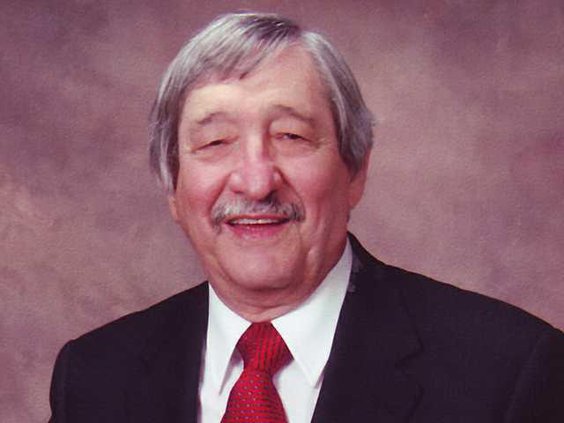
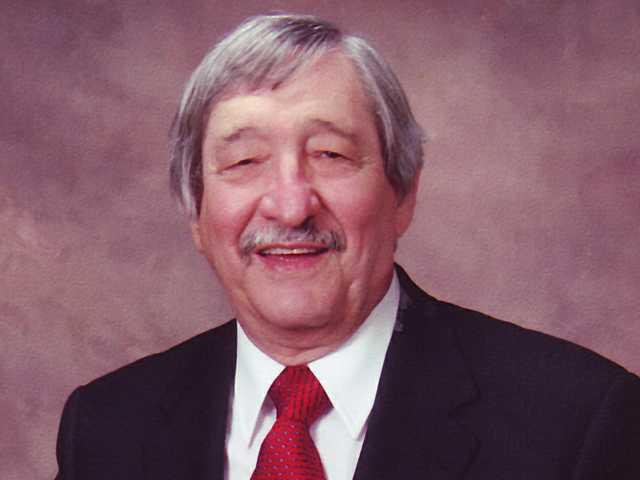
Dr. Roger Branch Sr.

Dr. Roger Branch Sr. is a professor emeritus of sociology and long-time chair of the Department of Sociology and Anthropology at Georgia Southern University, where he served from 1970-2000.

He also is a retired minister, last serving as pastor of Ailey Baptist Church near Vidalia. He is the last surviving founder of the Catface Country Turpentine Festival in Portal. A former journalist, he is author of four books, including one on aging, and many articles and research papers. He is joining the group of regular contributors to the Herald to present columns on issues that eventually we all will face as we grow older.

Dr. Branch is a graduate of the University of Georgia, where he received an A.B. in journalism and an M.A. and Ph.D. in sociology; and of the Southeastern Baptist Seminary, where he received a bachelor of divinity and a master of theology.

A telling measure of any community, any country, is how well it treats its children and its elders. In this country, the treatment of children ranges from over-indulgence to gross abuse. As to the elders, no one seems to know what to do with these people in a world that is constantly changing. This is scary because their number will continue to grow until the baby boomers have all retired and begun to die out. So, aging issues are important.

How did old folks get to be a problem? The answer is change. In a nation of farmers, elders were owners, decision makers, living libraries of vital information and key members of functioning economic units, namely their families.

Then the economy changed. Industrialization and even more modern occupations moved people from farms to cities, slashed the size of families and caused people to move from place to place regularly. New ways of making a living made the old farmers' wisdom obsolete, therefore worthless. With the children away somewhere and about to move even farther away, who would care for their aging parents? Without the glue of connected families, communities lost their capacity to serve. Elders increasingly lost their security, authority and the respect traditionally given to them.

Where do the elders fit in this new world? Surprisingly, as long as they are able to be up and about, they fit well in a lot of places. They are the backbone of many local institutions: churches, civic groups and so forth. They are the volunteers who vitalize the community. Check out the poll workers at the next election. You will see lots of gray hair, bent bodies, some canes and walkers, but the process flows smoothly.

So, what is the problem? In fact, the elders are valuable but under-used. It is true that the mind is a terrible thing to waste, especially in a world that needs all the people power available. However, at the sight of gray hair, a cane or a limp, many think the elder's mind is also impaired; learning has ended. Oh, it is all right for them to do the volunteer stuff that no one else wants to do anyway, but not important stuff where sharp, problem-solving minds are needed.

What a waste! None of this is necessarily true. Lots of younger people lack sharp minds and problem-solving skills. It all depends upon the person. Grandma Moses began painting at age 80. When I first became pastor of Ailey Baptist Church in 1960, the most familiar person in the town of Ailey and the church was Dr. J.W. Palmer, who had just been named Rural Practitioner of the Year in the state of Georgia by the Atlanta Journal-Constitution, which put him on the cover of its weekly magazine. He treated patients every day, including part of the day on Sunday. This doctor, deacon and Sunday school superintendent was in his early 80s when I first met him, and he and was still practicing medicine when I last saw him three years later.

Of course, Dr. Palmer could do as he liked; it was his medical practice. But, in most work settings now, others make the decisions, and elders often do not get a chance to contribute because they are deemed to be disabled.

Here's a novel idea: Hire older people. Even if they have some aches and pains, they are reliable employees. They show up for work regularly and on time better than younger people. Some retirees would come out of retirement under the right conditions. Others can work part-time without jeopardizing their retirement incomes. Some might serve well as consultants, most of whom work without benefit packages. This is no request for charity for the old folks; hiring them could be smart business.

The most important thing is to get rid of negative stereotypes about the elderly. Some are pretty useless, but a lot of pretty useless people are not old. Concentrate on worth, part of which has been gained by living and learning for many years. Dump the old geezer jokes and underlying ideas. Honor those who have earned it and include eagerly those who have much to offer. In the words of Leroy Jethro Gibbs, "Don't waste good."


Sign up for the Herald's free e-newsletter