Question: We have a row of red cedars on our property. One is covered with blue berries, but the others have none. What could cause this?
Answer: Our native Eastern red cedar (Juniperus virginiana) is dioecious — that is, it has male and female reproductive organs on separate trees. Occasionally, you may find a monecious Eastern red cedar with male and female organs on the same tree. Like many trees, the Eastern red cedar may bear a heavy crop one year and a light one the next.
Botanists point out that the cedar "berries" are not berries at all, but small, fleshy cones. Such technicalities do not matter to the birds who relish them or to the people who enjoy the beauty of both the berries and the birds they attract.
Eastern red cedar is also called simply red cedar, red-cedar or redcedar. Botanical sticklers remind us that it is not a true cedar (a member of the genus Cedrus along with the cedar of Lebanon and the deodar cedar) but is a juniper. Sometimes you will see it listed as Eastern juniper or red juniper, but not frequently.
Q: Do Georgia farmers grow kale? I didn't see any at my farmers market.
A: Yes. Georgia farmers grew kale before it was a superstar, or superfood, if you will. And they have been growing more of it to meet the demands for this in-vogue vegetable. University of Georgia researchers are evaluating a wider selection of varieties that growers may plant.
In addition to kale, Georgia farmers grow other nutritious leafy vegetables including turnip greens, mustard greens and collards. The peak season for all of them is fall, winter and spring, which is probably why you didn't see any on your recent visit to the farmers market.
Q: What are milk and wine lilies?
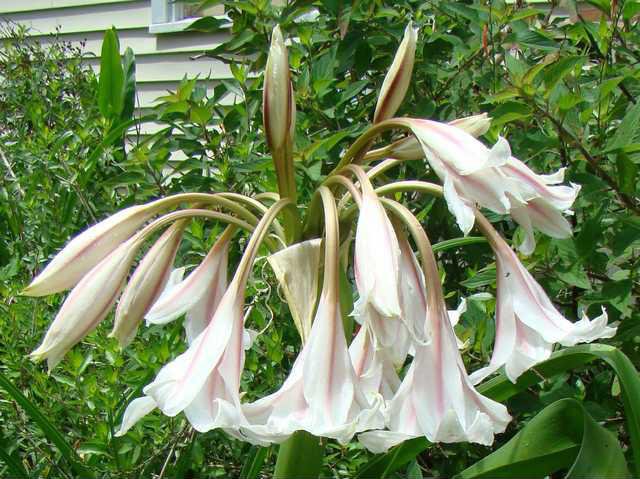
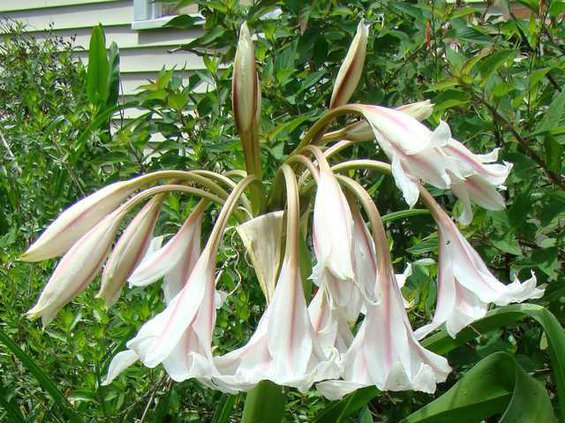
A: Milk and wine lilies are a group of crinums with showy, white flowers marked with pink or burgundy — like milk streaked with red wine. They have a sweet, musky fragrance and are easy to grow. Their large, strap-like leaves add a tropical flair to the landscape.
A combination of milk and wine in a glass may turn stomachs, but a milk and wine lily in the garden will turn heads.
Q: When are Georgia cucumbers in season?
A: Georgia cucumbers start coming onto the market in May and continue into the summer.
The heaviest harvest months are June and July. You may find a few growers producing a late crop in early fall, but your best bet is to start looking for cucumbers and enjoying them as soon as they become available in early summer.
If you have questions about services or products regulated by the Georgia Department of Agriculture, write to Arty Schronce at arty.schronce@agr.georgia.gov. You can also visit the department's website at www.agr.georgia.gov.
Consumer Q's: Red cedars, wine lilies