Question: What is the difference between an insect and a bug? Is there a difference?
Answer: The words "insect" and "bug" are often used interchangeably, with "bug" usually being the more informal and less scientific term. "Bug" has a broader usage: We also refer to germs, computer glitches and various other things as bugs. When dealing with insects, however, entomologists, taxonomists, biologists and other scientists specifically use "bug" to refer only to insects belonging to the order Hemiptera. Insects in this order are sometimes called "true bugs" and share two main traits: straw-like mouthparts for piercing or sucking and a specialized top pair of wings called hemielytra. Members include cicadas, aphids, stink bugs, mealy bugs, leafhoppers, assassin bugs, box elder bugs and bed bugs.
People refer to many insects as "bugs" that are not actually classified as members of Hemiptera. Two examples are ladybugs and June bugs. These are types of beetles, and in technical and scientific writing they will be referred to as such.
The main thing to remember is that in some instances "insect" and "bug" may be used interchangeably, but there are occasions when "bug" is more specific. Try not to let the difference bug you too much.
Q: What causes Irish potatoes to turn green? Can it be prevented? Are they safe to eat? Why does this never happen to sweet potatoes?
A: Although we think of Irish potatoes as "root crops," the Irish potato tubers themselves are actually specialized stems that, when exposed to light, may begin to turn green. When potato tubers turn green, there is usually an increase in the compound solanine in the green area. Tubers with a high concentration of solanine will taste bitter and can be harmful if eaten in large quantities. To be safe, it is best not to eat the green part of the potatoes. You do not need to discard green potatoes. Just peel away the green. To prevent greening, store Irish potatoes in the dark.
Sweet potatoes are not related to Irish potatoes. Sweet potatoes are tuberous roots and will not turn green when exposed to light.
Q: I have an old garden book that recommends chemicals my garden center has never heard of. Is there a place where I can order some of these?
A: Old reference books can provide lots of valuable information, but when dealing with pesticides and other chemicals, rely on the most recent recommendations from reliable sources such as the Cooperative Extension Service. It could be that the chemicals you have read about have been replaced by more effective, more precise or less toxic substances.
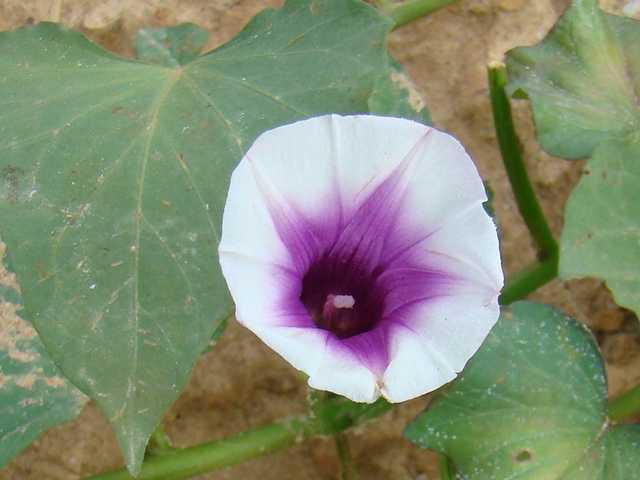
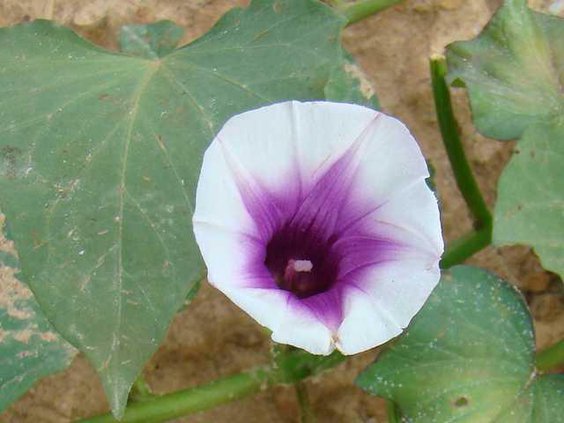
Q: Is it unusual for a sweet potato to bloom? I have grown them for years but have never seen a bloom until now. It looks like a morning glory.
A: Home gardeners may be surprised when attractive purple blooms appear on sweet potato vines, but it is not unheard of, especially late in the growing season. The blooms look like morning glories for good reason; the two are closely related.
If you have questions about services or products regulated by the Georgia Department of Agriculture, write Arty Schronce (arty.schronce@agr.georgia.gov) or visit the department's website at www.agr.georgia.gov.
Consumer Q's: Questions that bug you