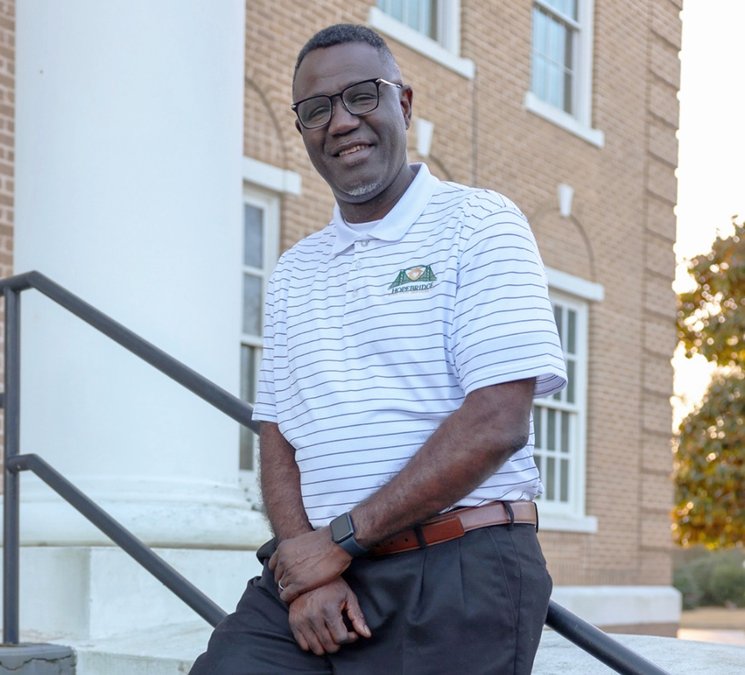
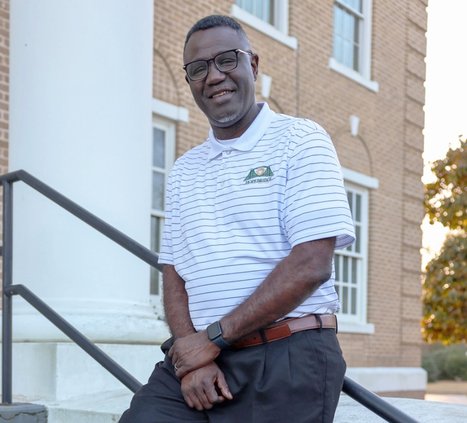
Cassius Osborn never set out to make history – but history found him anyway.
Born in Statesboro, Georgia, and raised in a close-knit family rooted in faith, discipline, and perseverance, Osborn would go on to become a retired educator, husband and father, community leader, entrepreneur, and the first Black head football coach in the Bulloch County Schools System.
Osborn, the son of Lena B. Roberts and the late Anthony Natson, grew up alongside siblings Wayne Roberts, Monet Roberts, Crystal Natson, Willie Osborn, and Toni Pittman. Osborn was raised in part by his grandparents, the late Robert and Evelyn Osborn, whose sacrifices established his core values. Osborn credits their influence for teaching him the importance of humility.
“I was surrounded by a lot of loving people who supported, challenged, and believed in me. My grandparents helped me to stay grounded.”
Osborn describes his grandmother as a praying woman who raised him with love and discipline, often saying, "If you're going to do something, do it right". Her words stayed with him long after childhood.
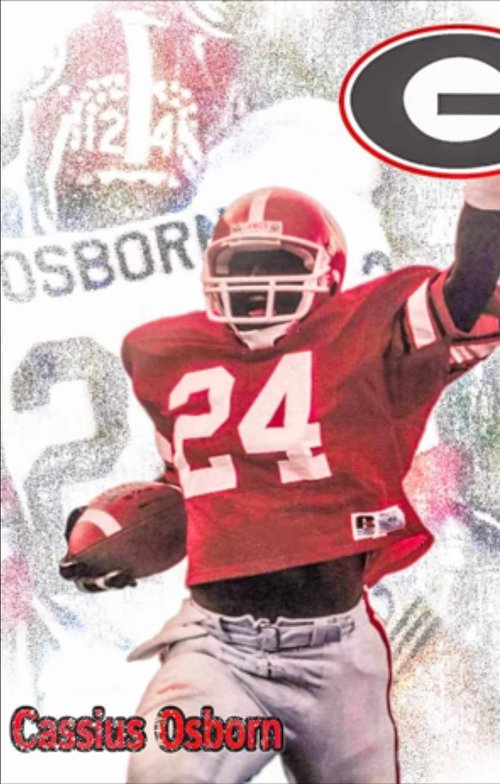
A 1984 graduate of Statesboro High School, Osborn’s stellar performance on the field secured him a full athletic scholarship to the University of Georgia, where he earned his degree while establishing himself as an elite athlete. Osborn swept High School All-State, All-American, and Player of the Year honors before being named UGA’s Middle Georgia Player of the Year and claiming a spot in the UGA Hall of Fame. His standout collegiate career ultimately paved the way to the NFL, where he was signed as a priority free agent by the Pittsburgh Steelers. Osborn also attended Georgia Southern University for additional certifications.
Osborn’s story would continue to develop into chapters not written in stadiums, but in classrooms, hallways, and communities. The cheering crowds were gone, but Osborn’s greatest impact was in its infancy.
Certified in middle school social studies and language arts, as well as high school business (CTAE), Osborn dedicated decades to education, serving at William James Middle School, Portal Middle High School, Langston Chapel Middle School, The Transitions Learning Center, and Metter Middle and High School. His connection with students is contagious, and his logic is simple: every child matters. Osborn explains, “Teachers, coaches, and administrators often represent the mothers and fathers who are absent in many households. Many kids are raised by their grandparents or in single-parent homes; we fill that void. I'm a prime example of that kid.”
That belief guided his tenure at Portal Middle High School, where he became head football coach—and later athletic director—under circumstances that carried both opportunity and pressure. When former head coach Scott Schofill recommended Osborn (offensive coordinator) for the position, Osborn recalls feeling “a mix of excitement and fear.” He also understood the weight of becoming the first African American head football coach in the program’s history.
“I knew I couldn’t afford to fail at this opportunity,” Osborn said. “Not because of pride—but because the culture had to change. In most schools, this is done through the football program. I figured if football was successful, it would set the tone for other programs. And it did. Schofill and I had laid the groundwork for lots of changes, and we wanted to keep it going.”
Under Osborn’s leadership, football became the engine that drove success across the athletic program. He reinstated track after a 10-year absence, transforming it into what is now one of the region’s premier programs. He launched fast-pitch softball, built a new field, and even redirected football funds to ensure female athletes had uniforms—sending a clear message that equity mattered.
Justin Chester, who now serves as assistant principal and athletic director at Portal Middle High School, once suited up as a Portal Panther under Osborn’s guidance.
“Coach Osborn was a true player’s coach—patient, fair, and demanding the best from us,” Chester states. “He helped shape us not just as athletes, but as a team and as young men. We are proud to have had him here at Portal.”
In spite of the progress he made as the first African American head football coach in the school’s history, Osborn faced skepticism, cultural resistance, and the unspoken pressures that come with being a “first”, but he met those challenges with consistency, character, and care for students. Parents, players, and community members soon realized that Osborn wasn’t a Statesboro stand-in, but a leader who was invested in the Portal community.
“I had to show that I cared about the students’ success and prove myself to those who didn’t know me. It was a foreign concept at the time: a Black man in charge of the school’s athletic program. But I surrounded myself with people I trusted. I’d confide in Darryl Cone and Donald Lamonte, two Black coaches on staff. And Coach Jeff Brannen was a teammate of mine from SHS. Fortunately, I was blessed with co-workers who helped me navigate community dynamics.”
Throughout his career, Osborn leaned heavily on mentors and allies at Portal Middle High, including Principal Gwendolyn Yarbrough, who reflects, “Cassius Osborn brought youthful energy and a strong desire for students to achieve to the best of their abilities both on and off the field. He placed equal priority on excellence as well as success in football, encouraging well-rounded growth and dedication in all areas.”
Along the way, Osborn drew additional guidance from Assistant Principal Jimmy Parrish, businessman Harvey Williams, educator Jan Higgins, coaches Lee Hill and Clark Collins, and former Assistant Superintendent Eugene Natson. He also found strength in fellow Black coaches who understood the unique pressures of leadership in spaces where representation was rare.
The UGA Hall of Famer didn’t limit himself to sports on the school grounds. He extended his service to the Statesboro community by leading a fundamentals camp hosted by the Statesboro-Bulloch County Parks and Recreation Department. He also served on the board that helped make Splash in the Boro a reality—another reflection of his dedication to the community.
He is most proud of being a UGA graduate, growing in his faith, retiring after a successful career in education, and building a loving family with his wife Debra Osborn, their children, Darell Jr., Juhwan, Cashonti, Dylan, Dakota, and Daylen, and eight grandchildren.
Now retired, Osborn serves as an elder at Power Chapel: The Oasis, a non-denominational church, where - under the leadership of Bishop Harold Moore - Osborn has been profoundly affected as faith continues to guide his life and spiritual journey. Osborn also serves on the Candler County Board of Assessors. In addition to his impact in the community, Mr. Osborn continues to give back through service and mentorship. He and his wife, Debra, operate Homebridge Homecare Services, which provides personal care, companionship care, and respite care for families in Candler and surrounding counties. Continuing his commitment to supporting youth, Osborn hosts an annual football camp each summer in Wadley, Georgia. Now in its third year, CAMP24 focuses on skill development, discipline, and positive mentorship for young athletes from surrounding counties.
Looking back, he hopes his legacy is remembered not just for being first, but for being faithful.
“If my career has meant anything,” Osborn said, “I hope it has shown young people the importance of hard work, respect, faith, and perseverance. The wins fade, but the lives you impact last forever.”