Here is a snapshot of what Congress has to deal with between now and Oct. 1.
The federal fiscal year ends Sept. 30, and there is not a budget or even a spending resolution in place to allow the federal government to continue to operate beginning Oct. 1.
Open enrollment for many health insurance plans, including those that will be part of the insurance exchanges under the Affordable Care Act – begins Oct. 1. Some Republicans want to shut down the federal government rather than fund the implementation of the sweeping health-care law known informally as “Obamacare.”
And the federal government is once again flirting with the debt ceiling – something that has led to partisan confrontations, one of which nearly led to a shutdown at the beginning of the year.
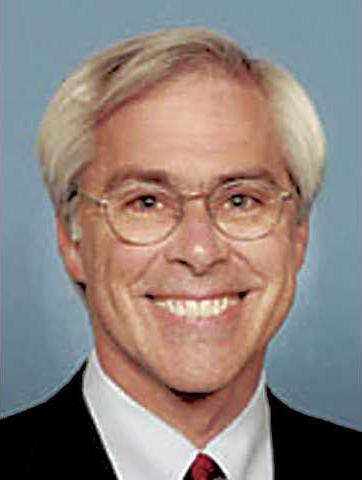
“So you’ve got all these things coming together at the same time, and we’ve only got eight weeks between now and then to deal with it – less than eight weeks,” said U.S. Rep. John Barrow, D-Ga., during a visit to the Statesboro Herald on Tuesday. “So, of course, Congress is going to knock five weeks off, pretending it’s business as usual and going back home and basically waiting until the last minute to deal with this again.”
His reaction?
“It just frustrates the people I represent so much,” said Barrow, who represents the 12th Congressional District, which includes all of Bulloch County. “And it frustrates me because we really ought to be in Washington focusing on dealing with these issues. But the leadership on neither side seems to be particularly interested in working with each other.
They’re more interested in blaming the other side for all the problems that are here and looming on the horizon.
“And so it’s an incentive on the part of the two warring tribes, basically, to wait until the crisis is upon us before we figure out what, if anything, we’re going to do to avoid it,” he continued. “And that’s no way to govern a great country.”
‘Obamacare’
Part of the frustration Barrow expressed was toward the Republicans who would rather shut down the federal government than proceed with the Affordable Care Act. On Thursday, 80 Republicans wrote a letter to House Speaker John Boehner, R-Ohio, asking him to resist any spending bills that would include funding for the new health-care law, according to The Associated Press.
Barrow, who voted against adopting the sweeping law but who also has voted against repealing it, said he does understand those Republicans’ frustration. But the solution, he said, is not to shut down the entire government over the law.
He is against the requirement that employers with 50 or more full-time employees to offer “affordable” medical coverage (a provision that the Obama administration recently announced will be delayed by a year), the requirement that individuals purchase health insurance or pay a penalty, and the Independent Payment Advisory Board – a panel whose role is to keep Medicare solvent and limit health-care spending growth.
All of those parts should be repealed, he said.
But Barrow said he supports popular parts of the law: the ability for parents to keep children on their health-insurance plans until age 26 and the elimination of “pre-existing condition” as a reason for insurance to be denied.
Port of Savannah
Regarding the Port of Savannah, Barrow expressed optimism that the deepening of the harbor will proceed, despite
President Barack Obama’s fiscal 2014 budget only including about $1 million for the project.
Barrow pointed out that the federal agencies overseeing the port have approved all the required permits for the deepening to proceed. He added that there is a change from competition to cooperation among the ports of Savannah; Charleston, S.C.; and Jacksonville, Fla.
The deeper harbors in all three ports would allow them to receive the larger cargo ships that will be able to pass through the Panama Canal once it is expanded, a project that is expected to be finished by 2015.
“We’re never going to lose our advantage over these guys for being the quickest, fastest, to get you off the boat and on the road and on the rails,” Barrow said of Savannah compared to the other two ports. “And it’s not a natural advantage, it’s manmade. We created that with the longest pier on the Eastern Seaboard, and the machinery, equipment and infrastructure to get it off the boat and on the roads and on the rails faster than anybody else. We want to preserve that advantage.”
Jason Wermers may be reached at (912) 489-9431.