"A", "an" and "the" are the most common articles. While "a" and "an" are called indefinite or non-specific, the article "the" is both definite and specific. Hold this thought for a while.
It is important to teach and understand critical thinking in an age of overwhelming electronic information and much of it is uncensored, emotional, unsupported and unfortunately accepted as truth. Critical thinking does not mean to be critical or fault finding. It means to think outside the box by using acceptable research, recognized experts and evidence even though the findings might contradict our most cherished position, "I know I am right because I believe I am right!"
I remember an individual, an intelligent man and well to do, who stopped me in a conversation when he said, "Don't give me the facts. I'm not interested!" I can live with that but have great difficulty when my students look me in the eye and tell me that they can find hundreds, if not thousands, of people on the Internet who agree with what they believe or hear. Remember the student who wrote, "We could stop terrorism if we would simply find and kill the leader of all these attacks. His name is Al Qaeda."? I suppose we would also have to kill his brothers Sam and Bill just in case they are part of the group. Where did this student find this information? The Internet.
Critical thinking has five universally accepted elements: clarity, precision, accuracy, depth and relevance. If these rules of engagement are applied to every question, position, statement or action, many of the problems we and our country face could be prevented or at least made less harmful.
Let me pick just one of those elements in critical thinking. The process needs to be relevant. If a question is legal, then use the law. If a problem is ethical, let's apply honesty and morality. If democracy is the concern, read the Constitution. And, if my needs are life, hope and faith, where do I turn?
Do not give me a book on ethics, law, philosophy, wisdom or the latest novel. I am not interested in an opinion of an anthropologist or an overview of thoughts from a collection of wise men and women through the ages. Give me The Book! I want to hear from the author of The Book. I want the source. I want the Bible!
For the critically thinking Christian, is there any other source he or she can turn to when a question of faith must have an answer of clarity, precision, accuracy, depth and relevance? I was always taught — and I use this principle — the Bible is not to be used as a weapon of destruction. Take all the time needed to interpret this position.
My Bible — the one given to me by my church before our family left the security of Clearwater, Fla., to enter seminary so long long ago — is held together by duct tape and so full of notations, references and stains that most folks would have set it aside for the latest edition that is up-to-date and spotless. That's not going to happen because this Book is my old friend and I know it and trust it and it will never be replaced.
Get your own and open to the first page. It reads, "In the beginning..." What a read it will be!
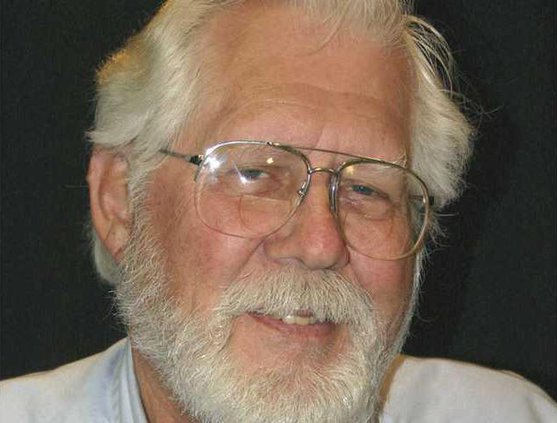
John Bressler - Check out the Bible; it's still a great read