

While the federal government is channeling a second round of COVID-19 pandemic economic stimulus funding through the states to public schools, the Bulloch County Schools are already in much better shape financially than expected last spring.
A list the Georgia Department of Education released to school officials Thursday shows $10.5 million earmarked for the 11,000-student Bulloch County district as more than $1.7 billion flows to Georgia’s county and city school districts and state-funded charter schools.
The $10,543,418 is roughly equivalent to 10% of the local school system’s annual general fund budget. The district already received $2.7 million in the first round of CARES Act, or Coronavirus Aid, Relief, and Economic Security, funding last year. Meanwhile, although a 10% cut in Georgia’s state funding occurred in 2020, a feared decline in local sales tax revenue has, to this point, never happened.
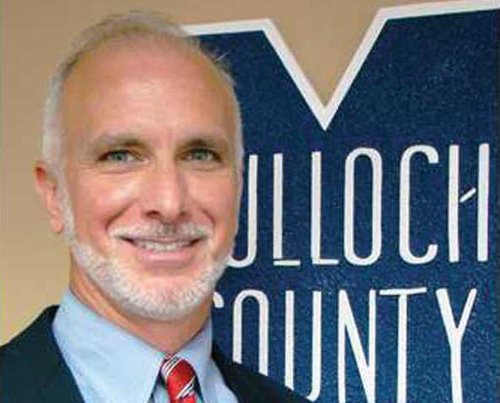
“So far that has not occurred,” Bulloch County Schools Superintendent Charles Wilson confirmed Friday. “That could be a matter of timing, but maybe this stimulus package will do exactly what it’s designed to do and stimulate the economy and we won’t see this problem.”
Bulloch is one of fewer than 10 Georgia counties where the original 1% Local Option Sales Tax is dedicated to funding school operations. The school system also receives the more common Education Special Purpose Local Option Sales Tax, or E-SPLOST, for building projects and equipment, technology, bus and book purchases.
Like everyone else, the school district’s leaders still cannot foresee the future with any certainty, Wilson cautioned.
“But what we have seen is our tax collections have not dropped at this point,” he said. “We want to continue to be careful, of course, but at the same time, we don’t need to be over-restrictive in how we approach things. We need to make sure we’re putting our resources towards serving our students, which is what we’re going to do.”
To fiscal 2022
The state Department of Education indicated that the “CARES 2” funding can be carried forward and spent in more than one fiscal year, said Bulloch Schools Assistant Superintendent for Business Services Troy Brown.
The school system’s 2021 fiscal year is now half over, and Wilson said their main intent will be to carry all or most of the money forward into the fiscal 2022 budget, which opens July 1.
“We put all of the money we got this year, the two and a half million, towards salaries as we’re trying to maintain jobs, our workforce, and what we’re going to do at this point is put (the $10.5 million) into our bucket of resources moving forward for building our school system back up to be able to meet the needs of our students, going forward,” he said.
A priority will be restoring teaching jobs and other positions eliminated through attrition after the 2019-20 school year, Wilson said. After instituting a temporary hiring freeze, the Bulloch County Schools did not rehire teachers, administrators and other personnel to approximately 40 jobs requiring educator certificates after employees left those jobs last summer, according to Brown.
“That will be one of the first priorities we have, moving back toward recapturing those positions,” Wilson said.
Currently there are 910 certificate-holding personnel employed in the 15-campus school system, including 696 classroom teachers, out of a total daily workforce of almost 1,600 people.
Learning gaps
In December as the school system prepared for second semester, which started for students Jan. 6, principals talked to the Bulloch County Board of Education about plans to address “learning gaps” that the past year created for some students.
Some who were already falling short of expectations for their grade-levels fell further behind during the schools’ March-May 2020 shutdown. After school started back in August, other students, whose families chose the virtual option, never did the online work or failed to make adequate process, administrators said. The school system required more than 500 previously “virtual” students to return to face-to-face classes this semester, and over 1,600 more did so at their parents’ request.
The federal money could also assist with efforts to help students catch up, which again implies hiring more full- or part-time educators. Wilson noted that the schools are, at this point, still dealing with a state funding cut.
“Now, with this money coming from the stimulus package, it gives us the ability to not only look at recapturing those positions, getting teachers back in front of children, it also relieves any need to consider whether we’re going to take it out of fund balance for the moment or even worry about property taxes,” Wilson said.
In its press release Thursday, the Georgia Department of Education stated that school systems can use the “CARES 2” funds “to support at-risk student populations, distance (or) remote learning, school meals, mental and physical health, supplemental learning and addressing learning loss, facilities and equipment, continuity of core staff and services and more.”
Neighboring counties
The stimulus funding shares are not based on each school system’s total enrollment, but on its proportionate share of federal Title I funding. This, in turn, reflects the number of students living in poverty.
“This funding formula is required by federal law and the Georgia Department of Education does not have the authority to use a different funding method,” the department noted in its news release.
Other area school systems’ shares include approximately $3.2 million to Bryan County, $3.1 million to Candler County, $5 million to Effingham County, $6.9 million to Emanuel County, $3.4 million to Evans County, $2.4 million to Jenkins County and $4 million to Screven County.
Charter schools are also included in the federal allocation. Statesboro STEAM Academy, which is not part of the Bulloch County Schools but receives state operating funds, is slated to get $155,886 in stimulus money.
Kemp’s commitments
Gov. Brian Kemp, in his State of the State speech on Thursday, announced that he will not request any new cuts in the state budget this year. But Brown and Wilson said it remains to be seen whether the money cut from state funding to the schools last year will be restored. Kemp also proposed a $1,000 one-time supplement to teachers and other public school employees for their service during the pandemic.
Leaders of local school systems will be waiting to see whether the state funds this supplement for all of their employees. Wilson said he hopes to extend it to all BCS employees by local decision if necessary.