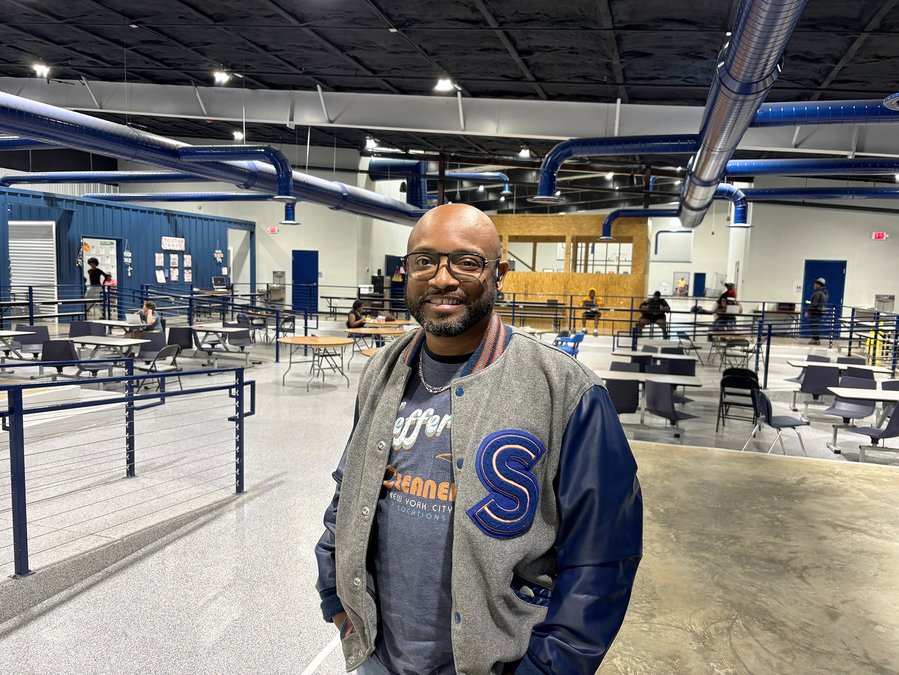
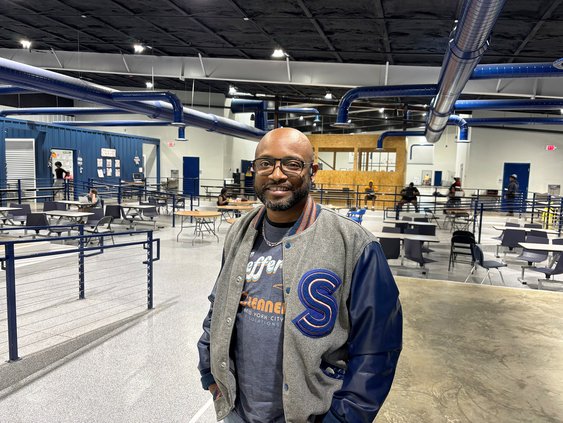
Statesboro STEAM opened in 2002 as the Charter Conservatory for Liberal Arts and Technology. For more than two decades, the school operated inside a leased, former commercial building on Northside Drive East.
On August 11, classes were held for the first time inside STEAM’s new 36,000-square-foot building on its 50-acre campus at the intersection of East Main Street and Veterans Memorial Parkway.
“I think it's what some people might call the dream realized, because this has been something that even the founders wanted to do: to be able to have their own space, own building and provide this school to the students of Statesboro and Bulloch County,” said Corliss Reese, the charter school’s principal and superintendent.
After Bulloch County commissioners approved tax-free bonds to finance the $9 million cost of building and quipping the school, construction started at the site in February 2025. The goal from the start was to begin classes for the 2026-27 school year in August 2026 – about a month later than STEAM’s normal mid-July start to a new year.
As a state-chartered school, STEAM receives direct state funding for its annual operations and maintenance under Georgia’s Quality Basic Education, or QBE, formula, based on its number of students. The school cannot charge tuition. Although its attendance area is Bulloch County, STEAM operates under its own governing board, entirely separate from the Bulloch County Board of Education.
Also, as a charter school it receives no state capital outlay funding for facilities and has no share in local sales tax or property tax revenue.
New school, new possibilities
Reese, who joined the school’s staff in 2006, is excited about the growth and educational possibilities of the new campus.
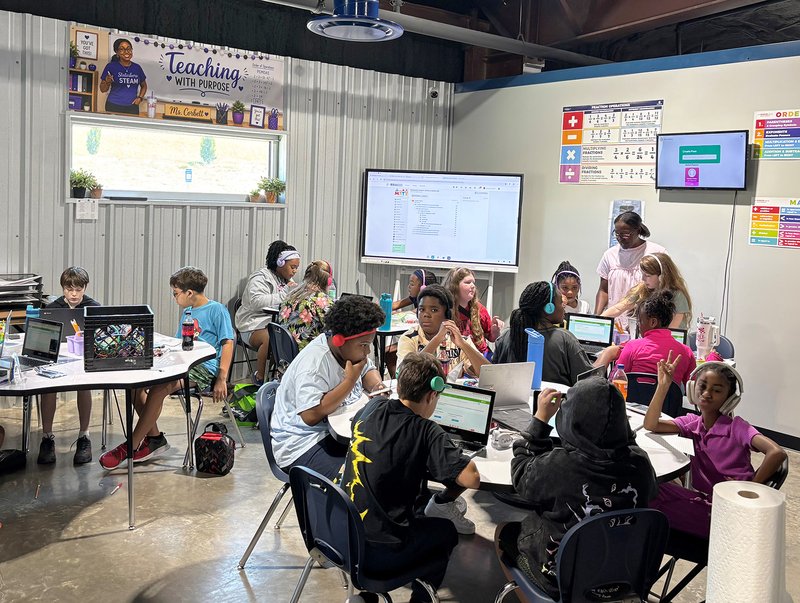
“The (Northside Drive) school space was what I call functional for what we needed to operate as a school on a daily basis,” Reese said. “But to be able to fully realize our identity as a school, we needed what this space does. It gives us more room to offer different programs that we couldn't offer in the previous building because every space was already taken up.”
One immediate effect that was planned was significant growth in student population. STEAM ended the 2025-26 school year in its Northside Drive building with about 180 students, Reese said. Currently, 290 students are enrolled – primarily in the elementary school section of STEAM.
Reese said the larger school allowed STEAM to add full second and third grade classes for the first time and increased fourth and fifth grade from half-sized classes to full classes.
The school has a capacity of 415 students and Reese said there are 420 children on a waiting list for admission. Ideally, he said would like to see the school add about 15-30 students each school year.
“It's so hard to turn people away,” Reese said. “It is so hard. But the other side of it is adding staffing. We may have a lot of space, but we need the human resources, as well, to be able to take on that kind of a number.”
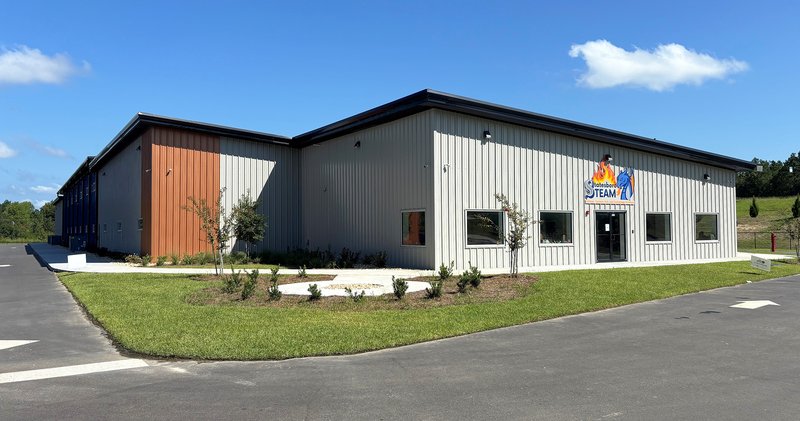
Another advantage of STEAM’s larger building and campus is now having its own gymnasium and outdoor areas, which will have fields for soccer, a track and, eventually, a baseball field.
Reese said a hardwood floor will be laid down over the concrete in the gym in time for the basketball teams to start practice in October and play games on this season. He hopes the soccer field will be ready for games when the season begins in January, but the baseball field won’t be ready for play until 2028.
The school is part of the Georgia High School Association and will compete in the smallest school-size classification. Reese said STEAM sports teams have scrimmaged against Bulloch Academy in past years and hopes to add regular season games with BA in the future.
Settling in
While the new school is larger and more modern, Reese said the staff at STEAM has made it a point to continue the school’s unique education mission in the community.
“That's a big part of our conversations here is we always want to stay true to who we are,” he said. “We always want to keep that identity. We want this culture to always be a place that's inclusive and fun for students to come to school. And we want them to be eager every day to come to school.
“That's one of the biggest things we hear from parents when their kids move over here is that they're kids beat them out the door to come to school. And that's good for us to hear. That means we're doing something right.”