Trust feels different than it once did.
Turn on the television, scroll through social media, or spend a few minutes reading the headlines, and it is easy to understand why. Many people have become skeptical of politicians, corporations, media outlets, religious organizations, and other institutions that once enjoyed a greater measure of public confidence.
Some skepticism is healthy. History reminds us that trust should never be blind.
But there is a difference between healthy skepticism and believing that no one deserves our trust.
That's a dangerous place for any society to land.
Thankfully, here in small-town America, trust is still built in ways that never make national headlines.
It is built when a teacher stays after school to help a struggling student.
It is built when a neighbor checks on an elderly resident after a storm.
It is built when volunteers show up at food pantries, churches, civic clubs, and community events without expecting recognition.
It is built when people do what they said they would do.
In communities like ours, trust is not primarily shaped by what happens in Washington, Atlanta, or on cable news.
It is shaped by what happens across kitchen tables, church fellowship halls, doctor's offices, and front porches.
As a pastor, I learned early that trust cannot be demanded.
People do not trust you because of a title.
They trust you because they watch you.
They watch how you treat people.
They watch whether your actions match your words.
They watch whether you show up when someone is hurting.
Trust is not established by one sermon, one speech, or one campaign promise.
It is built through consistency over time.
One of the clearest reminders of this comes from serving Communion in local care facilities with my wife.
Over the years, residents would often ask a simple question:
"Are you coming back?"
At first, it sounds like a question about scheduling.
But it is really a question about trust.
Can I count on you?
Will you remember me?
Will you keep your word?
Month after month, we returned. Eventually, the question disappeared.
Trust had taken its place.
That experience taught me something important: trust is rarely built through grand gestures.
It is built through reliability.
Showing up.
Keeping promises.
Being present.
One of the most profound lessons I have learned about trust came through a church member named Margie.
Years ago, Margie was receiving hospice care. I had been visiting her regularly and recognized signs that suggested her remaining time was short.
After one visit, I felt strongly that her family needed to be there.
So, I called them.
"I think you need to come."
There was a pause.
Then came the question.
"Are you sure, Pastor? We've been up there many times before, and she pulled through."
I understood their hesitation. Hope has a way of holding on even when reality is quietly speaking.
But I answered with confidence.
"Yes. I think you need to come now."
The family came.
They gathered around Margie's bed. They held her hands. They shared memories. They said the things that needed to be said.
Not long afterward, Margie passed peacefully with those she loved surrounding her.
Later, family members hugged me and thanked me for making that call. They were grateful they had been given those final moments together.
What stays with me all these years later is not simply their gratitude.
It is the question they asked:
"Are you sure, Pastor?"
In that moment, a family had to decide whether they trusted me.
Not because of my title.
Not because I was standing in a church.
But because over time they had learned whether my words could be trusted.
That family became dear friends in the years that followed, and that experience reminded me of something our communities desperately need to remember.
Trust is earned long before it is tested.
It is earned through honesty.
Through consistency.
Through showing up.
Through keeping promises.
Perhaps the real answer to our modern trust problem will not come from national institutions or public debates.
Perhaps it begins much closer to home.
It begins when we become the kind of neighbors, friends, teachers, business owners, pastors, parents, and citizens whose word still means something.
Trust may be harder to find than it once was.
That is exactly why it is so valuable when others find it in us.
In a world crowded with doubt, trustworthy people become anchors.
And every community needs more anchors.
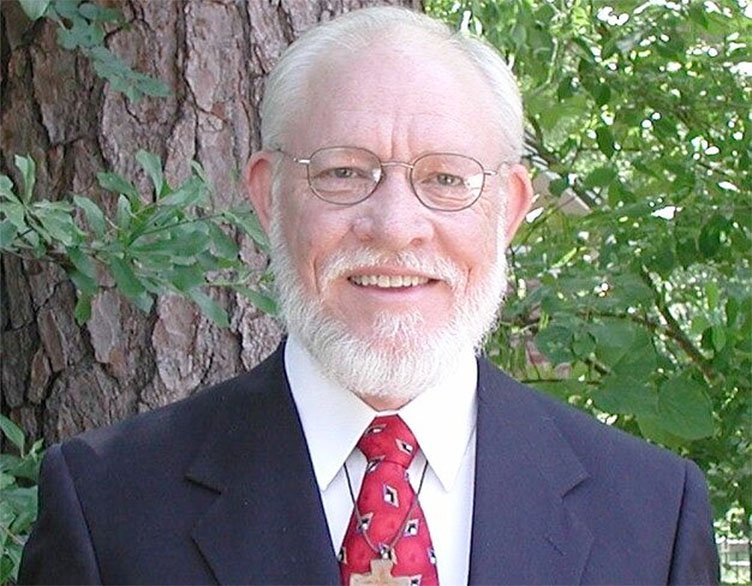
Dr. Charles Cravey has a Bachelor of Science in sociology from Georgia Southern, a master's degree in sacred literature from Trinity Theological Seminary and a doctoral degree in theology from Trinity. In addition to being a retired pastor, Cravey is a writer, photographer, recording artist, songwriter, singer and producer.