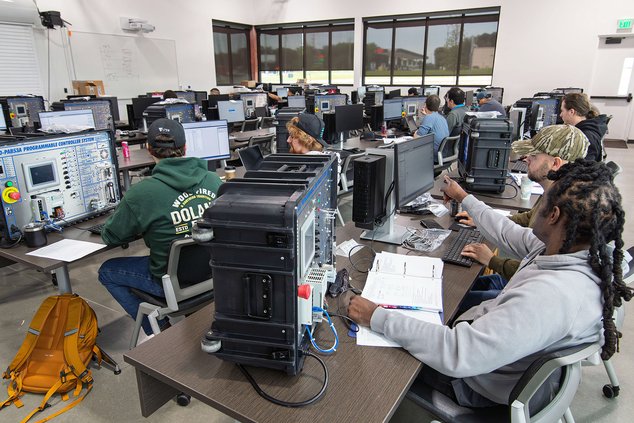
Ogeechee Technical College will unveil its new industrial systems and robotics training center next week, a nearly $30 million investment in southeast Georgia’s manufacturing future.
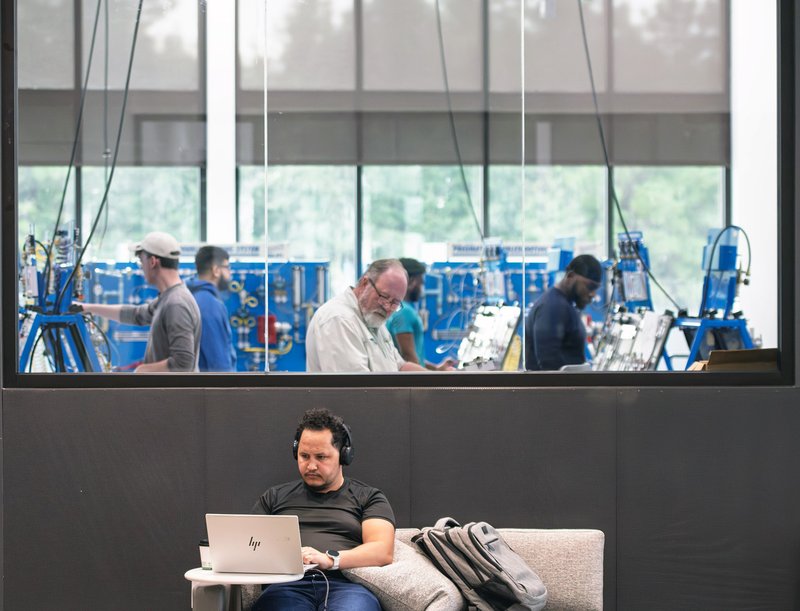
A little more than a week before the grand opening, students already were immersed in the new laboratories, with classes having begun Oct. 5. Behind large glass windows, industrial robots stand ready to perform the precise movements that define modern manufacturing. Nearby, students learn to program computerized controllers and study the electrical, mechanical and pneumatic systems that keep production lines moving.
But, the mission of the Georgia Industrial Systems and Industrial Robotics Training Center extends beyond providing a new learning space: It’s to prepare workers to keep the region’s growing manufacturing economy running.
The 39,777-square-foot facility expands the college’s industrial operations training program as southeast Georgia faces mounting demand for skilled maintenance technicians and automation specialists. It also gives the region a unique advantage in recruiting industries and training workers.
“There is no other facility like this at any other technical college in the state,” Jan Moore, Ogeechee Tech’s vice president for economic development, said. “What goes on in this building has a tremendous regional impact.”
Moore said the center grew from a vision nearly five years in the making. By 2022, the college recognized it was outgrowing the roughly 12,500 square feet dedicated to industrial systems in its old building.
That same year, Hyundai Motor Group Metaplant America was announced just 32 miles away in Bryan County, promising to eventually bring 18,121 manufacturing jobs to the region.
“And suddenly the center wasn’t just a nice thing to have,” Benjy Thompson, the CEO of the Bulloch County Development Authority, said. “It was almost a critical need because of the additional robotics jobs that would be coming to the region.”
Industrial maintenance emerged as the hardest job to fill across the eight-county region surveyed by RISE, a regional workforce initiative. The center trains workers to maintain machinery, troubleshoot electrical systems, program controllers and operate industrial robotics.
The future is bright
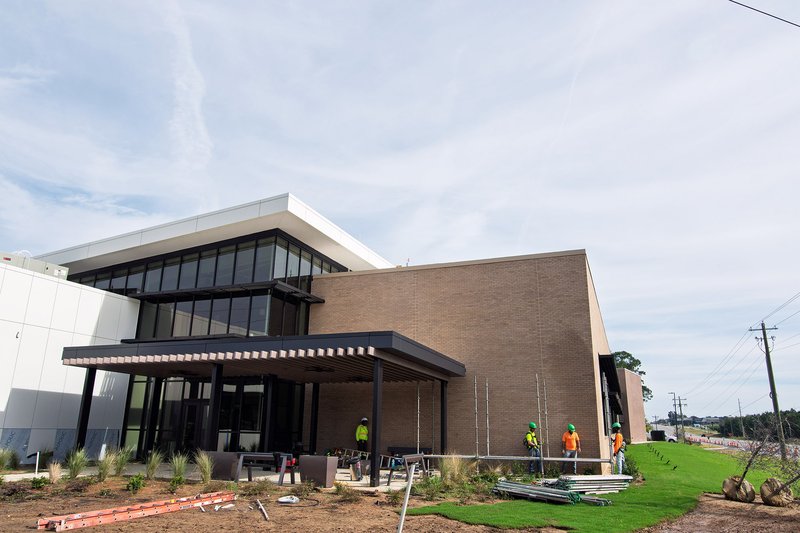
During the first week of classes, construction crews were still finishing the facility as students and instructors settled in.
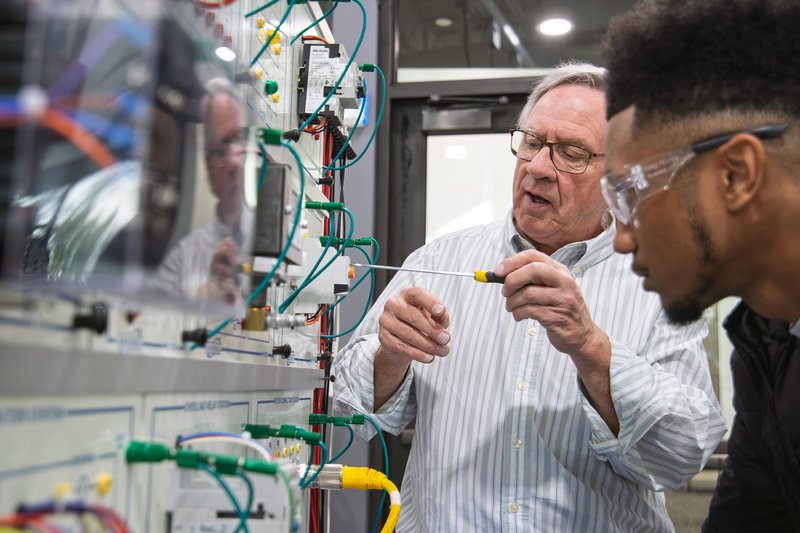
“It’s phenomenal,” Joshua Bennett, an industrial systems lab instructor, said. “There's nothing like what you see right here. What we can do with this is – I mean the industry's going to be better off for it.”
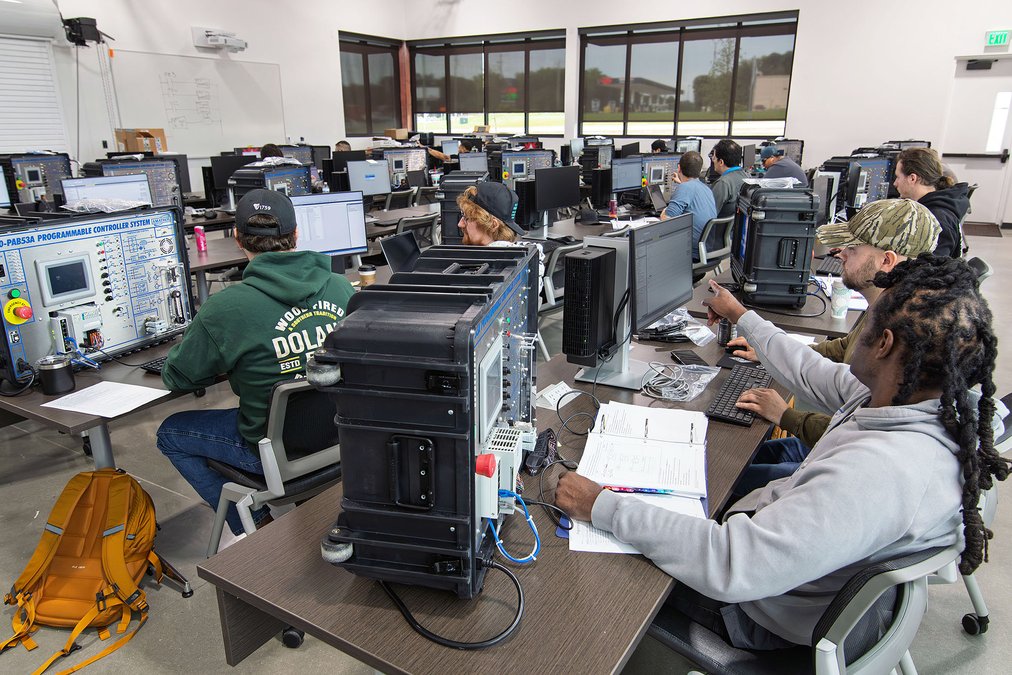
Bennett works in a classroom to teach students how to use Programmable Logic Controllers (PLCs), a skill that is essential for most modern industrial automation, manufacturing and process control jobs. Bennett’s new classroom has 25 PLCs, meaning he can train as many as 50 students at a time.
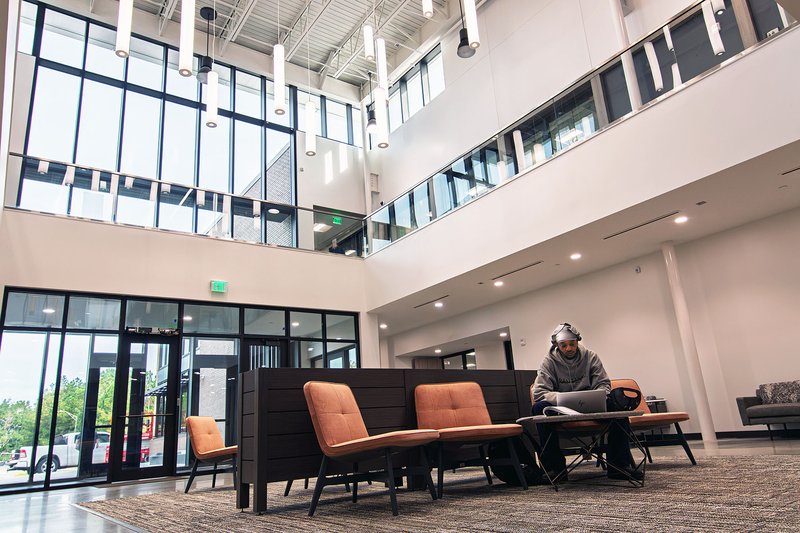
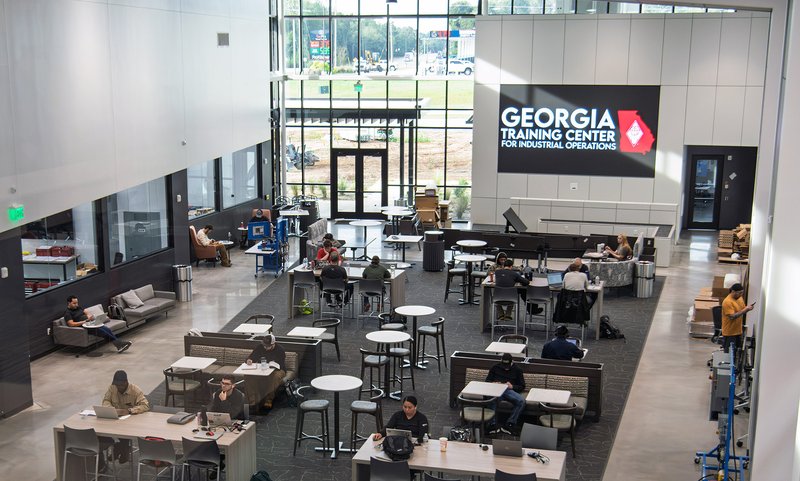
The center includes 12 labs, communal spaces and a studio on the first floor. Administrative offices, instructor workspaces and Development Authority of Bulloch County offices occupy the second floor, alongside a conference room overlooking the labs.
Moore said the building’s white walls, natural lighting and large windows were intentional, designed to challenge perceptions of manufacturing as dark, dirty or dangerous.
“As this industry evolves and grows – the future is bright. This building is bright because we want people to get that feeling when they come in here that ‘I must be learning something pretty important because this is a pretty significant facility to train in.’”
Lab rooms are separated into individual classrooms, preventing instruction in one discipline from interfering with another. However, large garage doors can be opened to connect the rooms, allowing instructors and equipment to flow easily from class to class.
The new center has room to train as many as 200 to 300 students per day with up to 14 instructors working.
Moore said the larger space will also lead to more efficiency in learning.
“It allows people to be hands-on in these labs longer than they would have necessarily been before just because we were limited by space,” she said. “When you're limited by space, you can only do so much in that space with so many people. It allows our instructors, our students, and the room to flow a little bit more freely.”
Training workers for a changing regional economy
The new Georgia Industrial Systems and Industrial Robotics Training Center offers multiple pathways into advanced manufacturing, from a four-semester diploma program for aspiring technicians to specialized training for employees already working in the industry.
Ogeechee Technical College’s Industrial Operations Technology diploma program launched this fall with an initial cohort of about 12 to 15 students. Moore said the program is expected to grow significantly.
Designed for people entering the field, the program teaches the foundational skills needed to maintain manufacturing equipment.
Moore said even in the program’s first semester, employers have expressed interest in hiring students before they complete their diplomas.
Also, the center serves as a training resource for existing employers, allowing companies to send workers for individual classes, instruction on specific equipment or more extensive apprenticeship programs. Training can address anything from electrical systems to programmable logic controllers, or PLCs, the computers that direct automated machinery.
The arrangement brings company-specific expertise to workers without requiring local employers to send them across the country. While the college works with national companies, much of this training is intended to strengthen the regional workforce.
An investment in regional competitiveness
The state provided $26.5 million in funding for the new center. The Development Authority of Bulloch County donated land valued at $595,000, and Bulloch County committed $663,500 toward an access road.
"We knew that we had some existing manufacturers in Bulloch County who could leverage the training,” Thompson said of the development authority’s support. “We also knew that this would be a unique resource in the state … a way to distinguish ourselves … we could say ‘if you’re interested in higher wages, larger investment industrial projects, it’d be nice to be close to a facility that trains your employees.’”
Economic projections prepared by Georgia Southern University’s Center for Business Analytics and Economic Research estimate that industrial operations training will generate $13.21 million in annual economic output in fiscal year 2027, its first year of training operations in the new facility. That activity is projected to support 84 jobs and $4.78 million in combined labor income across coastal Georgia.
By fiscal year 2035, annual output is projected to reach $16.64 million, supporting 96 jobs and $6.27 million in labor income.
Thompson said it’s something for a community the size of Bulloch County to be proud of.
“It’s cool to live in a place where there’s a resource no one else has,” he said. “It’s something that can help us become better as a community. That's the great thing about growth. If you manage it right and leverage it correctly, then it can help you get better.”